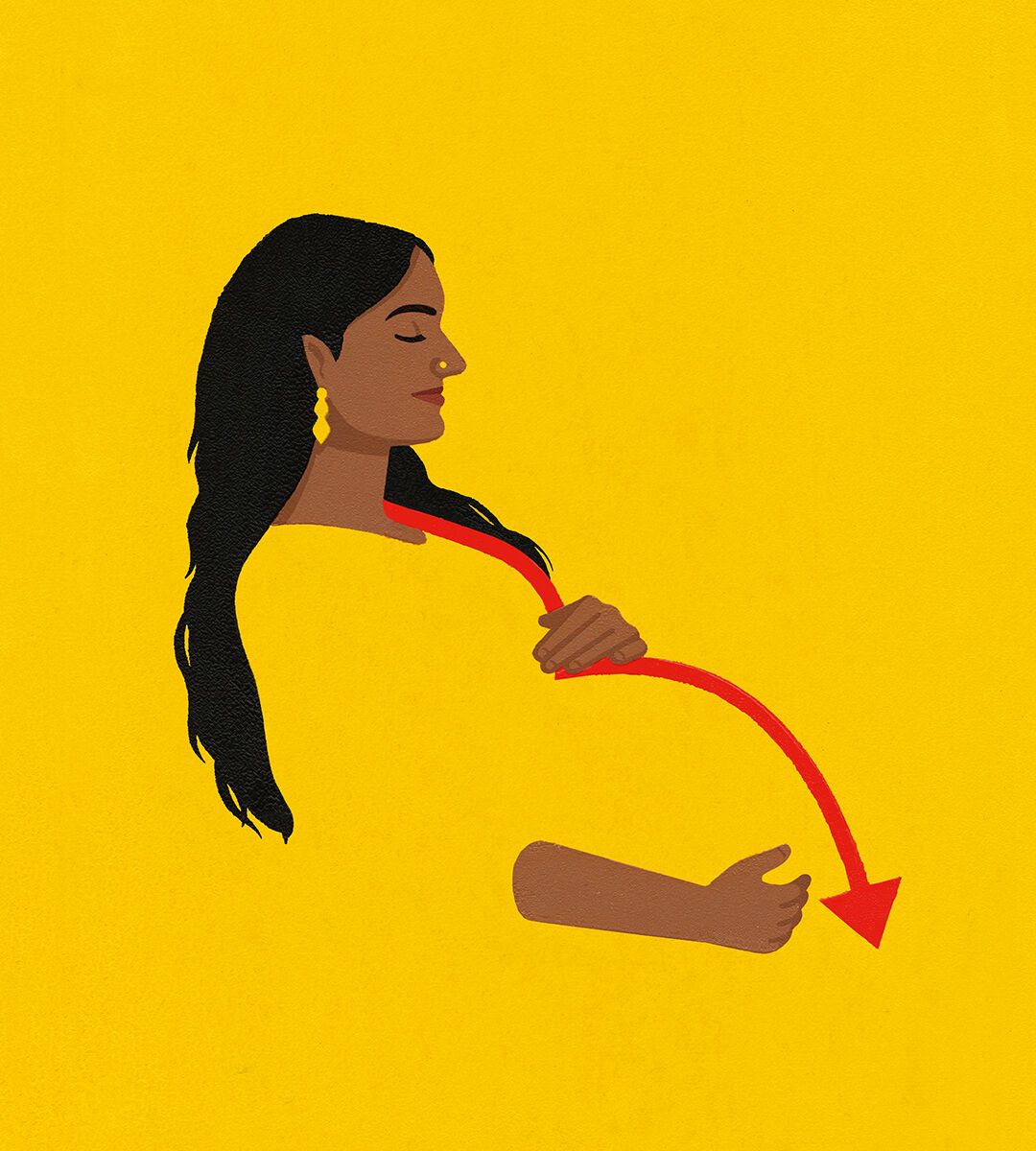
You are having too many babies. For decades that crude message(粗鲁的信息) was drilled into(反复灌输,强行灌输) the minds of Indians by their rulers, abetted by inept foreign donors. In the 1960s slogans on school buildings chided(责备,责骂) parents, telling them: “Two or three children, enough”. By the 1970s officials had taken a crueller turn, overseeing the sterilisation(绝育(手术)) of millions of young adults, usually the poor, many forcibly(强制地,强迫地). But when Indian school textbooks are reprinted this summer, they will carry a very different message. They will warn not of the dangers of having too many babies, but of the risks of having too few.
你们生得太多了。几十年来,印度统治者在不称职的外国捐助者的纵容下,将这个粗鲁的信息灌输到印度人的脑海中。20世纪60年代,学校建筑上的标语斥责父母,告诉他们:“两三个孩子,够了”。到了20世纪70年代,官员们采取更残酷的手段,监督数百万年轻人(通常是穷人,许多是强制性的)接受绝育。但今年夏天印度学校教科书重印时,将传达一个非常不同的信息。它们警告的不是生太多孩子的危险,而是生太少孩子的风险。
That’s because the world’s most populous country is experiencing a baby bust. India has a total fertility rate(总和生育率) (TFR), a measure of children per woman, of 1.9 and falling. This is below the replacement rate, of 2.1 or so, needed for a stable long-term population. In several Indian states the TFR now matches the sputtering rates(低迷且波动不定的水平) you find in rich European countries. Tamil Nadu, an industrialised state in the south, and West Bengal, a populous one in the east, each have the same fertility rate (1.3) as Finland. Maharashtra, a big western state encompassing Mumbai, is on a par with(与……相当,与……同等) Norway (1.4). If you think of Indian demography, Scandinavia(①地理:包括挪威、瑞典、丹麦,有时也包括...) is not the natural reference point. Increasingly, it will be.
这是因为这个世界上人口最多的国家正在经历婴儿荒。印度的总生育率(TFR)——衡量每名妇女生育子女数量的指标——为1.9且在下降。这低于维持长期人口稳定所需的约2.1的替代水平。在印度几个邦,TFR现在已经与你在富裕的欧洲国家看到的低迷水平相当。南部的工业化邦泰米尔纳德邦和东部人口众多的西孟加拉邦,生育率(1.3)与芬兰相同。包括孟买的西南部大邦马哈拉施特拉邦,与挪威(1.4)相当。如果你想到印度的人口状况,斯堪的纳维亚半岛并不是自然的参考点。但越来越是这样了。
India’s population will still continue to grow from its current tally(总数,计数) of 1.45bn: it takes time for fewer births to translate into fewer people overall. But the number of births is already down by a fifth from its peak in 2001. In Tamil Nadu 1,200 schools were closed last year for a lack of pupils to fill their classrooms. Those who do attend increasingly show up without any siblings. The government frets that India will get old before it gets rich(未富先老)—that the country is on a similar path to China, where the population has already peaked and is starting to fall. Some politicians are offering cash to encourage Indians to procreate(生育,繁殖).
印度人口仍将继续增长,目前为14.5亿:生育减少转化为总人口减少需要时间。但出生人数已比2001年峰值下降了五分之一。在泰米尔纳德邦,去年有1200所学校因缺少学生而关闭。那些上学的孩子越来越多地没有兄弟姐妹。政府担心印度会‘未富先老’——该国正走上与中国相似的道路,中国人口已经达到峰值并开始下降。一些政客正在提供现金鼓励印度人生育。
They grow up so fast
他们成长得如此之快