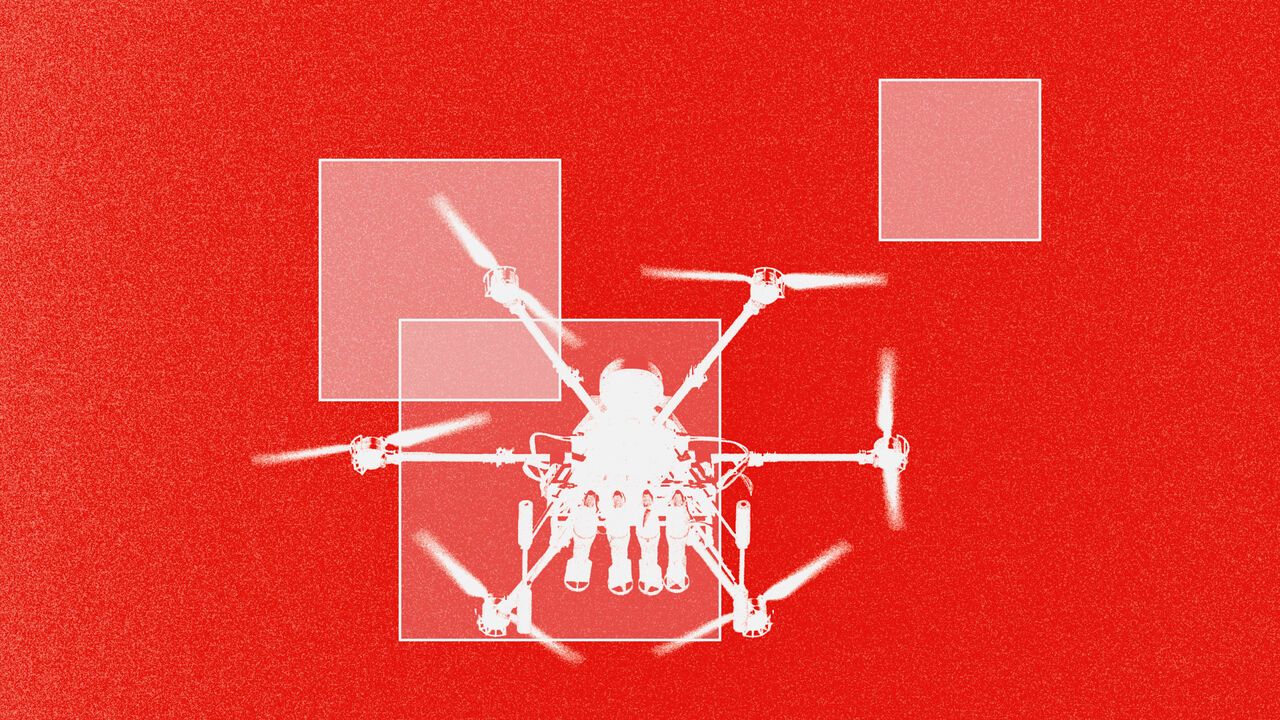
SMALL DRONES are everywhere. Not just in Ukraine, but flying over air bases in mainland America and Britain, and hitting targets across the Middle East. The technology is cheap, easy to use and accessible, with groups like Hizbullah enthusiastically deploying small quadcopters(四旋翼无人机) to hit Israeli tanks. To make matters worse(更糟糕的是), existing air-defence sensors have been mostly designed to spot bigger threats like manned aircraft(有人驾驶飞机) and missiles.
小型无人机无处不在。不仅在乌克兰,还飞越美国本土和英国的空军基地,并打击中东各地的目标。这项技术廉价、易用且普及,像真主党这样的组织正热情地部署小型四旋翼无人机来攻击以色列坦克。更糟糕的是,现有的防空传感器大多设计用于探测有人驾驶飞机和导弹等较大的威胁。
The challenge, then, is to develop systems that can spot small, low-flying drones that, like birds, may be skimming(掠过;刮过) treetops and weaving(穿梭;迂回前行) amid other clutter(杂乱物;干扰回波). One approach is to redesign radar systems. Another involves the clever use of acoustics.
因此,挑战在于开发能够探测小型低飞无人机的系统——这些无人机像鸟一样,可能掠树梢飞行,并在其他杂乱物中穿梭。一种方法是重新设计雷达系统。另一种方法则涉及巧妙运用声学。
Radars emit pulses of radio waves and detect the reflections that come back. They work equally well at night and in bad weather and will spot anything in the air. But, says Thomas Withington, an electronic-warfare expert at RUSI, a think-tank, radar typically filters out small, low-flying objects, which are assumed to be birds.(但智库RUSI的电子战专家托马斯·威辛顿表示,雷达通常会过滤掉小型低飞物体——这些物体通常被假定为鸟类。)
雷达发射无线电波脉冲并检测返回的反射波。它们在夜间和恶劣天气中同样工作良好,并能发现空中的任何物体。但智库RUSI的电子战专家托马斯·威辛顿表示,雷达通常会过滤掉小型低飞物体——这些物体通常被假定为鸟类。