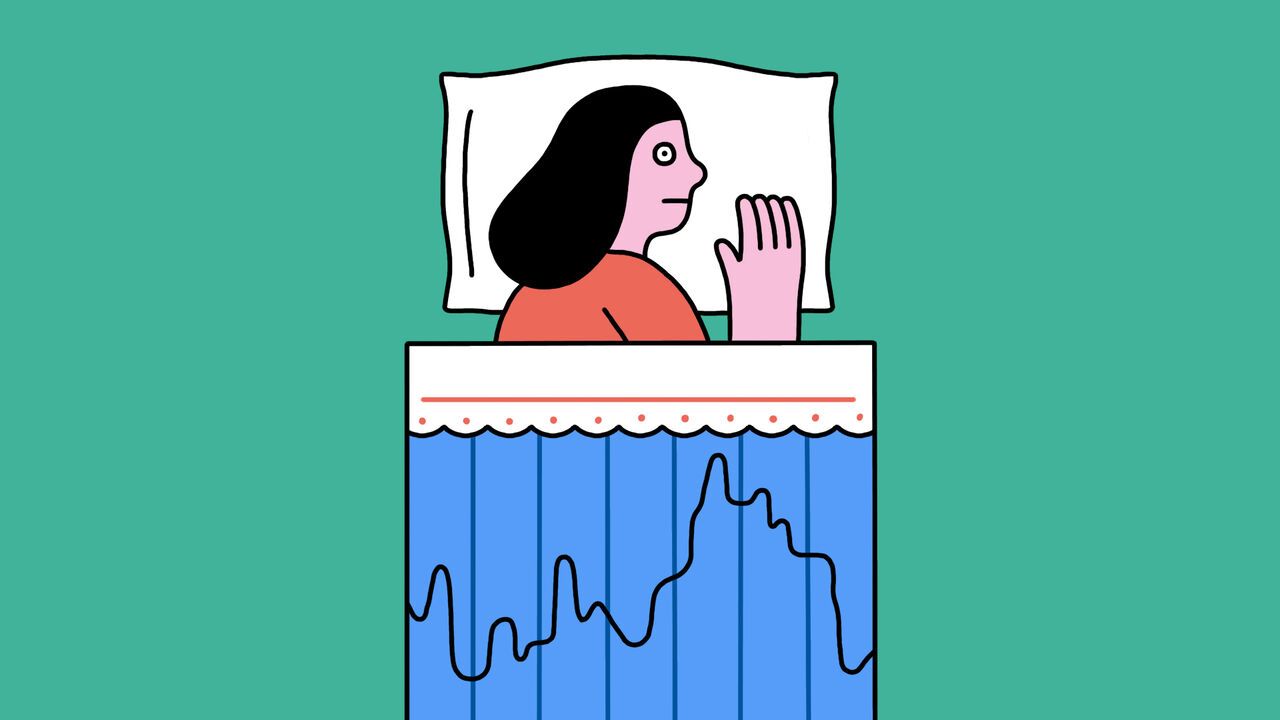
Nearly half of(近一半) all Americans and around 40% of Britons now use a smartwatch, smart ring, phone app or another similar device to track their sleep. Are these gadgets(小工具、小装置) accurate—and do their users get a better night’s rest?
近一半的美国人和约40%的英国人现在使用智能手表、智能戒指、手机应用或其他类似设备来追踪睡眠。这些小工具准确吗?用户是否因此获得了更好的夜间休息?
Not getting enough sleep can cause all manner of health problems, from dementia(痴呆症) to diabetes. A new study, published in Nature, finds a U-shaped relationship(U形关系) between how long people sleep and markers of biological ageing. The researchers used data from the UK Biobank, a database containing health and lifestyle information on roughly 500,000 people. Those who got between 6.4 and 7.8 hours of shut-eye(睡眠(口语)) a night seemed to experience slower ageing in both brain and body than those who slept either more or less.
睡眠不足会导致从痴呆到糖尿病等各种健康问题。一项发表在《自然》杂志上的新研究发现,人们的睡眠时长与生物衰老标志物之间存在U形关系。研究人员使用了英国生物银行的数据,该数据库包含约50万人的健康和生活方式信息。每晚睡眠时间在6.4到7.8小时之间的人,其大脑和身体的衰老速度似乎比睡得多或少的人都要慢。
Sleep trackers promise to help people hit this sweet spot(最佳点、理想状态). Apps typically record movement and sound, sometimes inferring(推断) breathing rates from the audio. Smartwatches record movement and use photoplethysmography—measuring blood flow by shining low-intensity light onto the skin and detecting how much reflects back. This is used to estimate heart and breathing rates. Rings often measure skin temperature, too.
睡眠追踪器承诺帮助人们达到这个最佳点。应用程序通常记录运动和声音,有时从音频中推断呼吸频率。智能手表记录运动并使用光电体积描记法——通过向皮肤照射低强度光并检测反射回来的光来测量血流——来估算心率和呼吸频率。戒指通常还会测量皮肤温度。