In 1974, soon after the first oil shock, William Simon, America’s treasury secretary, flew to Jeddah to sign a secret deal with the king of Saudi Arabia. Among other things, he promised the Saudi government preferential access(优先准入) to American Treasury bonds. In exchange, the regime agreed to invest some of its immense oil revenue in American public debt.
1974年,第一次石油冲击后不久,美国财政部长威廉·西蒙飞往吉达,与沙特阿拉伯国王签署了一项秘密协议。他承诺沙特政府优先购买美国国债,作为交换,沙特政权同意将其部分巨额石油收入投资于美国公共债务。
Three years earlier Richard Nixon had ended the dollar’s convertibility to gold, ushering in(开启,迎来) an era of floating currencies. Central banks found themselves having to manage exchange rates. Foreign states stocked up on Treasury bonds in part to stop their currencies from appreciating against the dollar. America’s government needed foreign buyers, too: the more customers for its debt, the lower the interest it had to pay.
三年前,理查德·尼克松结束了美元与黄金的兑换,开启了浮动汇率时代。各国央行发现自己必须管理汇率。外国政府囤积美国国债,部分是为了阻止本币对美元升值。美国政府也需要外国买家:其债务的客户越多,需要支付的利息就越低。
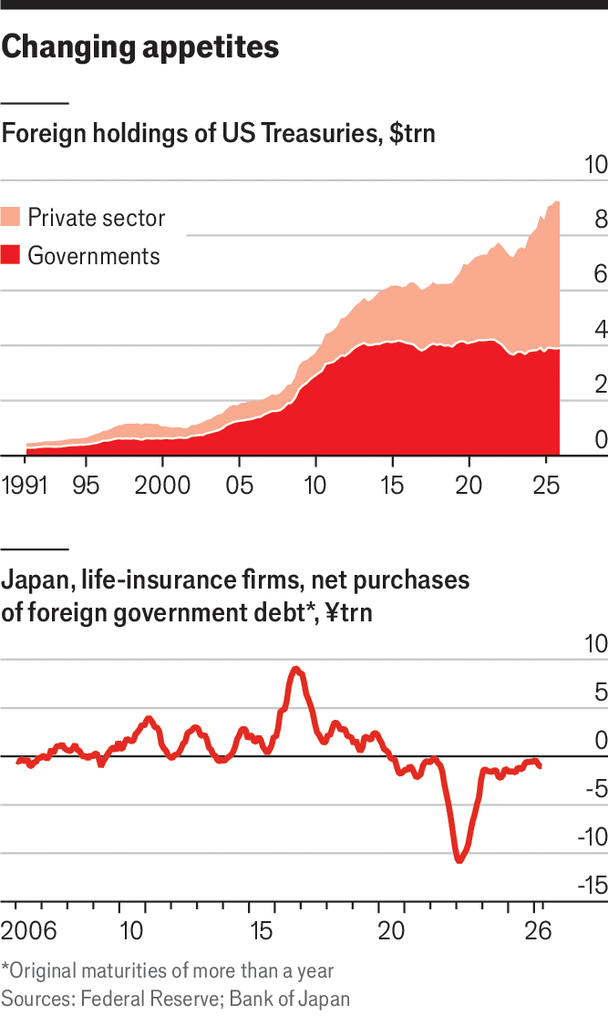
America’s financial bureaucrats offered a sweet deal(划算的交易,优惠条件): the chance to bid for Treasuries at private auctions, with favourable tax treatment. Although the Saudis never became big buyers, foreign states bought $2.3trn of Treasuries in the 2000s, bringing their holdings to $2.9trn, after currency crises convinced Asian governments in particular that they needed stockpiles of dollar-denominated assets. If their currencies started sliding, the logic ran, they could stem the decline by selling Treasuries to buy domestic assets.
美国的金融官僚们提供了一笔划算的交易:在私人拍卖会上竞标美国国债的机会,并享受优惠税收待遇。尽管沙特从未成为大买家,但21世纪初外国政府购买了2.3万亿美元美国国债,将其持仓推至2.9万亿美元,特别是亚洲国家在货币危机后确信需要持有美元计价资产储备。其逻辑是,如果本币开始下跌,他们可以通过出售美国国债买入国内资产来阻止下跌。
Debt of a salesman
推销员的债务