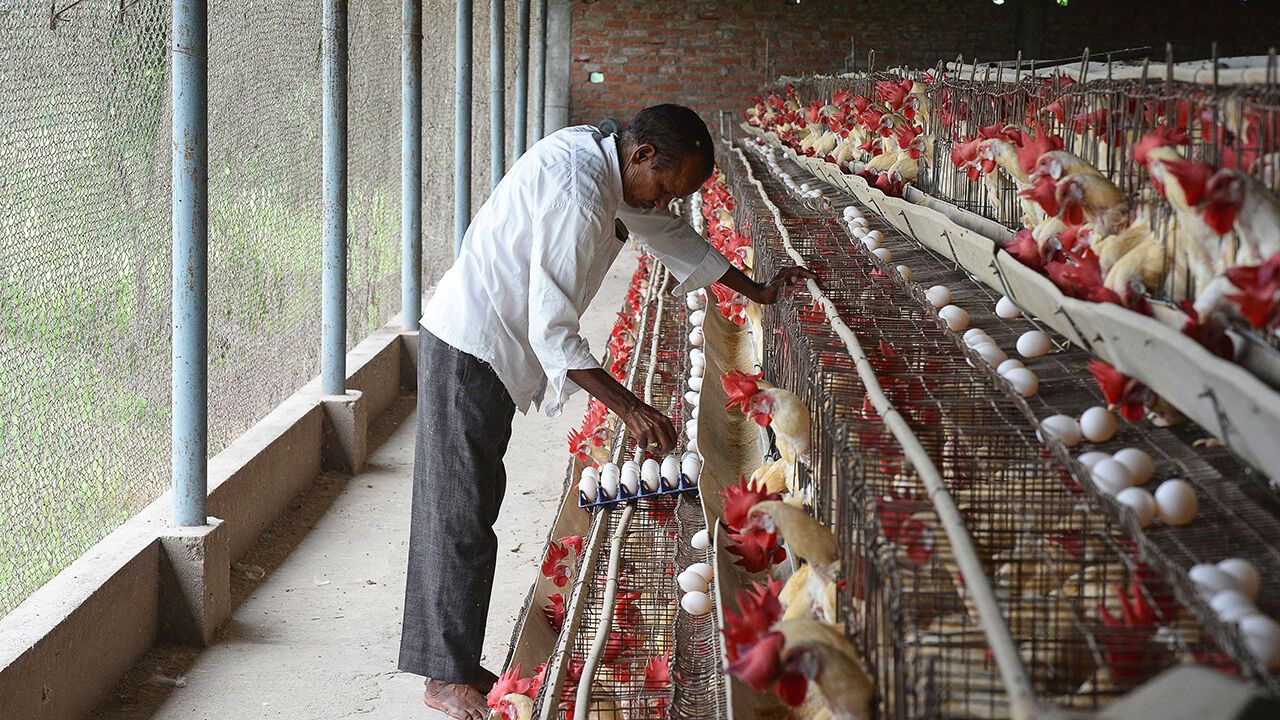
PEOPLE WHO farm eggs in Asia are on a roll(连续成功;一帆风顺). Across the continent egg production has quadrupled(翻了两番;变成四倍) in three decades. The region now accounts for(占(比例);解释) almost two-thirds of global output. Much of the growth is coming in developing countries, where demand for cheap protein is soaring(飙升;猛增). Between now and 2034 egg consumption is forecast to rise by around 30% in India and 20% in Indonesia.
在亚洲从事鸡蛋生产的人正一帆风顺。整个大陆的鸡蛋产量在三十年间翻了两番。该地区目前占全球产量的近三分之二。大部分增长来自发展中国家,那里对廉价蛋白质的需求正在飙升。从现在到2034年,印度的鸡蛋消费量预计将增长约30%,印度尼西亚增长20%。
Yet what has been good for humans has been much worse news for birds.(然而对人类有利的事情对鸟类来说却是更糟糕的消息。) For years the region’s eggs came from hens(母鸡) raised in backyards or on small farms; today they are much more likely to flow from big industrial operations. At one such complex outside Surabaya in Indonesia—surrounded by paddy fields and forest—some 60,000 hens lay many millions of eggs a year. They are cooped up(被关在狭小空间;禁闭) in rows of battery cages(电池笼) that stretch almost as far as the eye can see(一望无际;极目所及). Each bird occupies(占据(空间)) a space smaller than a laptop, where she will spend most of her short life.
然而对人类有利的事情对鸟类来说却是更糟糕的消息。多年来,该地区的鸡蛋来自后院或小农场饲养的母鸡;如今,它们更可能来自大型工业养殖场。在印度尼西亚泗水郊外的一个养殖区——周围是稻田和森林——约6万只母鸡一年产下数百万个鸡蛋。它们被关在一排排几乎望不到头的电池笼里。每只鸟占据的空间比一台笔记本电脑还小,它们将在那里度过短暂生命的大部分时间。
Several countries in Europe have banned battery cages, as have a number of states in America(美国的一些州也是如此). In Asia, by contrast, around 89% of the region’s commercial laying hens(商业蛋鸡) are raised in cages, compared with 55% in America and 16% in Britain. Factories that go cage-free(散养的;非笼养) need a lot more space, which can increase costs by 20-40%. Few consumers in India or Indonesia are willing to shell out(支付(通常指不情愿地)) that kind of a premium. Nor have governments much appetite to intervene. Many officials see factory farms as a much-needed boost to agricultural productivity, and eggs as essential food for growing populations.
欧洲有几个国家已经禁止了电池笼,美国的一些州也是如此。相比之下,在亚洲,该地区约89%的商业蛋鸡是在笼中饲养的,而美国和英国分别只有55%和16%。实行散养的养殖场需要更大空间,这可能会使成本增加20-40%。印度或印度尼西亚很少有消费者愿意支付这种溢价。政府也没有多少干预意愿。许多官员将工厂化养殖视为对农业生产力的急需提振,并将鸡蛋视为不断增长人口的必需食品。