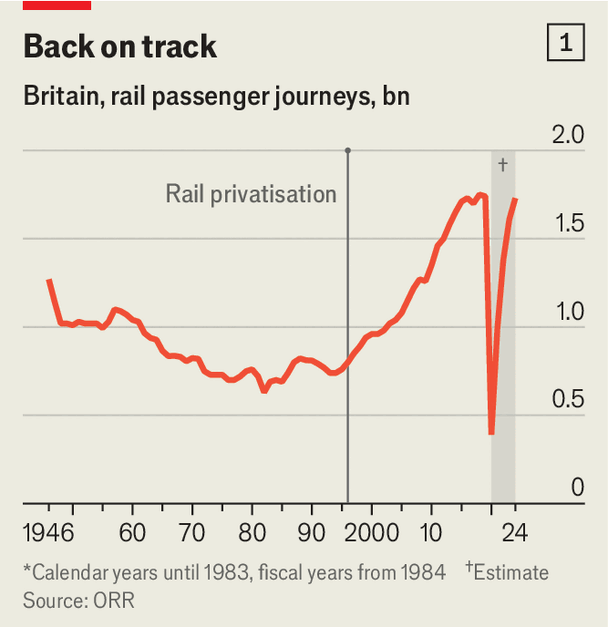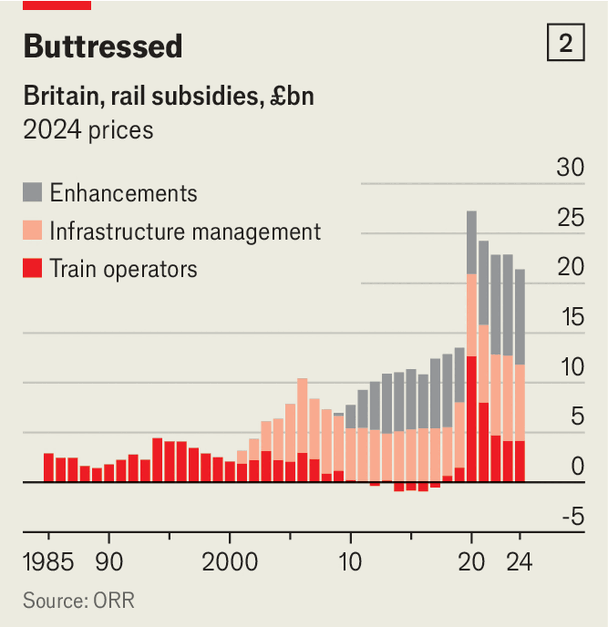
British commuters moaning(抱怨,发牢骚) about the trains should remember that life could be worse. They could be Germans. Some 91% of British trains arrived within five minutes of schedule in 2024; only 82% of German ones did. The Swiss (punctuality(准时,守时) rate: 93%) are so fed up(厌倦,受够了) that they are terminating any German trains that arrive 20 minutes late at the border.
抱怨火车的英国通勤者应该记住,生活可能更糟。他们可能是德国人。2024年,约91%的英国列车准点(误差5分钟内),而德国只有82%。瑞士人(准点率93%)已经受够了,他们正在让任何晚点20分钟入境的德国列车终止运行。
The struggles of Germany’s state-run operator suggest that public ownership is no panacea(万灵药,万能解决方案). That is a lesson Britain’s Labour Party should heed(注意,听从) as it renationalises(重新国有化) the railways. The British government now controls 53% of trips, up from 16% in 2023-24, with more to follow. Heidi Alexander, the transport secretary, has promised that Great British Railways (GBR), the new state operator, will run more services, have simpler fares and provide cleaner lavatories. Labour’s left sees it as step one(第一步,开端) in a sweeping renationalisation of the economy.
德国国营运营商的困境表明,公有制并非万灵药。这是英国工党在铁路重新国有化时应吸取的教训。英国政府目前控制着53%的铁路行程,高于2023-24年的16%,且还会增加。交通大臣海蒂·亚历山大承诺,新国营运营商“大英铁路”(GBR)将增加班次、简化票价并提供更干净的厕所。工党左翼将其视为全面经济重新国有化的第一步。
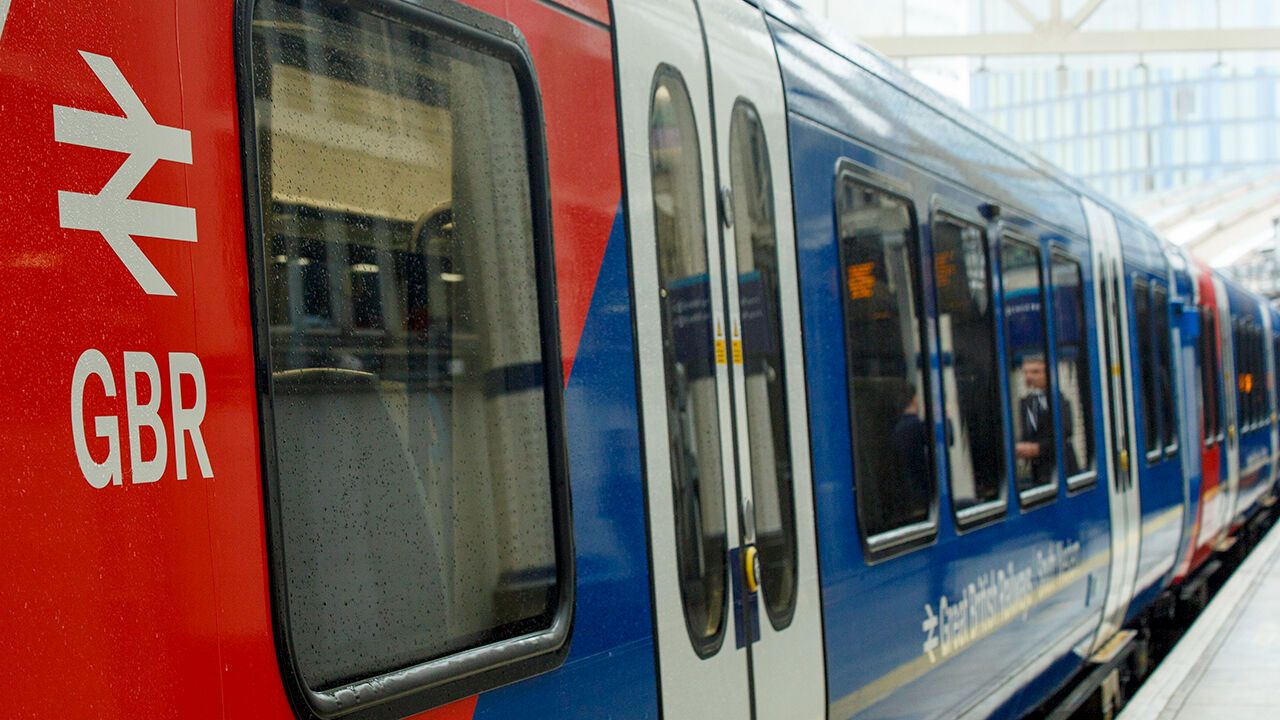
The changes so far have mostly entailed daubing(涂抹(油漆)) the new GBR trains in garish(俗艳的,花哨的) Union Jack(① 组成:由英格兰、苏格兰、爱尔兰的旗帜...) colours. Although some services have improved, others, such as the South Western routes (nationalised since May 2025), have seen cancellations increase.
迄今为止的变化主要是在新的GBR列车上涂上俗气的米字旗颜色。尽管一些服务有所改善,但其他服务,如西南线路(自2025年5月国有化),取消次数却增加了。