Two years ago Apple announced its first foray(初次涉足,尝试) into artificial intelligence. Built largely on in-house models, “Apple Intelligence” promised to turn the iPhone-maker’s boneheaded(愚蠢的,笨拙的) Siri assistant into a perspicacious(有洞察力的,睿智的) PA as clever as the whizziest(最先进的,最棒的) chatbots—withthe added advantage of access to a user’s personal data, alongside various other superpowers. The effort was an embarrassing flop(失败,惨败), with Apple having delivered little of what it set out to offer.
两年前,苹果宣布首次涉足人工智能领域。主要基于内部模型构建的“苹果智能”承诺将这家iPhone制造商笨嘴拙舌的Siri助手变成一位像最聪明的聊天机器人一样睿智的私人助理——并且还能访问用户的个人数据,具备各种其他超能力。这一努力以尴尬的失败告终,苹果几乎没有兑现其承诺。
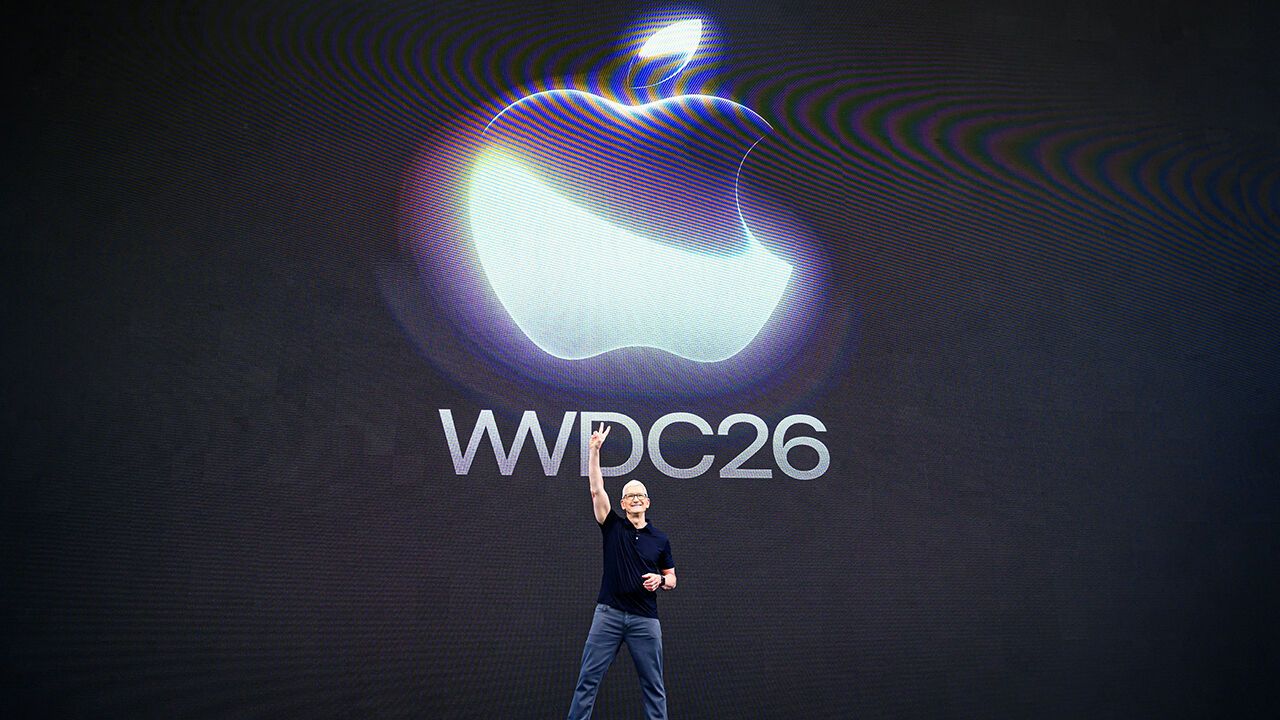
Now it is taking a second bite(再次尝试). On June 8th, at its annual software jamboree(盛会,欢乐的聚会), the company’s outgoing boss, Tim Cook(①背景资料:蒂姆·库克(Tim Cook...), again unveiled(揭幕,发布) a “new Siri”, which users can operate using their voice, a pull-down search bar or a chatbot-style app. Rather than building its own models, the company is using ones made by Google, which competes at the frontier of AI. Apple is betting that its devices, and the personal data stored on them, will become the portals(门户,入口) through which users get access to the technology. Will its strategy pay off?(其策略能否奏效?)
现在它正在第二次尝试。6月8日,在年度软件盛会上,即将离任的老板蒂姆·库克再次发布了“新版Siri”,用户可以通过语音、下拉搜索栏或聊天机器人风格的应用来操作。公司没有自建模型,而是使用谷歌开发的模型,后者处于AI前沿。苹果押注其设备及其上存储的个人数据将成为用户获取该技术的门户。其策略能否奏效?
Apple’s earlier AI flubs(失误,错误) have not caused it obvious harm. Its stock price is up by more than half over the past two years—less than for Google’s parent company, Alphabet, but more than for Amazon, Microsoft or Meta, all of which have torched stacks of cash(烧掉大把现金) in an effort to get ahead in the AI race. Apple, by contrast, has been able to sit back(袖手旁观,放松) and take a cut(抽取分成) of up to 30% of the revenues generated by chatbot apps installed on its devices.
苹果之前的AI失误并未对其造成明显损害。其股价在过去两年上涨了一半以上——虽不及谷歌母公司Alphabet,但高于亚马逊、微软或Meta,这些公司都为在AI竞赛中领先而烧掉了大把现金。相比之下,苹果能够袖手旁观,并从其设备上安装的聊天机器人应用产生的收入中抽取高达30%的分成。