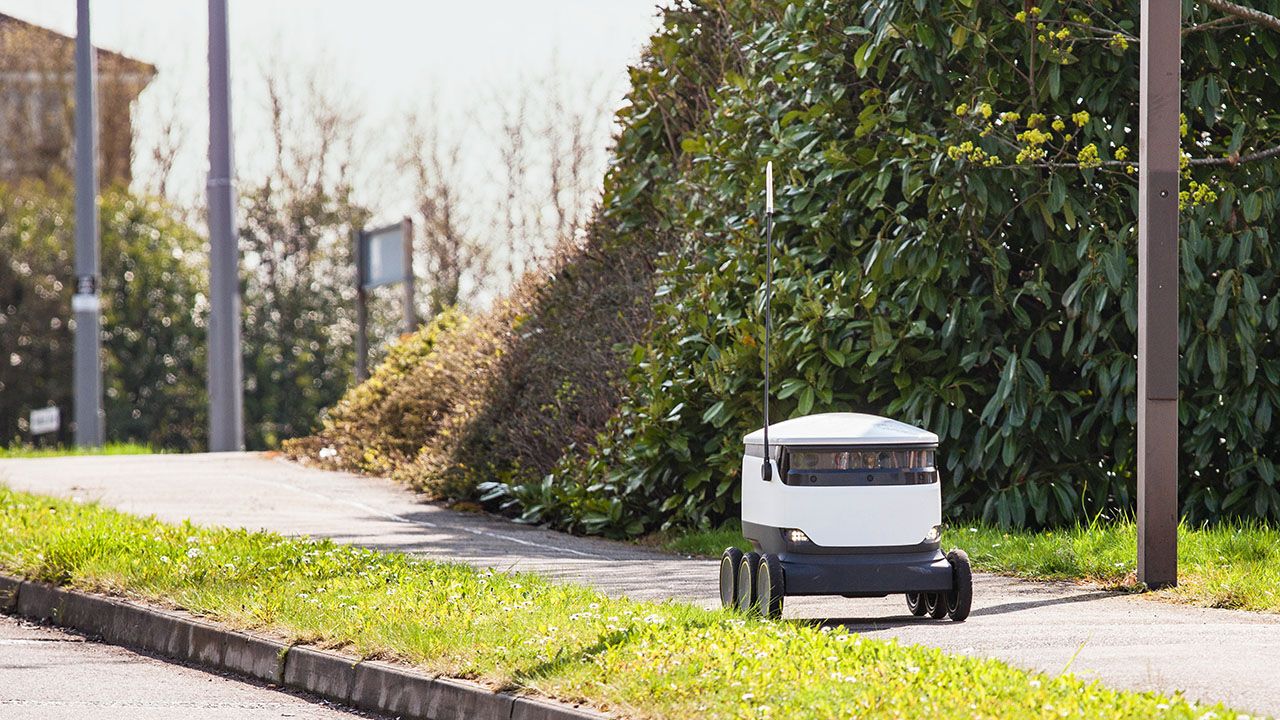
If you live in San Francisco, you will often get a glimpse(一瞥,瞥见) of the future—commuting(通勤) in a self-driving taxi, say. In Milton Keynes? Not so much(并非如此,不太). But the English city, best known for its many roundabouts(环形交叉路口), is the place to go if you want to foresee a world without delivery drivers. It is one of the largest markets for Starship Technologies, an Estonian startup which claims to have cracked the problem(解决了难题) of getting robots to deliver groceries more cheaply than people can.
如果你住在旧金山,你常常能瞥见未来——比如乘坐自动驾驶出租车通勤。在米尔顿凯恩斯?就不太一样了。但这座以众多环形交叉路口闻名的英国城市,如果你想预见一个没有送货司机的世界,绝对值得一去。它是Starship Technologies的最大市场之一,这家爱沙尼亚初创公司声称已经解决了用机器人送货比人工更便宜的问题。
Designers of delivery robots face challenges familiar to anyone developing robotaxis. Starship has had to build a sensor array(传感器阵列) that its six-wheeled couriers, each the size of a beer cooler, can use to navigate along pavements come rain or shine(风雨无阻). That hardware must feed into an artificial-intelligence model that can pick the best route and carry on even if the connection to a data centre is lost.(这些硬件必须输入一个人工智能模型,该模型能够选择最佳路线,即使与数据中心的连接中断也能继续运行。)
送货机器人的设计者面临着与任何开发自动驾驶出租车的人所熟悉的类似挑战。Starship必须构建一个传感器阵列,让其六轮快递员(每个都像个啤酒冷却器大小)能够在风雨无阻地在人行道上导航。这些硬件必须输入一个人工智能模型,该模型能够选择最佳路线,即使与数据中心的连接中断也能继续运行。
In some ways, though, delivery robots have it easy(处境轻松,容易). With a 35kg robot travelling at 6kph (4mph) tops(最高,至多), safety is less of a worry(不那么令人担忧) than it is with a two-tonne car going at 110kph on a motorway. And a slightly bumpy(颠簸的) ride won’t hurt a pizza.
然而,在某些方面,送货机器人要轻松得多。一个35公斤的机器人最高时速6公里(4英里),安全性远不及一辆重两吨、在高速公路上以110公里时速行驶的汽车那么令人担忧。而且,稍微颠簸的行驶也不会弄坏披萨。