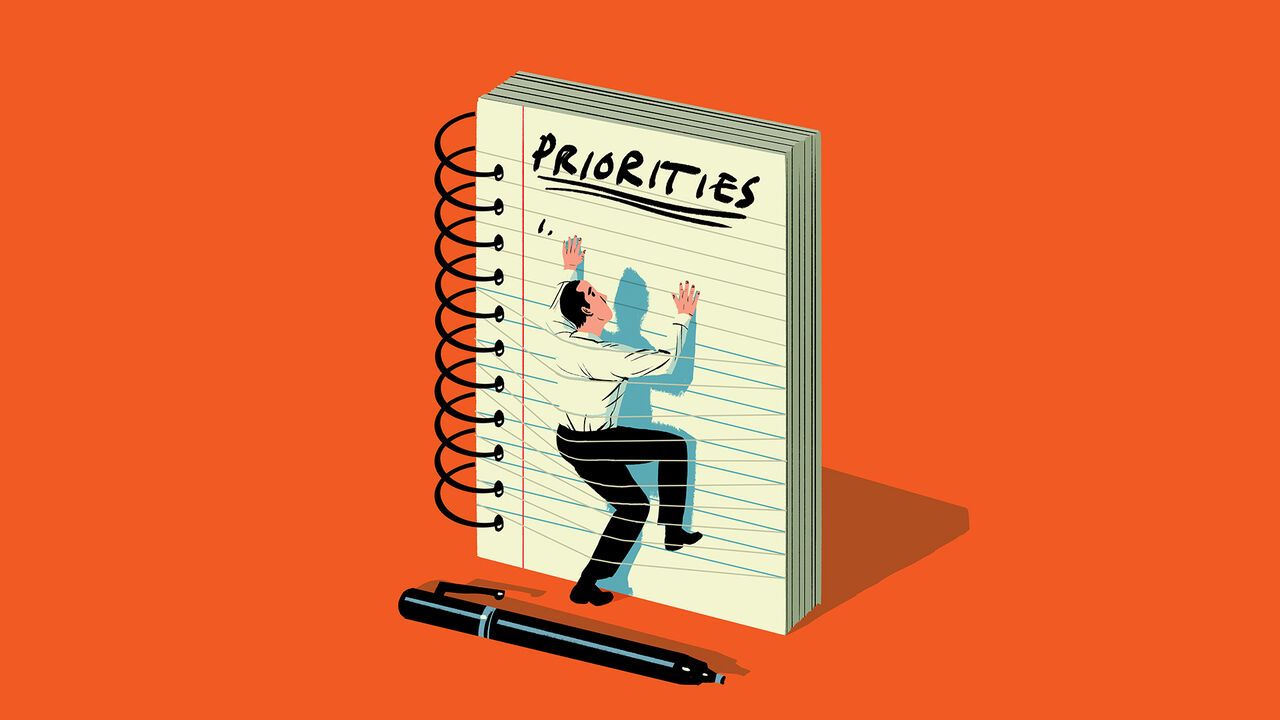
Work is a series of(一系列) decisions about what to prioritise(确定优先顺序). Occasionally, events set the agenda(设定议程): when the covid-19 pandemic shut down the world in 2020, for example, it was pretty obvious which problems firms had to focus on. But normally managers must weigh up(权衡,评估) for themselves how to allocate capital, decide which initiatives to concentrate on and work out which numbers matter most. Product teams have to choose which features to work on first. Sales teams must decide which customers to focus on. And day by day, hour by hour, individuals have to work out how to spend their next chunk of time(一段时间).
工作就是一系列关于优先级的决策。偶尔,事件会设定议程:例如,2020年新冠疫情使全球停摆时,企业必须关注哪些问题相当明显。但通常情况下,管理者必须自己权衡如何分配资本,决定重点推进哪些计划,并确定哪些数字最重要。产品团队必须选择优先开发哪些功能。销售团队必须决定重点跟进哪些客户。而日复一日、时复一时,个人必须规划如何度过下一段时间。
It’s a shame(真遗憾), then, that people are often very bad at setting priorities. Individuals seem to be so motivated by achieving goals of any kind that they find it hard to abandon(放弃) them. In one lab experiment, Timothy Ballard of the University of Queensland and his co-authors asked participants to pursue two competing(相互竞争的) goals, and varied the monetary(货币的,金钱的) rewards on offer. Even in cases where the reward for achieving one goal was the same as achieving both (and pursuing both made it more likely that neither would be attained), participants tried to get both done.(即使在达成一个目标的奖励与达成两个目标相同时(并且追求两个目标使得两者更可能都无法实现),参与者仍试图完成两个目标。)
那么,人们常常不擅长设定优先级,这真是遗憾。个体似乎被实现任何目标的动机所驱动,以致于难以放弃它们。在一项实验室实验中,昆士兰大学的蒂莫西·巴拉德及其合著者要求参与者追求两个相互竞争的目标,并提供了不同的金钱奖励。即使在达成一个目标的奖励与达成两个目标相同时(并且追求两个目标使得两者更可能都无法实现),参与者仍试图完成两个目标。
When people have to make a choice about what to do next, they often pick the thing that seems achievable(可实现的), even if that is not in their interests. A paper by Moty Amar of the Ono Academic College and his co-authors found that indebted(负债的) consumers prioritised paying off small debts ahead of(在…之前,优先于) larger debts with higher interest rates. A tangible(有形的,切实的) sense of progress was more important to them than the rational(理性的) choice.
当人们必须选择接下来做什么时,他们常常挑选看似可实现的事情,即使这不符合他们的利益。奥诺学术学院的莫蒂·阿马尔及其合著者的一篇论文发现,负债的消费者优先偿还小额债务,而不是利率更高的大额债务。对他们来说,切实的进步感比理性选择更重要。