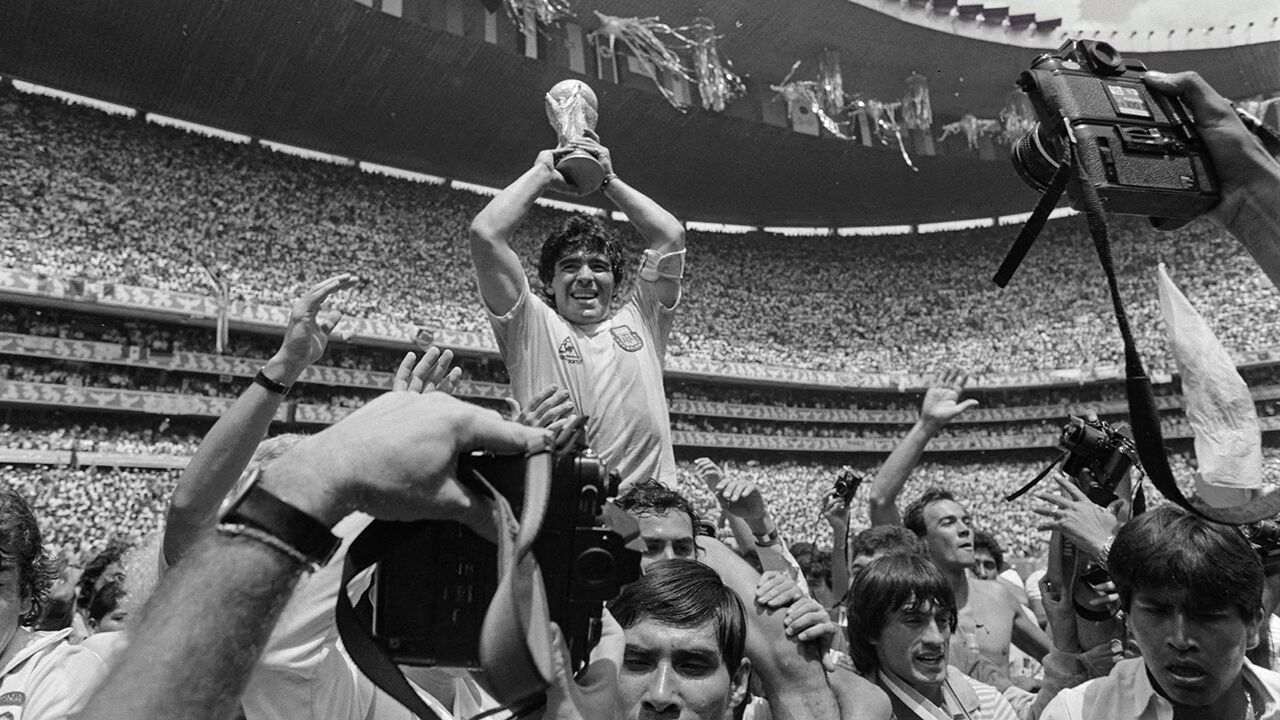
It was too much for Ángel di María. After scoring in the World Cup final in 2022, the Argentine forward burst into tears. It was too much for Gonzalo Montiel. Having hit the winning penalty in the shoot-out—so becoming immortal(不朽的、永生的)—he pulled off his national shirt and buried his face in it. And it was almost too much for Argentina itself: when around 4m people thronged(蜂拥、挤满) Buenos Aires for the victory parade, the team had to abandon their bus and wave from a helicopter.
这对安赫尔·迪马利亚来说太过分了。在2022年世界杯决赛中进球后,这位阿根廷前锋泪流满面。对贡萨洛·蒙蒂尔来说也太过了。他在点球大战中命中制胜点球——由此成为不朽——他脱下国家队球衣,把脸埋在里面。而这对阿根廷本身也几乎太过分了:当大约400万人涌向布宜诺斯艾利斯参加胜利游行时,球队不得不放弃大巴,从直升机上挥手致意。
For players and fans, even whole countries, winning the World Cup is a secular rapture(世俗的狂喜). One team and nation will experience that euphoria at the climax of this year’s competition, which begins on June 11th. A lot of ink and airtime will be expended on predicting who the champions will be. But a better question than who will win the World Cup is: who should win? Answer that, and you know whom to back when your home team is knocked out. To do so, you first have to grasp the tournament’s true purpose.
对于球员和球迷,甚至整个国家来说,赢得世界杯是一种世俗的狂喜。在6月11日开始的今年比赛高潮时,将有一支球队和一个国家体验这种狂喜。大量的笔墨和广播时间将用于预测冠军是谁。但比谁会赢得世界杯更好的问题是:谁应该赢?回答这个问题,你就知道当你的主队被淘汰时该支持谁。要做到这一点,你必须首先把握锦标赛的真正目的。
The World Cup is a branch of international relations. It is an expression of power by the hosts—this year America, Canada and Mexico—and a form of soft diplomacy(软外交). The draw can throw up grudge matches(宿怨对决) that are benign alternatives(良性的替代品) to war (such as, in 2022, Iran v America) and pair nations which ordinarily have little to do with one another (this time, for example, Cape Verde v Saudi Arabia). It helps supporters everywhere see what they have in common, starting with a shared devotion to watching 22 men chase a ball.
世界杯是国际关系的一个分支。它是东道国——今年是美国、加拿大和墨西哥——表达权力的一种形式,也是一种软外交。抽签可以产生宿怨对决,这些比赛是战争的良性替代品(例如2022年伊朗对美国的比赛),并将通常没什么关系的国家配对(例如这次佛得角对沙特阿拉伯)。它帮助各地的支持者看到他们的共同点,从共同热衷于观看22个男人追一个球开始。