Thucydides(古希腊历史学家,以《伯罗奔尼撒战争史》闻名) thought rising powers tend to cause conflict. Had he been an economist looking at the explosion of Chinese exports to Europe, he might have expected a trade war. So do many analysts these days. The question is no longer whether Europe will pull up some drawbridges(拉起吊桥(喻指保护主义措施)), but how many and how fast, and how it will deal with the consequences.
修昔底德认为,崛起的大国往往会引起冲突。如果他是一位经济学家,看到中国对欧洲出口的激增,他或许会预料到一场贸易战。如今许多分析师也持同样看法。问题已不再是欧洲是否会拉起一些吊桥,而是会拉起多少、多快,以及它将如何应对后果。
The stakes(利害关系,风险) are clear. Bankruptcies in the European Union have risen to levels last seen in 2015. Germany lost 143,000 jobs in industry in 2025. In most of Europe growth is sluggish(缓慢的,停滞的) and industrial production declining. In France and Germany hard-right(极右翼的) parties lead the polls. At a summit on June 18th EU leaders will discuss how to cope with the Chinese challenge, in an increasingly dire(极其严重的,可怕的) global economy.
利害攸关之处显而易见。欧盟的破产数量已升至2015年以来的最高水平。德国在2025年失去了14.3万个工业就业岗位。在欧洲大部分地区,经济增长缓慢,工业生产下滑。在法国和德国,极右翼政党在民调中领先。在6月18日的峰会上,欧盟领导人将讨论如何在一个日益严峻的全球经济中应对中国的挑战。
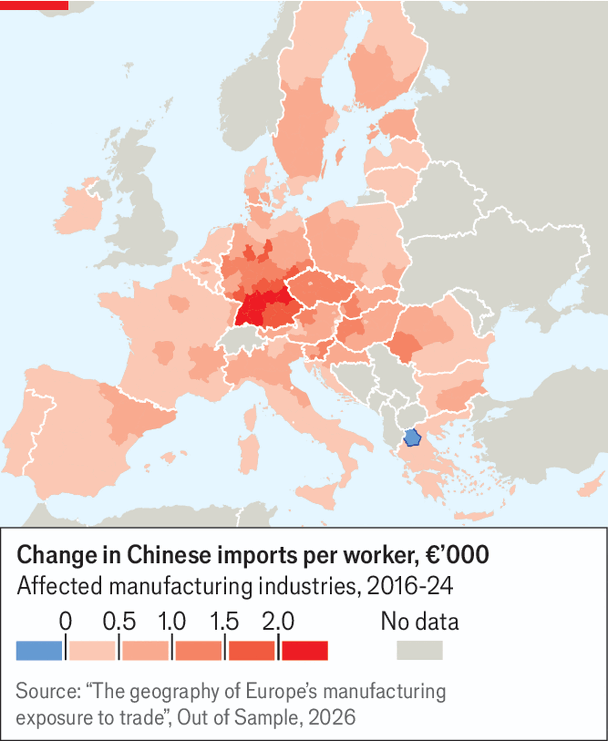
Is China really behind Europe’s economic problems? The EU’s trade deficit(贸易逆差) in goods with China was about €1bn ($1.16bn) a day in 2025, roughly double the figure before the pandemic. Germany especially has seen a constant rise in imports from China and a steep decline in exports going there. Some see foul play(违规行为,舞弊). The OECD(经济合作与发展组织), a club of mostly rich countries, found Chinese firms got three to eight times more subsidies between 2005 and 2024 than competitors in OECD countries. Some would fail without them: 32% of industrial firms in China lose money.
中国真的是欧洲经济问题的幕后推手吗?2025年,欧盟对华商品贸易逆差约为每天10亿欧元(11.6亿美元),几乎是疫情前的两倍。尤其是德国,从中国的进口持续增长,对中国的出口却大幅下降。一些人认为存在违规行为。经合组织(主要由富裕国家组成的俱乐部)发现,在2005年至2024年间,中国企业获得的补贴是经合组织国家竞争对手的三到八倍。如果没有这些补贴,一些企业可能会倒闭:中国32%的工业企业亏损。