MORE THAN 100 days into the third Gulf war, oil markets have shielded themselves against(使自己免受…影响) bad news on the battlefield. On June 8th, after renewed strikes between Iran and Israel threatened a shaky two-month ceasefire(摇摇欲坠的两个月停火), the price of Brent crude(布伦特原油(国际基准)), the international benchmark, rose by just 1%. Even after subsequent exchanges between America and Iran, early on June 11th it was around $93 per barrel, more than $30 below its intraday high in April.
第三次海湾战争已持续超过100天,石油市场已经对战场上的坏消息产生了免疫力。6月8日,伊朗和以色列再次交火,威胁到摇摇欲坠的两个月停火协议,国际基准布伦特原油价格仅上涨1%。即使在美伊后续交锋之后,6月11日早盘油价仍维持在每桶93美元左右,比4月份盘中高点低30多美元。
Oil markets are placid(平静的,稳定的) because they have found ways around the 15m barrels per day (b/d) of missing supply created by the closure of the Strait of Hormuz. China has slashed(大幅削减) its imports by roughly 5m b/d from pre-war levels; rationing has caused overall demand elsewhere to fall by a similar amount. Brazil, Venezuela and others are pumping a bit more than before. The remainder is being filled by tapping(动用,利用(资源)) the world’s stocks—above all from rich countries’ strategic petroleum reserves (SPRs).
石油市场之所以平静,是因为它们找到了应对霍尔木兹海峡关闭导致的每日1500万桶供应缺失的方法。中国已将进口量较战前水平削减约500万桶/日;配给制度导致其他地区的总需求也下降了类似幅度。巴西、委内瑞拉等国产量略有增加。其余缺口通过动用全球库存来填补——尤其是富国的战略石油储备。
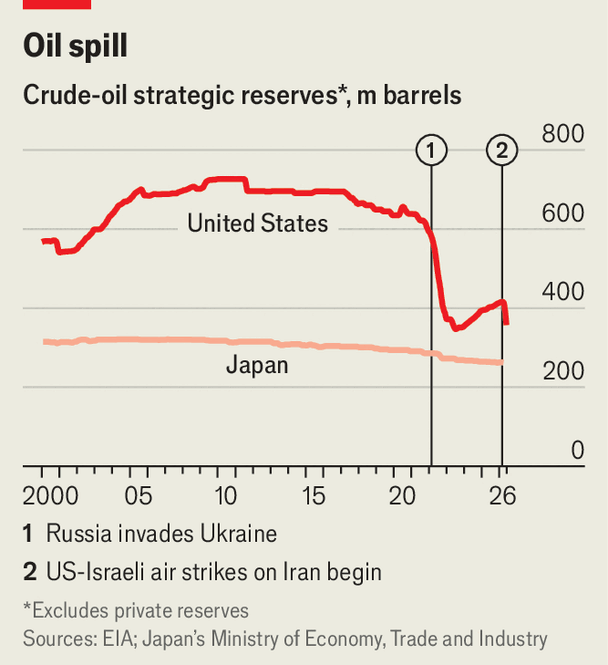
In March the 32 members of the International Energy Agency, a club of large oil-consuming countries, pledged to release 400m barrels from government stockpiles—the biggest co-ordinated drawdown in the IEA’s history. Just under half of those barrels have now been delivered, at the record pace of 2.5m-3m b/d. But releases may slow sharply in the coming weeks. Whether they do will help determine if oil markets keep their cool(保持冷静,稳定) this summer.
3月份,由大型石油消费国组成的俱乐部——国际能源署(IEA)的32个成员国承诺从政府库存中释放4亿桶石油——这是IEA历史上最大的协调动用。目前已有略低于一半的石油以创纪录的每天250万至300万桶的速度交付。但未来几周释放速度可能大幅放缓。这能否实现将有助于决定石油市场今年夏天能否保持冷静。