FOR MOST of Kevin Warsh’s career, becoming chair of the Federal Reserve with the American economy hot and in need of higher interest rates would have been the stuff of professional nirvana. Few central bankers had staked out so hawkish a reputation.(很少有央行行长树立过如此鹰派的声誉。) So it is ironic that this scenario has come to pass, yet it seems likely to make Mr Warsh’s life miserable as he starts at the Fed.
在凯文·沃什职业生涯的大部分时间里,在美國经济火热且需要更高利率的背景下成为美联储主席,本应是职业巅峰。很少有央行行长树立过如此鹰派的声誉。因此具有讽刺意味的是,这种情况虽然成真,却似乎可能让沃什先生在美联储上任伊始就过上痛苦的生活。
For that, he can thank the circumstances of his appointment. President Donald Trump wants lower interest rates, and appointed Mr Warsh in January because he, too, favoured them. Back then, the economic case for looser money was respectable: the post-pandemic inflation surge had been all but killed(几乎被消灭), and the jobs market looked like it was wobbling(摇晃,不稳定). Mr Warsh’s out-of-character doveishness(鸽派倾向,温和立场) provoked wry smiles but not scorn from other central bankers, most of whom were glad that Mr Trump had picked someone sane for the job.
对此,他得感谢自己任命时的环境。唐纳德·特朗普总统希望降低利率,并在1月份任命了沃什先生,因为他也支持降息。那时,宽松货币的经济理由还说得过去:疫情后的通胀飙升几乎已被扼杀,就业市场看似摇摇欲坠。沃什先生一反常态的鸽派倾向引起了其他央行行长苦笑而非嘲笑,他们大多对特朗普挑了个正常人担任此职感到高兴。
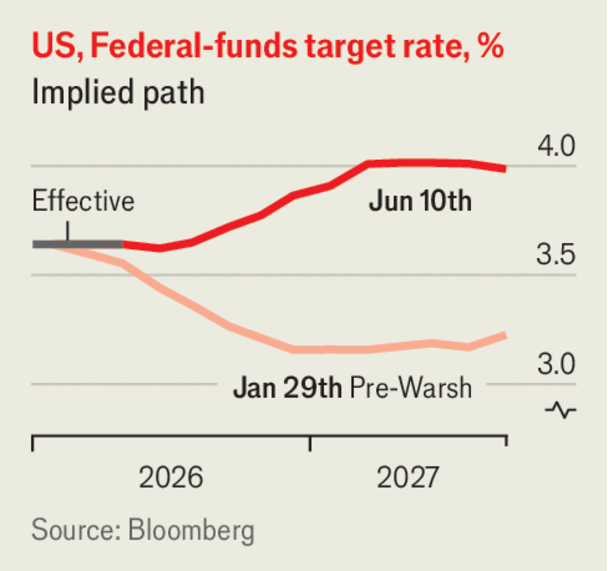
Alas, the happy coincidence is over. The case for lower interest rates has crumbled(崩溃,瓦解). Mr Trump still wants rate cuts but, if anything(恰恰相反,甚至可以说), today’s economic conditions demand tighter money.
唉,这种愉快的巧合结束了。降息的理由已经崩溃。特朗普仍然希望降息,但恰恰相反,今天的经济状况要求更紧的货币。
Are you Jay Powell in disguise?
你是杰伊·鲍威尔假扮的吗?