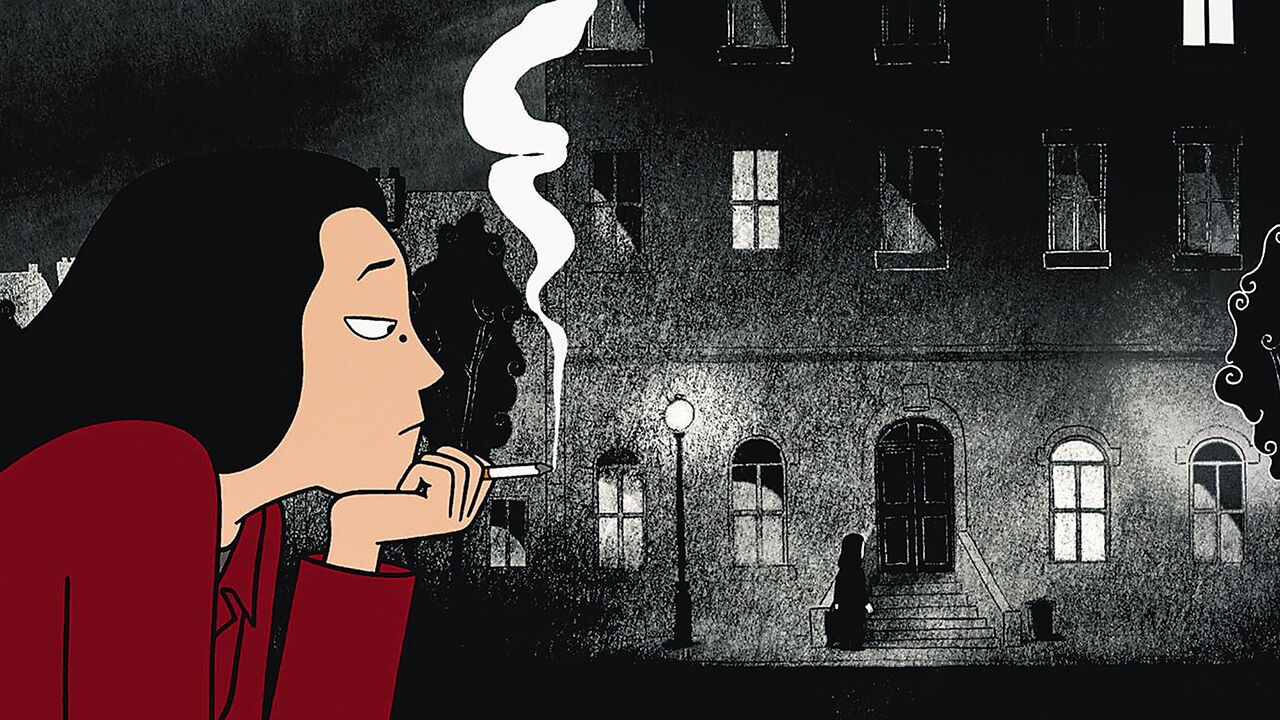
When it happened, she was ten. Her face stared out(凝视,突出显眼) separately from a line of grim little girls, all wearing black veils. She didn’t see why she had to; no one had explained. In the playground the veils came off (too hot anyway) to make strangler scarves and skipping ropes. On that first page of “Persepolis”, Marjane Satrapi’s graphic novel of 2000, it was already clear that Marji, her child-self, would not be told what to wear or how to behave. She knew who she was: the last Prophet, born to bring celestial light. She had already written her own book of Rules (Rule 6: Everybody should have a car). Iran’s Islamic Revolution in 1979 forced her to look demure(端庄的,含蓄的), and she was outraged.
事情发生时,她十岁。她的脸从一排严肃的小女孩中单独凝视出来,她们都戴着黑色面纱。她不明白为什么必须戴;没人解释过。在操场上,面纱被摘下来(反正太热了)当作勒人的围巾和跳绳。在2000年玛嘉·莎塔碧的图像小说《波斯波利斯》的第一页,就已经很清楚:玛吉,她的童年自我,不会被告知该穿什么或该如何举止。她知道她是谁:最后的先知,生来要带来天光。她已经写了自己的规则书(规则六:每个人都该有辆车)。1979年伊朗伊斯兰革命迫使她装出端庄的模样,她愤怒了。
It was so hard to fit in. Her bright, bourgeois(资产阶级的,中产阶级的) parents were Marxists; her head was filled early with dialectic materialism(辩证唯物主义), which she read about in bed. Teachers and preachers held no terror for her, nor any heavy-bearded official who would not look a woman in the eye. Speaking her mind got her expelled from school and into trouble with the regime’s morality police. But why shouldn’t she walk out in the tight jeans and denim jacket her parents had bought for her, or in lipstick, with a bit of hair showing? Why shouldn’t she politicise the maid by taking her along to protests? And what was wrong with going out at night to buy Iron Maiden(铁娘子(英国重金属乐队)) tapes from the men with suitcases on Gandhi Avenue?
融入太难了。她聪明、中产阶级的父母是马克思主义者;她头脑很早就充满了辩证唯物主义,她在床上阅读这些东西。老师和传教士对她毫无威慑力,任何不愿直视女性眼睛的浓密胡须官员也一样。直言不讳导致她被学校开除,并惹上政权道德警察的麻烦。但为什么她不能穿着父母给她买的紧身牛仔裤和牛仔夹克出门,或涂着口红,露出一点头发?为什么她不能带着女佣去抗议,让她政治化?晚上去甘地大道从带手提箱的男人那里买铁娘子乐队的磁带又有什么错?
In mullah-ruled Iran she lived two lives, but so did many people.(在毛拉统治的伊朗,她过着双重生活,但许多人也如此。) In public, men grew beards and removed their ties. Women went black-robed all over. Everyone recited the same politico-religious nonsense, especially during the war with Iraq, when the martyrs (their bodies dissolving into ghosts, with the golden keys to paradise swinging round their necks) were honoured with twice-daily breast-beatings. In private, certainly in the houses of her parents and their neighbours, there could be riotous drinking and dancing; her father once had to distract the police while she and her grandmother, in panic and quickly back in their chador(罩袍(伊朗女性传统外衣))s, emptied all the alcohol down the loo.
在毛拉统治的伊朗,她过着双重生活,但许多人也如此。在公共场合,男人留胡须、取下领带。女人全身穿黑衣。每个人都背诵同样的政治宗教废话,尤其是在与伊拉克战争期间,殉道者(身体化为幽灵,脖子上晃动着天堂的金钥匙)受到每天两次捶胸顿足的纪念。私下里,至少在她父母和邻居的房子里,可以有狂欢式的饮酒和跳舞;她父亲曾不得不引开警察,而她和祖母在恐慌中迅速重新穿上罩袍,把所有酒精倒进马桶。