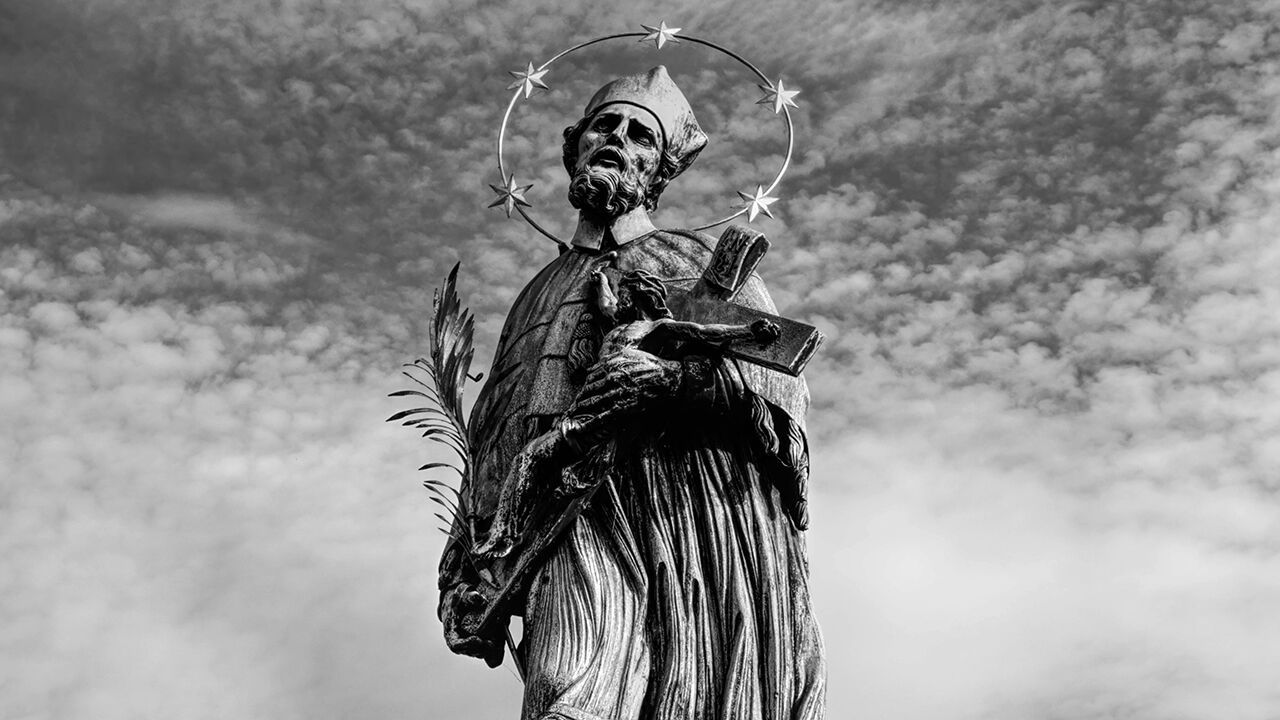
TRAVEL THROUGH central Europe and you will eventually come across(偶然遇到、发现) one of thousands of statues of a man on a bridge with his finger pointing to his tongue. According to lore, John of Nepomuk, a 14th-century clergyman, heard the queen of Bohemia’s confession, only for the jealous king to ask him to divulge(泄露、透露) his wife’s secrets. When he refused, the king had him drowned. Poor John was martyred(殉道、殉难) for one of Catholicism’s most sacred tenets(信条、教义): the absolute seal of confession.
在中欧旅行,你最终会看到成千上万座雕像中的一座,描绘着一个站在桥上、手指指向舌头的人。据传说,14世纪的神职人员内波穆克的约翰听取了波希米亚王后的忏悔,而嫉妒的国王要求他泄露妻子的秘密。当他拒绝时,国王将他淹死。可怜的约翰为了天主教最神圣的信条之一——忏悔的绝对保密——而殉道。
Six centuries later, tight-lipped(守口如瓶的) priests are once again being tested—this time by state legislatures. State laws govern which adults are required to report child abuse that they learn about on the job. In most places teachers, doctors, therapists and camp counsellors have to tell the police and can face fines or even jail time if they don’t. As part of a reckoning(清算、反思) with the church’s recent history, more states have added clergy to the list. But this spring twin bills(孪生法案) in Missouri and Vermont took it further. They aimed to scrap(废除、取消) an exemption that allows priests to withhold information disclosed during confession.
六个世纪后,守口如瓶的神父们再次受到考验——这次来自州立法机构。州法律规定哪些成年人必须举报在工作中得知的儿童虐待信息。在大多数地方,教师、医生、治疗师和营地辅导员必须告诉警方,否则可能面临罚款甚至监禁。作为对教会近期历史清算的一部分,更多州已将神职人员加入名单。但今年春天,密苏里州和佛蒙特州的两项孪生法案更进一步,旨在废除允许神父隐瞒忏悔中透露的信息的豁免权。
Policy on the matter is already a patchwork(拼凑之物,不一致). Clergy everywhere in America enjoy some form of “penitent privilege(忏悔者特权)”, which broadly shields conversations that take place in a spiritual context from the courts. But states differ on whether the protection applies when it comes to child abuse. At least six states—New Hampshire, North Carolina, Oklahoma, Rhode Island, Texas and West Virginia—don’t recognise it in these cases or override(推翻、使无效) it, as the new bills aim to. Others, such as California and South Carolina, preserve it narrowly(狭隘地、严格地) by exempting a priest who learns about a crime during confession but not while teaching a class, for example, or when a perpetrator confesses rather than a victim. That inconsistency of rules has ignited(点燃、引发) a battle between child-safety advocates and religious-liberty lawyers.
这方面的政策已经是拼凑而成。美国的全体神职人员都享有某种形式的“忏悔者特权”,该特权大体上保护在宗教语境中进行的对话不受法庭干预。但各州在涉及儿童虐待时是否适用该保护存在分歧。至少六个州——新罕布什尔、北卡罗来纳、俄克拉荷马、罗德岛、德克萨斯和西弗吉尼亚——在这些情况下不承认该特权或将其推翻,正如新法案力图做到的那样。其他州,如加利福尼亚和南卡罗来纳,则狭隘地保留该特权,例如,神父在忏悔中得知犯罪(而非在授课时)或由施害者(而非受害者)忏悔时,可以豁免。这种规则的不一致性引发了儿童安全倡导者与宗教自由律师之间的斗争。