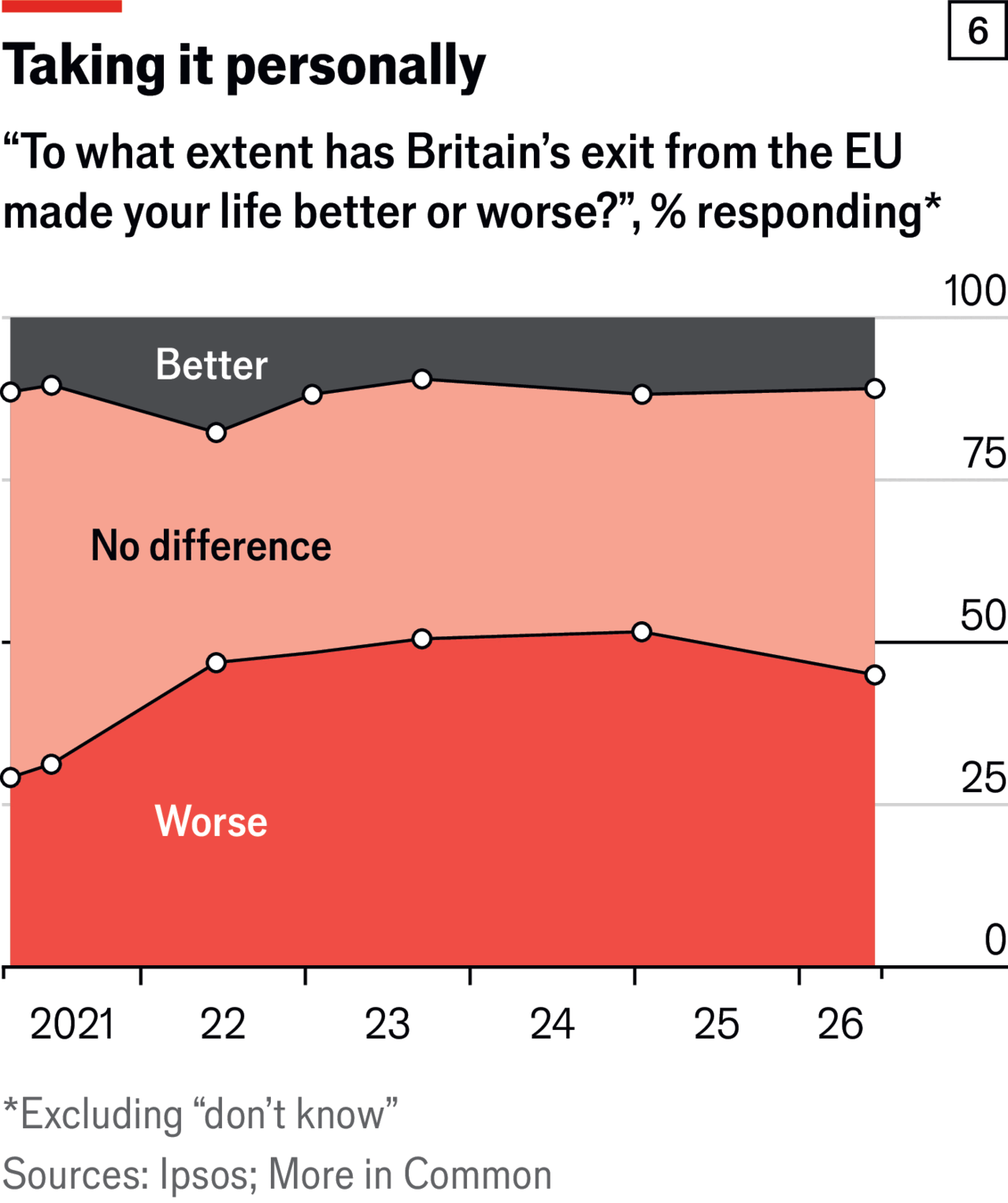
At 12.15am on June 24th 2016, Sunderland became the poster child(典型代表,典范) for Brexit. The port on England’s north-eastern coast was the first city to declare that it had voted to leave the European Union. Over 60% of Sunderland’s inhabitants wanted out(想要退出), despite veiled(隐晦的,含蓄的) warnings from Nissan that Brexit might cause it to close its car factory (a major local employer). As a working-class area whose shipbuilding glory days were long gone, the port came to embody left-behind Britain’s desire to give global elites a bloody nose.
2016年6月24日凌晨12点15分,桑德兰成了脱欧的典型代表。这个英格兰东北海岸的港口城市是第一个宣布投票脱离欧盟的城市。超过60%的桑德兰居民希望离开,尽管日产汽车隐晦地警告脱欧可能导致其关闭当地的汽车工厂(该地的主要雇主)。作为一个造船辉煌时代早已逝去的工人阶级地区,这个港口体现了被遗忘的英国想要让全球精英们鼻青脸肿的渴望。
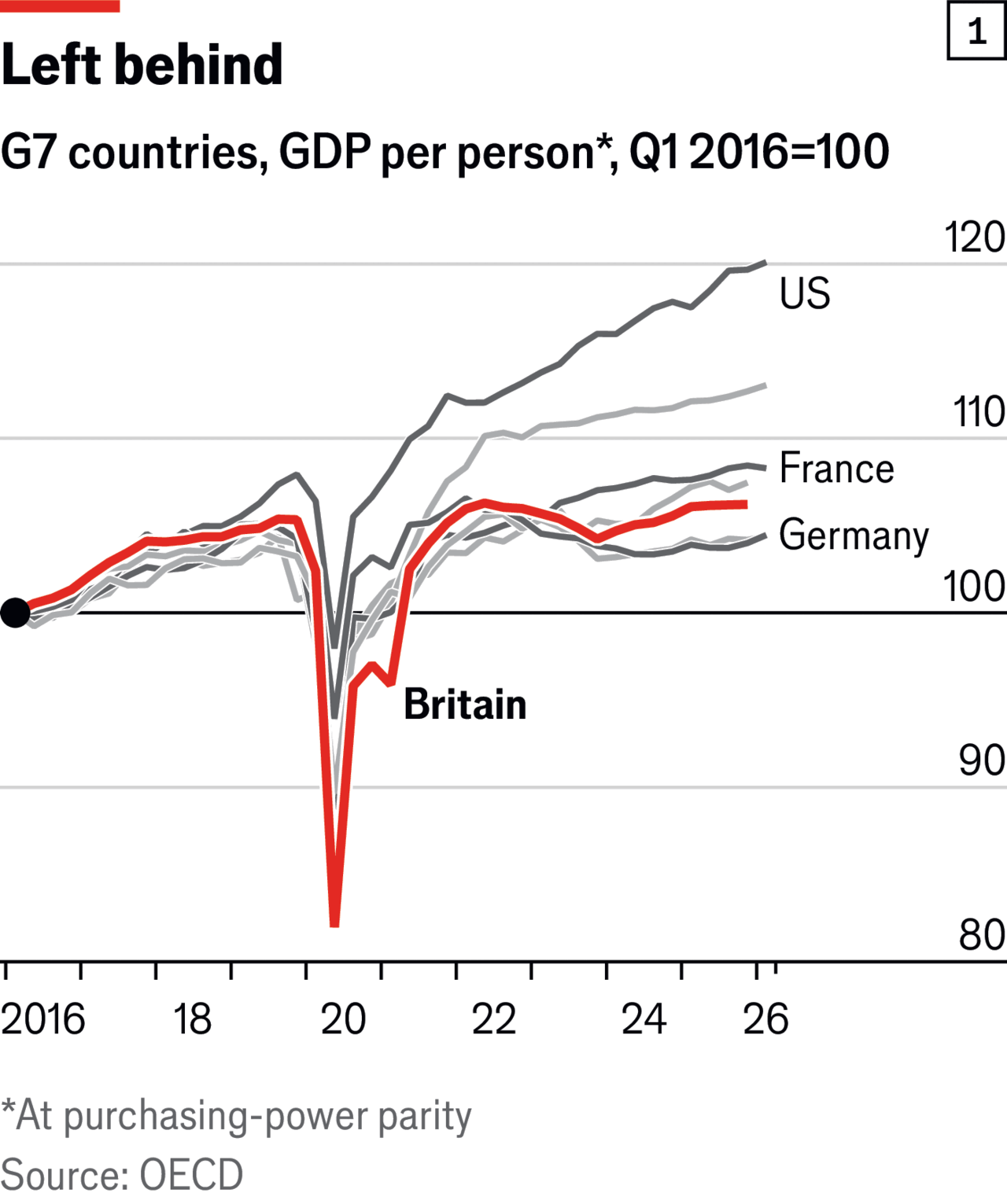
Economists try to quantify(量化,衡量) the damage from Brexit. Some say GDP per person is 8% lower than it could have been; others say 2.5%. Growth in most other G7 rich economies has been faster (see chart 1). In Sunderland Remain’s worst economic fears did not come to pass(发生,实现) (the Nissan factory limps on(勉强维持,蹒跚前行)) but leaving has quickened the decline of British manufacturing (the plant now produces 46% fewer cars). Sunderland has not become a deregulated Singapore-on-the-Wear(① 详细背景:Singapore-on-...).
经济学家试图量化脱欧造成的损失。一些人说人均GDP比原本可能达到的水平低了8%;另一些人则说是2.5%。大多数其他G7富裕经济体的增长更快(见图表1)。在桑德兰,留欧派最严重的经济担忧并未成为现实(日产工厂勉强维持),但脱离加速了英国制造业的衰落(该工厂现在生产的汽车减少了46%)。桑德兰并未成为一个放松管制的“威尔河上的新加坡”。
Brexit has brought myriad(无数的,大量的) day-to-day annoyances. Dominic Gardner, who runs a road-repair business in Sunderland, finds it harder to import parts. The paperwork is “phenomenally frustrating(极其令人沮丧的)”. His colleague Mike complains about long passport queues when on holiday. (Mike’s Polish neighbour is “laughing” because he “goes straight through security”.) From exporting cheese to taking your dog abroad, life in Brexit Britain is simply harder.
脱欧带来了无数日常烦恼。多米尼克·加德纳在桑德兰经营一家修路公司,他发现进口零件更难了。文书工作“令人极其沮丧”。他的同事迈克抱怨度假时护照排队时间很长。(迈克的波兰邻居在“笑”,因为他“直接通过了安检”。)从出口奶酪到带狗出国,脱欧后的英国生活就是更困难了。
Every little hurts
点滴积累也伤人