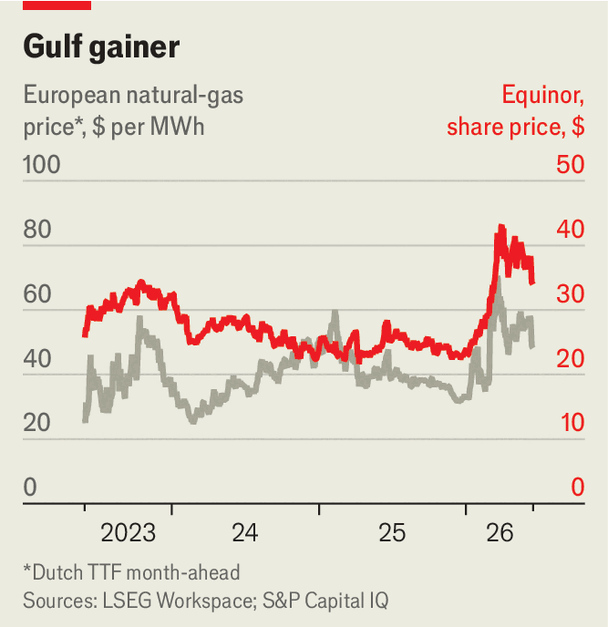
RECENT EVENTS have been kind to energy firms outside the Gulf—including Norway’s Equinor, the largest supplier of hydrocarbons to Europe. The closure of the Strait of Hormuz(① 地理位置与战略意义:霍尔木兹海峡最窄...), through which one-fifth of the world’s oil and liquefied natural gas (LNG)(液化天然气) usually flows, has pushed European gas prices up by 40% since February; Brent crude averaged $103 a barrel in the three months to May. Equinor’s share price is up by a quarter(上涨了四分之一) (see chart).
近期事件对海湾地区以外的能源公司有利——包括挪威的Equinor,它是欧洲最大的碳氢化合物供应商。霍尔木兹海峡的关闭(全球五分之一的石油和液化天然气通常经过此处)自2月以来已推动欧洲天然气价格上涨40%;截至5月的三个月内,布伦特原油均价达到每桶103美元。Equinor的股价上涨了四分之一(见图表)。
So you might have expected cheer at Equinor’s capital-markets day(资本市场日) on June 16th, the 25th anniversary of the company’s listing in Oslo and New York. Yet Scandinavian restraint(斯堪的纳维亚式的克制) prevailed—and not just because peace between Iran and America will calm prices. Equinor remains caught between a greying(老化的、变灰的) fossil-fuel business and a green portfolio with clipped ambitions(被削减的雄心).
因此,你可能会预期Equinor在6月16日的资本市场日(该公司在奥斯陆和纽约上市25周年纪念日)上会迎来欢呼。然而,斯堪的纳维亚式的克制占了上风——不仅因为伊朗与美国之间的和平将稳定价格。Equinor仍被困于日益老化的化石燃料业务和雄心受挫的绿色投资组合之间。
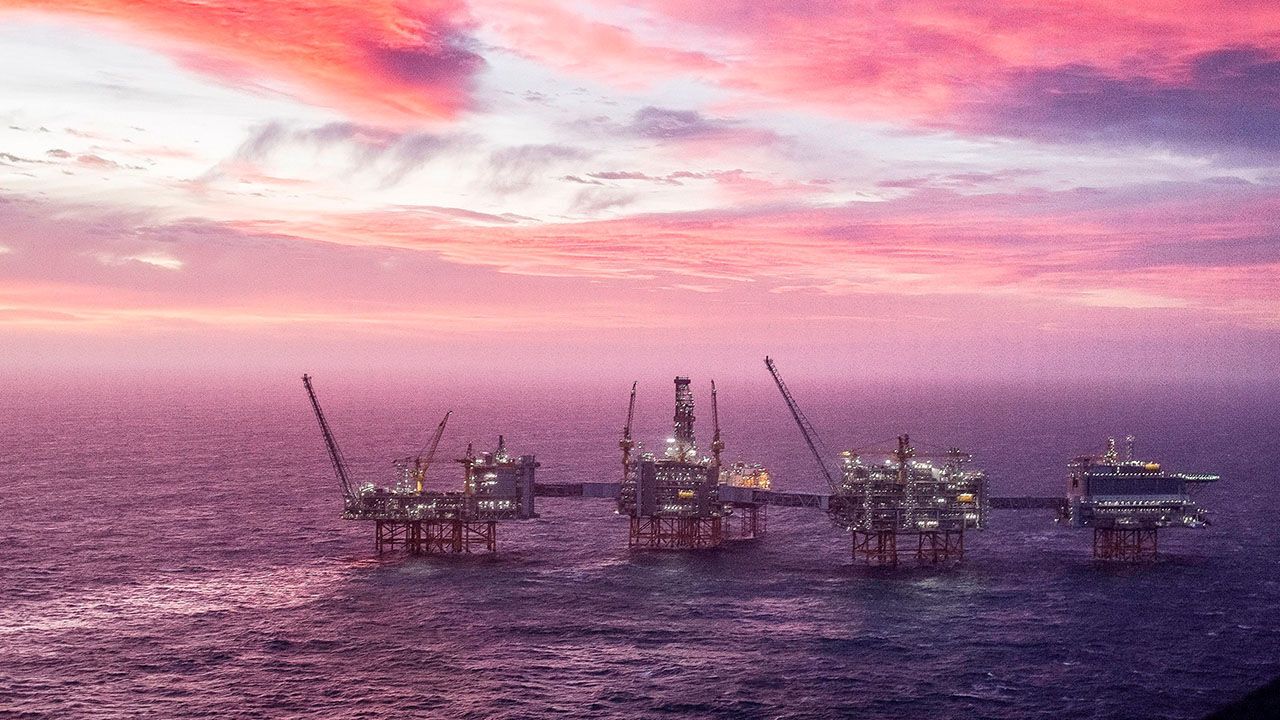
Discovered but undeveloped oil and gas on the Norwegian continental shelf(挪威大陆架), the source of 65% of Equinor’s output, peaked in 1983. Most fields are now mature. To sustain production, in the next few years Equinor intends to deploy 60% of its capital expenditure(资本支出) at home. It will mostly go into small deposits near existing pipelines, wells or plants, to break even(收支平衡、盈亏平衡) within two and a half years and at $35 a barrel or less. Equinor also aims to boost recovery(采收率) from older fields. It expects Norwegian output to peak in 2027 at 1.4m barrels of oil equivalent per day (boe/d), declining gently to 1.3m boe/d in the early 2030s. But many analysts reckon it may drop faster.
在挪威大陆架上发现但未开发的石油和天然气(Equinor 65%产量的来源)在1983年达到峰值。大多数油田现已成熟。为了维持产量,未来几年Equinor打算将60%的资本支出投入国内。这些支出将主要用于现有管道、油井或工厂附近的小型矿床,目标是在两年半内、每桶35美元或更低的油价下实现盈亏平衡。Equinor还计划提高老油田的采收率。它预计挪威产量将在2027年达到每天140万桶油当量(boe/d)的峰值,到2030年代初缓慢下降至每天130万桶油当量。但许多分析师认为下降速度可能更快。