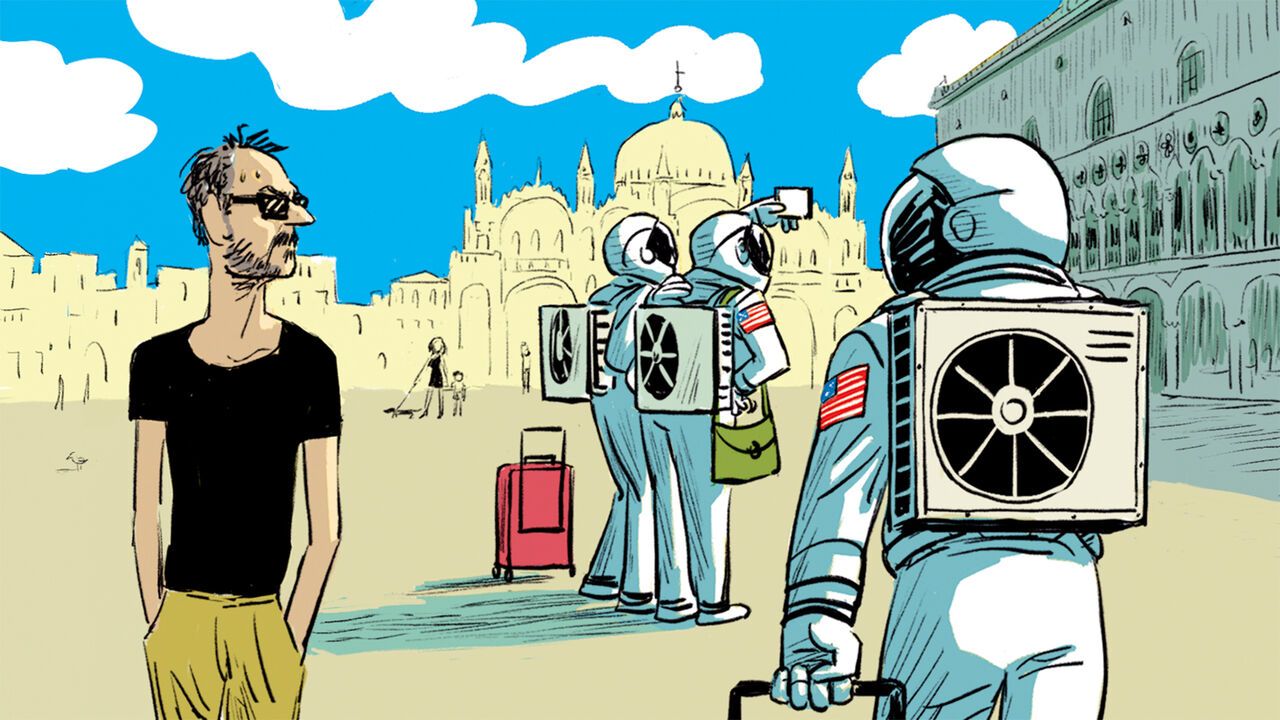
AMERICANS AND Europeans differ loudly on many issues, from health-care policy to gun-carrying etiquette. But a quieter division appears every summer when they visit each other’s continents. Europeans touring America complain that shops and restaurants are so frigidly(极冷地) air-conditioned as to require a jacket; step outside again and your glasses fog over. Yanks holidaying in Europe expect cool comfort, and grow surly on finding that many old-world buildings require them to sweat and bear it(忍受炎热(硬撑着)).
美国人和欧洲人在许多问题上争论激烈,从医疗政策到持枪礼仪。但每到夏天,当他们互相访问对方的大陆时,一种更安静的裂痕就会出现。在美国旅游的欧洲人抱怨商店和餐馆的空调开得极冷,以至于需要穿夹克;再走到室外,眼镜就会起雾。在欧洲度假的美国人期望凉爽舒适,却沮丧地发现许多旧世界的建筑让他们只能流汗忍受。
The divide is rooted in both climate and culture. Long before General Electric began cooling using circulating chemicals, southern Europe was built to handle heat. In traditional houses, white paint and shaded courtyards keep things cool. Windows are thrown open and rooms aired in the mornings. Shutters keep out the midday sun, and siestas allow one to skip the hours when it is too hot to do much anyway. Europe’s southerners think coddled(被宠坏的) Americans don’t know how to cope with heat naturally. Northern Europe, meanwhile, is mostly spared the problem: June days can be cold enough for a Scandinavian knitted sweater. Flinty northern Protestants regard buying an air-conditioner for the year’s few scorchers(极度炎热的日子) as an expensive environmental sin.
这种分歧根植于气候和文化。早在通用电气开始使用循环化学品制冷之前,南欧的建筑就设计来应对炎热。传统房屋中,白色油漆和阴凉的庭院保持凉爽。早晨窗户大开,房间通风。百叶窗挡住正午的阳光,午睡可以让人跳过一天中最热的时候,那时干什么都太热了。南欧人认为被宠坏的美国人不知道如何自然地应对炎热。与此同时,北欧基本没有这个问题:六月的天气可能冷到适合穿斯堪的纳维亚针织毛衣。坚毅的新教徒认为,为一年中少数几个酷热天购买空调是一种昂贵的环保罪过。
These days, climate change is putting such attitudes to the test. Europe is expecting a broiling(炙热的) summer, in part thanks to the El Niño weather event. As it is, heat contributes to around 175,000 deaths a year on the continent, the UN reckons. Yet Europeans who think first-world lifestyles are largely to blame for global warming may feel pangs of carbon guilt(碳罪恶感(愧疚)) about equipping their houses with air-conditioning, or using it if they have it. They needn’t. The impressive build-out of renewable energy in Europe’s hottest places means that judiciously dialling down the temperature will not do much to melt the glaciers.
如今,气候变化正在考验这些态度。欧洲即将迎来一个炎热的夏天,部分原因是厄尔尼诺天气事件。联合国估计,目前欧洲每年约有17.5万人死于高温。但那些认为第一世界生活方式应对全球变暖负主要责任的欧洲人,可能会因为给家里装上空调或使用空调而感到碳罪疚感。他们不必如此。欧洲最炎热地区可再生能源的可观发展意味着,适度调低温度并不会对融化冰川造成太大影响。
A chilling realisation
一个令人寒心的认识