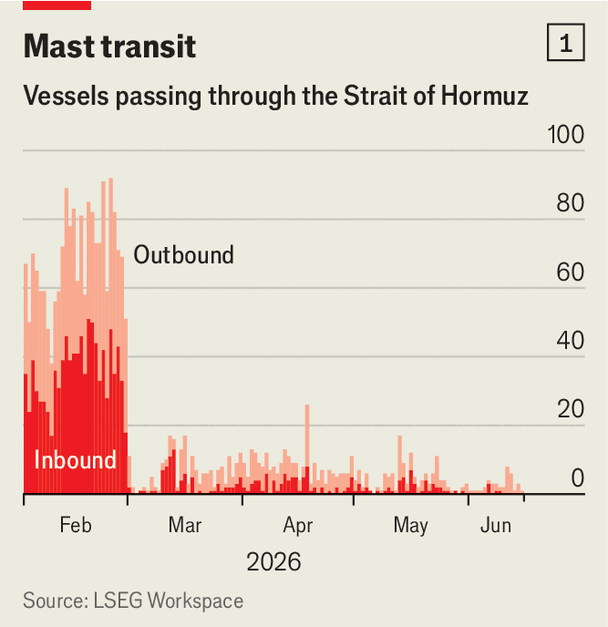
IT IS A moment of relief for energy markets. A memorandum of understanding(谅解备忘录) to end the war between America and Iran calls for lifting the naval blockade of Iranian ports and reopening the Strait of Hormuz within 30 days. While Donald Trump and his Iranian counterparts work out the details of a peace deal, the world can look forward to recovering 15-20% of its usual supply of oil and liquefied natural gas(液化天然气).
能源市场迎来了一个喘息时刻。一份旨在结束美伊战争的谅解备忘录要求30天内解除对伊朗港口的海上封锁,并重新开放霍尔木兹海峡。当唐纳德·特朗普与伊朗方面协商和平协议细节时,全球有望恢复其常规石油和液化天然气供应量的15-20%。
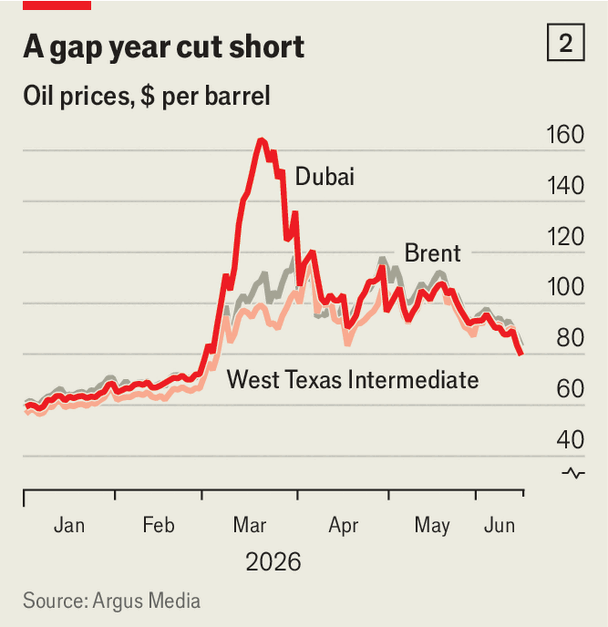
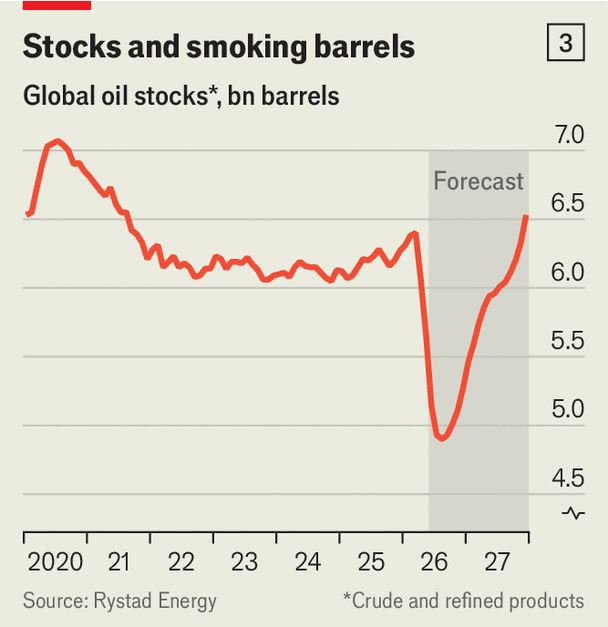
It may all still be derailed(使脱轨;破坏,阻碍) by skirmishes or disagreements over the fine-print. Yet both sides have incentives to stop fighting. Iran’s wrecked economy needs oil exports to resume; Mr Trump wants cheaper petrol ahead of the midterms in November. Markets are pricing in(将…计入价格) peace. Brent crude, the global benchmark, has slid below $80 a barrel, from well over $110 in May. Some analysts expect an oil glut next year, as supply recovers faster than demand.
这一切仍可能因小规模冲突或对细则的分歧而脱轨。但双方都有停止战斗的动机:伊朗破败的经济需要恢复石油出口;特朗普希望在11月中期选举前降低汽油价格。市场正在将和平因素计入价格。全球基准布伦特原油已从5月份的远高于每桶110美元跌至80美元以下。一些分析师预计明年将出现石油供应过剩,因为供应恢复速度快于需求。
The optimists may be getting ahead of themselves(过于乐观,超前判断)—especially in the short term. Wary buyers are not yet placing large orders for Gulf crude, notes Tom Reed of Argus Media, a price-reporting agency. Even if the deal holds, tankers must start returning to the Gulf, not just leaving it, production must restart and refining ramp up worldwide—all of which will take time.
乐观主义者可能过于超前——尤其是在短期内。价格报告机构阿格斯媒体的汤姆·里德指出,谨慎的买家尚未大量订购海湾原油。即使协议得以维持,油轮必须开始返回海湾,而不仅仅是离开;生产必须重启,全球炼油必须加速——所有这些都需要时间。