Given their slow growth and sessile(固着的,不能移动的) lives, the idea of plants battling one another may seem fanciful. Yet they do. They fight for access to water, nutrients and pollinators. Since one plant’s leaves are another’s shade, growing towards the sun can be a duel to the death(生死决斗). As in any conflict, espionage(间谍活动) helps. A paper published in the Journal of Experimental Botany reveals how plants engage in it.
考虑到植物生长缓慢且固着生活,它们相互争斗的想法可能显得异想天开。然而事实确实如此。它们为获得水分、养分和传粉者而战。由于一株植物的叶子会成为另一株的阴影,向阳光生长可能是一场生死决斗。与任何冲突一样,间谍活动大有裨益。《实验植物学杂志》上发表的一篇论文揭示了植物如何参与其中。
Botanists have known for years that plants can communicate with each other. One way is via chemicals known as volatile organic compounds(挥发性有机化合物) (VOCs). When plants are attacked by pests, for instance, the composition of the VOCs they release changes. Previous work has shown that this drives nearby plants to raise their own defences in anticipation of(预期…,预先) being attacked in turn. What has gone unexplored is whether plants detect VOCs released by their neighbours when they are healthy.(尚未探索的是,植物能否检测到邻居健康时释放的VOCs。) So Velemir Ninkovic, an ecologist at the Swedish University of Agricultural Sciences, decided to run an experiment.
植物学家多年来已知植物可以相互交流。一种方式是通过称为挥发性有机化合物(VOCs)的化学物质。例如,当植物遭受害虫攻击时,它们释放的VOCs成分会发生变化。先前的研究表明,这会促使附近植物提高自身防御,以预期随后遭到攻击。尚未探索的是,植物能否检测到邻居健康时释放的VOCs。因此,瑞典农业科学大学的生态学家Velemir Ninkovic决定进行一项实验。
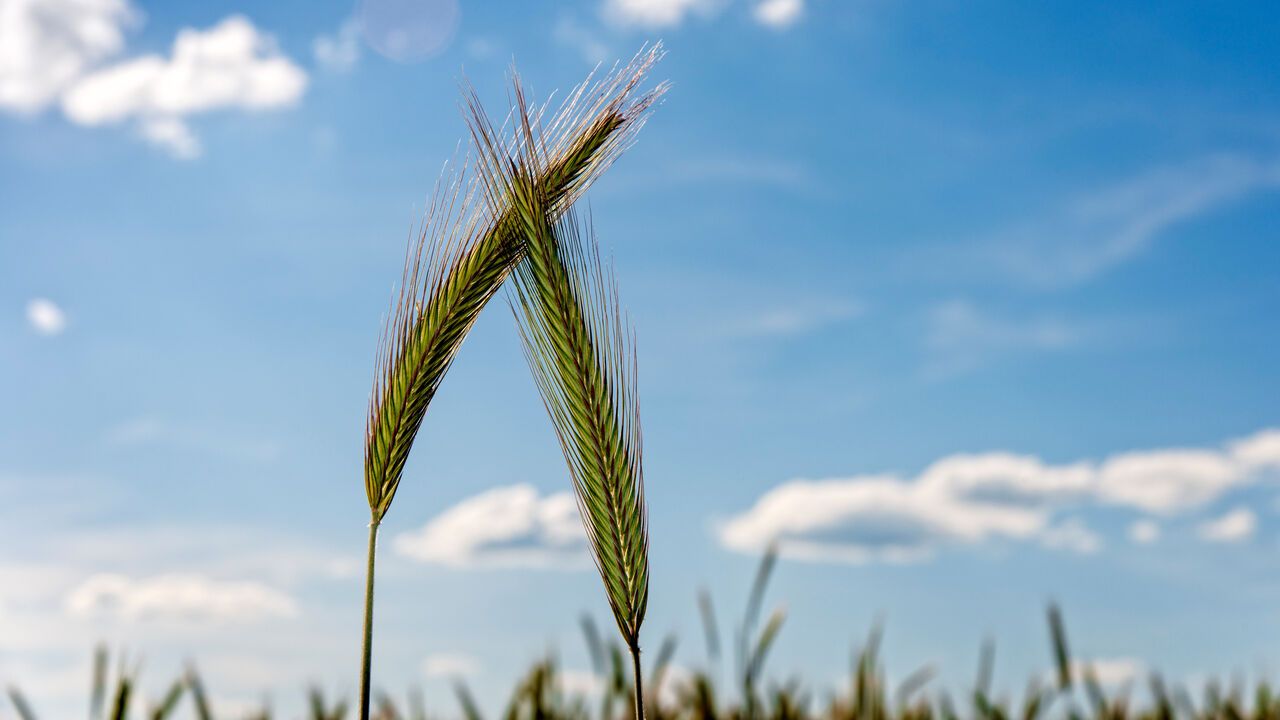
With a team of colleagues, Dr Ninkovic planted three varieties of barley that grow at different rates—one quickly, one slowly and one at a middling(中等的,普通的) pace. The plants were put in growing chamber(室,箱)s next to one another, but with no way for them to shade their neighbours. The only connection that the plants had to one another was through one-way air vents(单向通气孔) that connected their growing containers. These allowed the researchers to blow air from one chamber to the next, and to monitor the effect that this had on the plants over 25 days.
Ninkovic博士与同事团队种植了三种生长速度不同的大麦品种——一种快速、一种缓慢、一种中等。这些植物被放置在彼此相邻的生长箱中,但无法遮挡邻居的光线。植物之间的唯一连接是通过连接它们种植容器的一个单向通气孔。这些通气孔使研究人员能够将空气从一个箱子吹到另一个,并监测这对植物在25天内的影响。