IT IS A warm afternoon in Nagepur and Bahadur Kumar is working at the power loom(动力织布机). Opposite the workshop stands his two-storey, half-finished house.(作坊对面矗立着他那两层楼高、尚未完工的房子。) Outside it are five goats, a motorbike, his wife and his 22-year-old son, Karan, who explains that he is busy doing a science degree at a local university while preparing for exams for a government job. Asked how he studies, he whips out(迅速掏出) a phone to show The Economist(① 背景:The Economist 是...) his favourite YouTube coaching classes(辅导课(印度英语)) and long conversations with ChatGPT about questions he does not understand.
在纳格普尔一个温暖的下午,巴哈杜尔·库马尔正在动力织布机旁工作。作坊对面是他那两层高、尚未完工的房子。屋外有五只山羊、一辆摩托车、他的妻子以及22岁的儿子卡兰。卡兰解释说,他正在当地大学攻读理学学位,同时准备政府工作的考试。被问及如何学习时,他迅速掏出手机,向《经济学人》展示他最爱的YouTube辅导课,以及与ChatGPT就他不理解的问题进行的长时间对话。
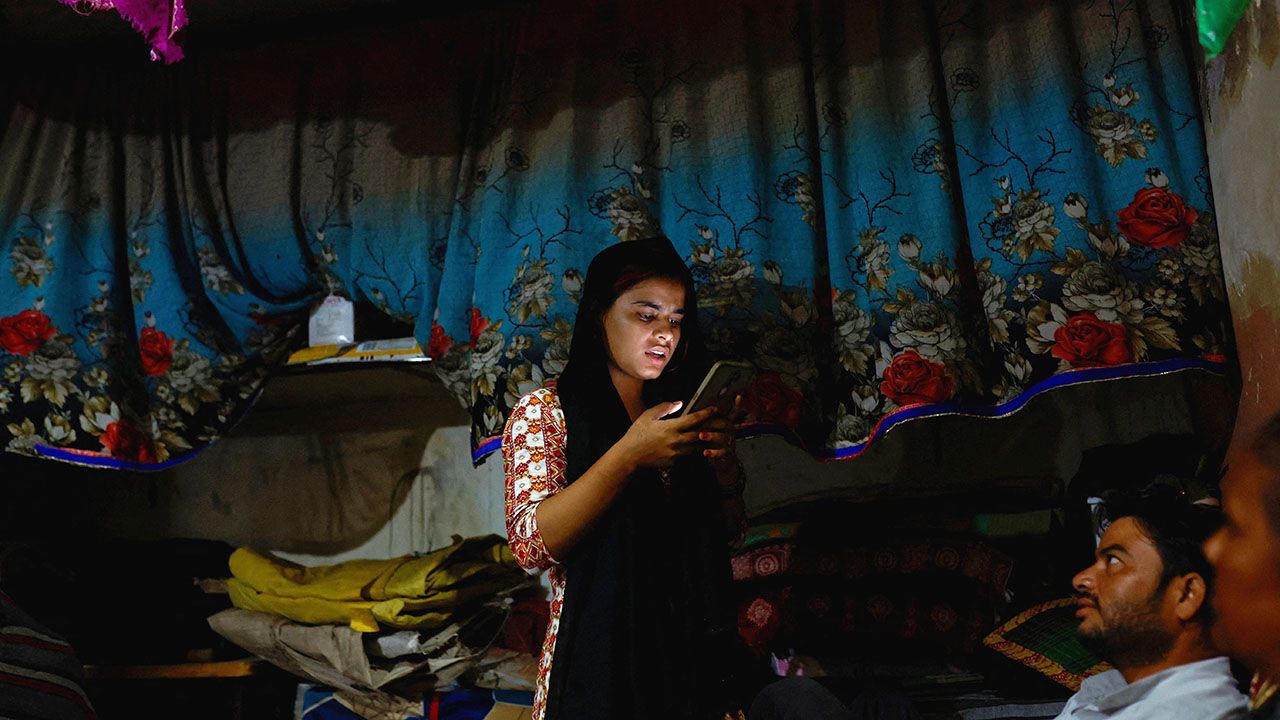
Nagepur is a fairly well-off(富裕的) village by the standards of(按照……的标准) Uttar Pradesh, a huge and poor state. In the past decade many of its households have gained toilets, running water, reliable power—and the internet. Scarce not long ago, smartphones are becoming ubiquitous.(不久前还稀缺的智能手机正变得无处不在。) Ownership remains skewed(偏向的,倾斜的) towards men, but devices are shared and keenly fought over(被激烈争夺). “When my dad goes to work, I take it,” says Roshni, a 14-year-old schoolgirl, flashing a smile(露出灿烂的笑容).
按照北方邦(一个庞大而贫困的邦)的标准,纳格普尔算得上一个相当富裕的村庄。在过去十年里,许多家庭获得了厕所、自来水、稳定的电力——以及互联网。不久前还稀缺的智能手机正变得无处不在。所有权仍然偏向男性,但设备是共享的,并且被激烈地争夺。“当我爸爸去上班时,我就拿走它,”14岁的女学生罗什尼说道,露出灿烂的笑容。
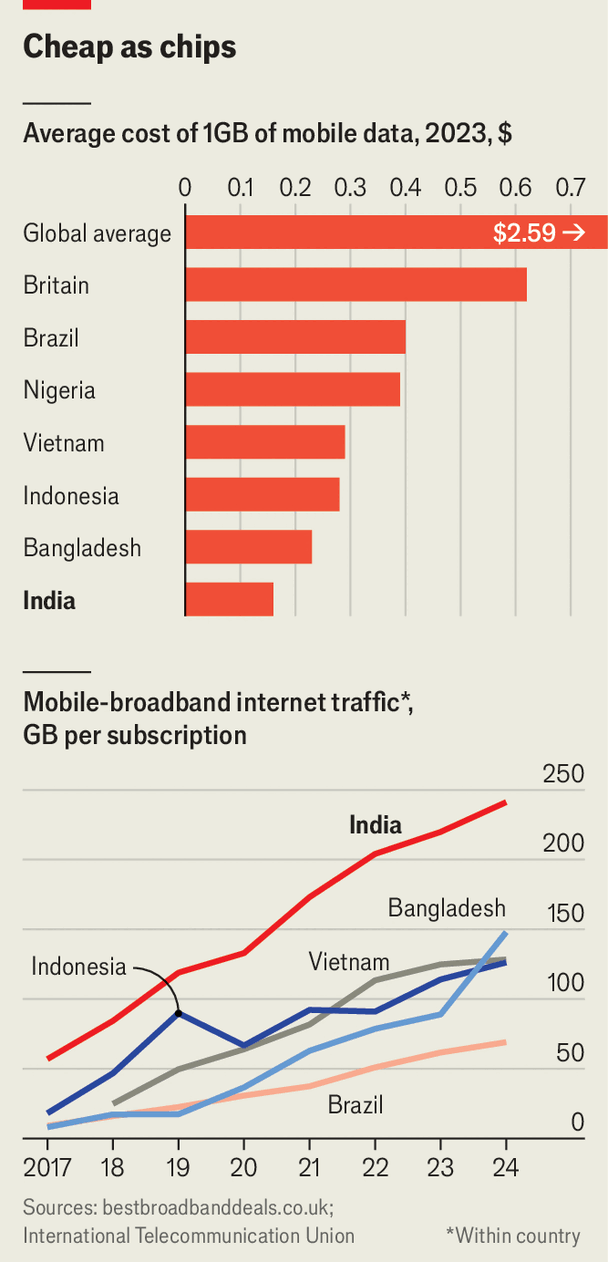
This year the world’s most populous(人口最多的) country is on track to(有望;按计划将) pass 1bn active internet users, up from 622m in 2020, according to the Internet and Mobile Association of India (IAMAI), a trade body. The shift is happening at lurching speed(以极快的速度) thanks to dirt-cheap(极其便宜的) devices and data. Indians can now get their hands on(弄到;获得) a used Chinese-brand smartphone for as little as(低至) 2,000 rupees ($21), around four days’ pay for a labourer. Data cost just 15 rupees (16 cents) per gigabyte, less than a tenth of the global average and much less than in most developing countries (see chart).
据行业组织印度互联网与移动协会称,今年这个世界上人口最多的国家有望突破10亿活跃互联网用户,高于2020年的6.22亿。这种转变正以极快的速度发生,这要归功于极其廉价的设备与数据。印度人现在可以以低至2000卢比(21美元)的价格买到二手中国品牌智能手机,相当于一名工人约四天的工资。数据费用仅为每GB15卢比(16美分),不到全球平均水平的十分之一,远低于多数发展中国家(见图表)。