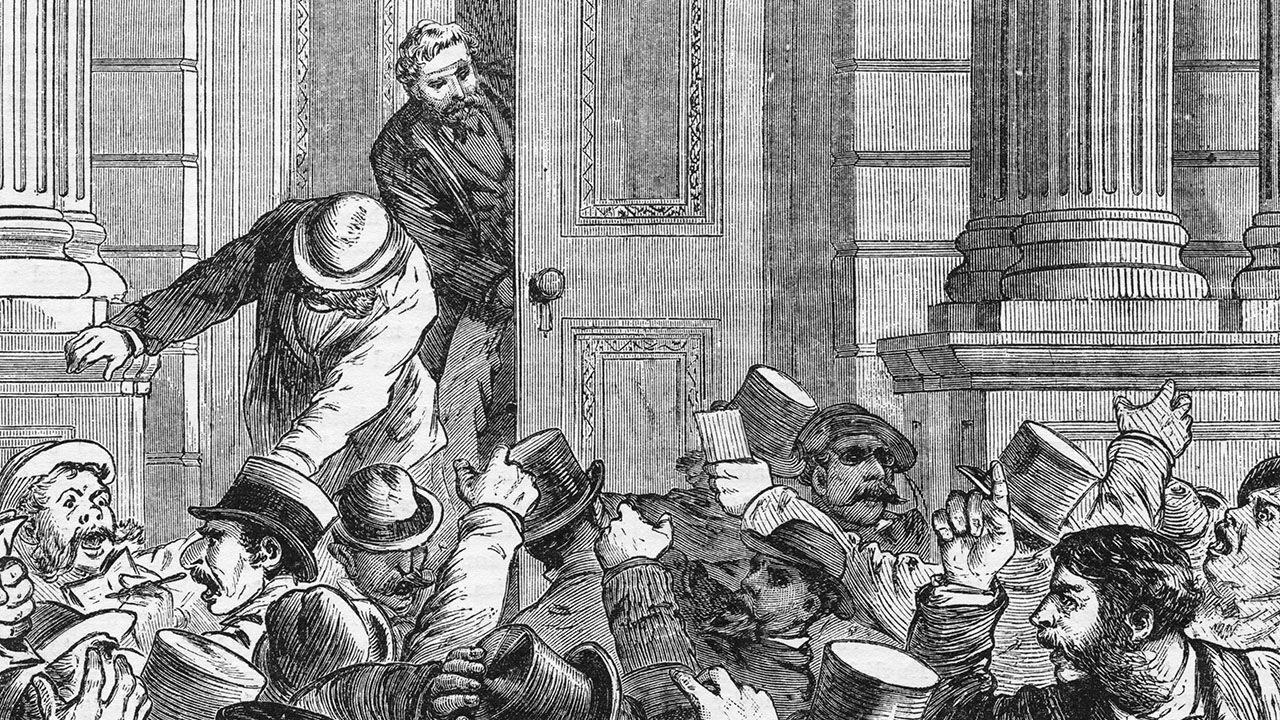
1873. By Liaquat Ahamed. Penguin; 368 pages; $32. Hutchinson Heinemann; £25
《1873》。作者:利亚夸特·艾哈迈德。企鹅出版社;368页;32美元。哈钦森·海涅曼出版社;25英镑。
Liaquat Ahamed, an American author, has excellent timing. His first book, “Lords of Finance”, charted how blundering(笨拙的;犯大错的) central bankers plunged the world into a depression(使世界陷入大萧条) after the Wall Street crash of 1929(1929年10月,美国股市崩溃,标志着大...). It was published in 2009, when crises were on policymakers’ minds and lips(在政策制定者心头和嘴边).
美国作家利亚夸特·艾哈迈德时机把握得恰到好处。他的第一本书《金融之王》讲述了1929年华尔街崩盘后,笨拙的央行行长们如何将世界推入大萧条。该书出版于2009年,那时危机正是政策制定者心头和口头的话题。
His new book also catches the moment(抓住时机;应时而生). Rocketing share prices have made some investors feel torn between(在……之间左右为难) giddy(眩晕的;轻浮的) enthusiasm about AI and fear that the boom will turn to bust. Perhaps in part because of this, Andrew Ross Sorkin’s “1929”, an account of the Wall Street crash that was published last year, spent more than six months on the New York Times bestseller list. In “1873” Mr Ahamed tells the story of how the global railway boom of the 19th century ran out of steam(失去动力;势头减弱), setting off what was then called “the great Depression”.
他的新书也抓住了当下。股价飙升让一些投资者在AI的狂喜和对繁荣转为萧条的恐惧之间左右为难。或许部分出于这个原因,安德鲁·罗斯·索尔金去年出版的讲述华尔街崩盘的《1929》在《纽约时报》畅销书榜上停留了超过六个月。在《1873》中,艾哈迈德先生讲述了19世纪全球铁路繁荣如何失去动力,引发了当时所谓的“大萧条”。