IT DOES NOT take long for a visitor to Ingolstadt, a medium-sized(中等大小的) city in Bavaria, to notice that this is Audi town. Spot the Audi health-insurance booth near the town hall, the carmaker’s splendid museum or the ads for its summer concert season, which opens this weekend. Meet a local, and chances are(很可能) they work at the Audi plant—the firm employs 40,000 people here—or are related to someone who does. The success of Audi drove(推动,驱动) Ingolstadt’s growth from a sleepy town(宁静的小镇) of 30,000 after the second world war to 145,000 today.
游客很快就能注意到巴伐利亚的中等城市英戈尔施塔特是奥迪之城。在市政厅附近能看到奥迪健康保险摊位、汽车制造商宏伟的博物馆,或本周末开幕的夏季音乐会季的广告。遇到当地人,他们很可能在奥迪工厂工作——该公司在此地雇佣了4万人——或者与某位员工有关系。奥迪的成功推动了英戈尔施塔特从二战后的一个只有3万人的沉睡小镇发展到如今14.5万人。
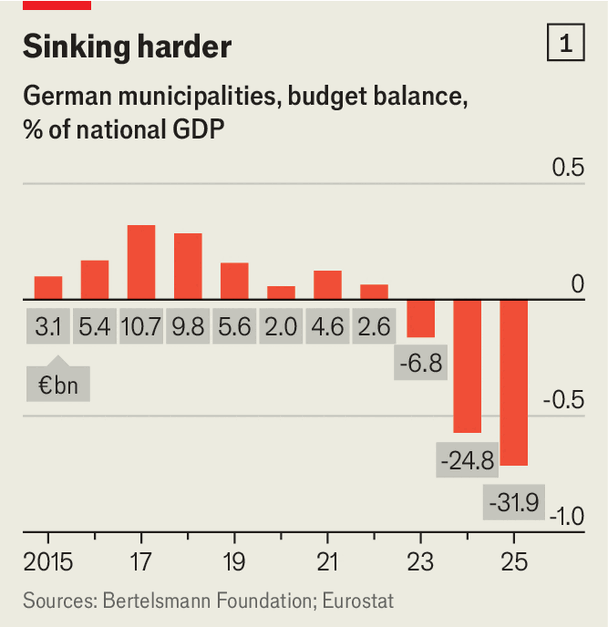
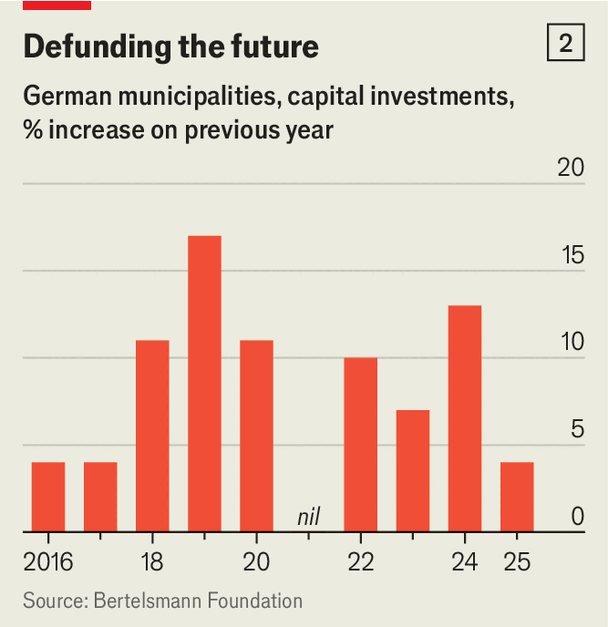
And it is the struggles(困境,斗争) of Audi, where profits and the workforce are shrinking, that help explain why the city has fallen into a deep hole(陷入严重困境). Business-tax revenues have halved(减半) in just a few years, thanks in large part to(很大程度上归因于) the woes(困境,不幸) of Audi and Volkswagen, its parent company. So tight is the squeeze that earlier this year the Upper Bavarian government rejected Ingolstadt’s budget, banning the city from making new investments.(财政紧缩如此严重,以至于今年早些时候上巴伐利亚州政府否决了英戈尔施塔特的预算,禁止该市进行新的投资。) Marquee projects, such as the renovation of the city’s celebrated brutalist(野兽派的(建筑风格)) theatre building, are on ice(搁置,暂停). Pupils had to be removed from one dilapidated(破旧的,失修的) school because the city could not afford to repair it. “Audi is a blessing(福气,恩赐) for our city, and also a risk,” says Michael Kern, the mayor.
正是奥迪的困境(利润和员工人数都在萎缩)帮助解释了该市为何陷入深坑。商业税收收入在短短几年内减半,很大程度上归因于奥迪及其母公司大众的困境。财政紧缩如此严重,以至于今年早些时候上巴伐利亚州政府否决了英戈尔施塔特的预算,禁止该市进行新的投资。标志性项目,比如该市著名的野兽派剧院建筑的翻新,被搁置。学生们被迫从一所破旧的学校撤离,因为该市无力修复它。市长迈克尔·科恩说:“奥迪是我们城市的福气,也是风险。”
The volatility(波动性,不稳定性) of municipal financing has bound(捆绑,结合) the fates of many German cities to local business. In good times some swam in money(非常富有,资金充裕): one town with a Daimler plant near Stuttgart paved its pedestrian crossings with Carrara marble(卡拉拉大理石(名贵石材)). But when industry sneezes, cities fall ill—and the bug now extends beyond post-industrial spots like the Ruhr or Saarland.(但当工业打喷嚏时,城市就会生病——而这种病菌现已蔓延到鲁尔或萨尔等后工业地区之外。) Towns in wealthy Baden-Württemberg have been walloped(重创,痛击) by the car sector’s woes. The troubles of Ludwigshafen, one of Germany’s most indebted(负债的,债务缠身的) cities, are those of BASF(巴斯夫(德国化工巨头)), the local chemicals giant.
市政融资的波动性将许多德国城市的命运与本地企业捆绑在一起。在好时期,有些城市资金充裕:斯图加特附近一个拥有戴姆勒工厂的小镇用卡拉拉大理石铺设人行横道。但当工业打喷嚏时,城市就会生病——而这种病菌现已蔓延到鲁尔或萨尔等后工业地区之外。富裕的巴登-符腾堡州的城镇受到了汽车行业困境的重创。路德维希港(德国负债最重的城市之一)的困境就是当地化工巨头巴斯夫的困境。