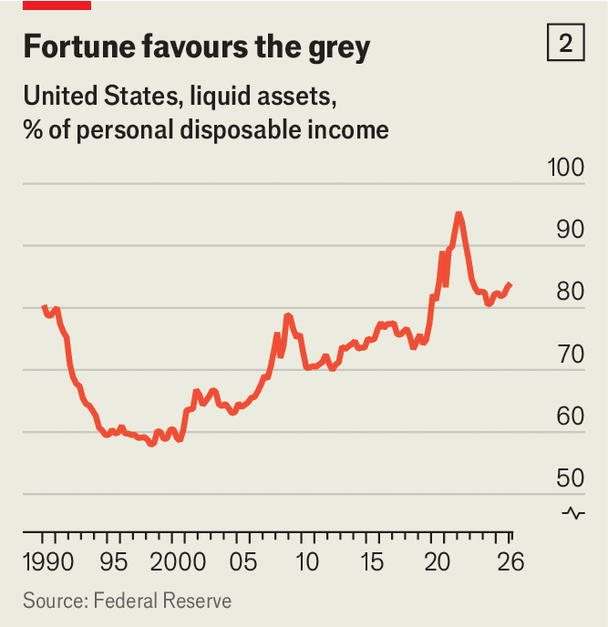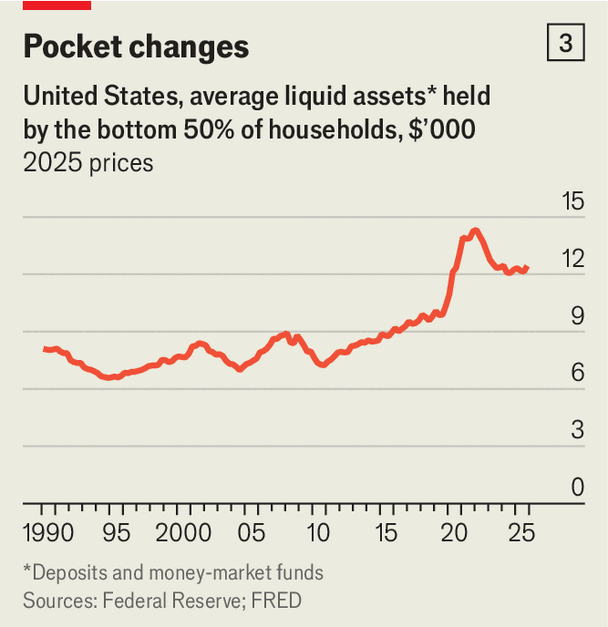
The latest fashionable worry(流行的担忧) about America’s economy is that consumers are spending beyond their means(超出承受能力,入不敷出). Personal consumption—its engine(引擎,驱动力), accounting for two-thirds of gdp—has grown by a respectable(可观的,相当的) 2% or so over the past year. But the personal-saving rate fell to 2.6% in April. It has been lower only once since early 2008, when Bear Stearns(①背景:贝尔斯登成立于1923年,是美国...), a bank, became an early casualty(受害者,牺牲品) of the global financial crisis. It is only a matter of time, the argument goes, before consumption cracks(崩溃,断裂).
关于美国经济的最新流行担忧是消费者正在入不敷出。作为经济引擎的个人消费——占GDP的三分之二——过去一年增长了约2%,还算可观。但4月份个人储蓄率降至2.6%。自2008年初以来,这一数字只有过一次更低,当时投行贝尔斯登成为全球金融危机的早期牺牲品。有观点认为,消费崩溃只是时间问题。
From 1970 to 2000 the personal-saving rate, which measures how much income Americans have left after taxes and expenses, averaged around 10%. Even a year ago it was double April’s figure. Annual inflation is now outpacing wage growth(超过工资增速) for the first time in three years. Larger tax refunds(退税) from Donald Trump’s One Big Beautiful Bill Act—worth about $350 more per household than last year—have mostly been disbursed(支付,发放). On the surface, then, the low saving rate looks like proof that Americans are running short of(短缺,不够用) cash.
从1970年到2000年,衡量美国人税后收入扣除支出后剩余的个人储蓄率平均约为10%。即便一年前,该数字还是4月份的两倍。年通胀率三年来首次超过工资增速。唐纳德·特朗普的《一项大而美的法案》中较大的退税——每户比去年多出约350美元——大部分已发放。那么从表面上看,低储蓄率像是美国人现金短缺的证据。
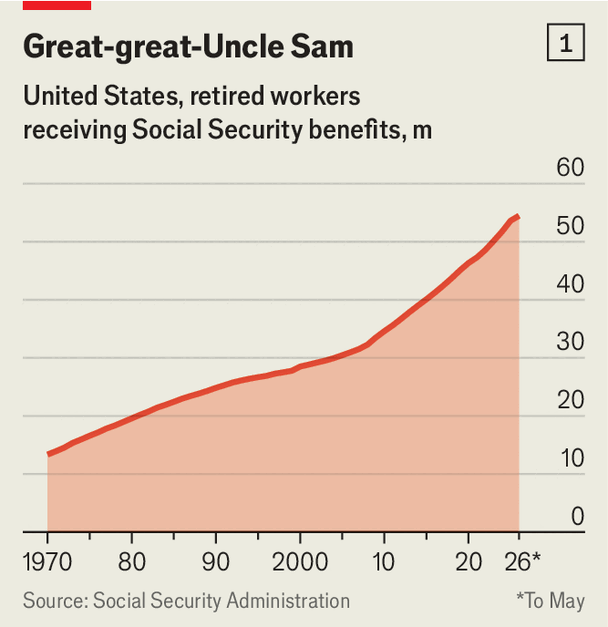
There are, though, some benign(良性的,无害的) explanations. The first is demographic(人口结构的). The saving rate at the end of the 20th century was supported by a much higher ratio of workers, who save for retirement, to pensioners(退休人员,领养老金者), who draw down(提取,动用) their savings. Today America has more pensioners than ever: the number collecting Social Security reached 54.5m in May (see chart 1). For the first time, more than half of those outside the labour force are 65 or older. Pensioners typically have less current income than workers, but keep spending by tapping(利用,提取) lifetime savings. That pushes down the saving rate in a financially innocuous(财务上无害的) way.
不过,也有一些良性的解释。首先是人口结构。20世纪末储蓄率较高,是因为工作人口(为退休储蓄)与退休人口(动用储蓄)的比例更高。如今美国退休人员比以往任何时候都多:5月领取社保的人数达到5450万(见图表1)。劳动人口之外的人口中,超过一半在65岁及以上,这是首次出现。退休人员通常的当期收入低于工作者,但他们通过动用终生储蓄来维持支出。这以一种在财务上无害的方式压低了储蓄率。