IT BEGAN IN the 1980s as a way to quickly produce simple prototype(原型) models in plastic. These days 3D printing—or “additive manufacturing(增材制造)”, to give it its posher(更高级的) name—is used to make kitchen gadgets, jet-engine parts, dental implants(牙科植入物) and even some buildings.
这项技术始于20世纪80年代,作为一种快速生产塑料简单原型模型的方法。如今,3D打印——或者用更高级的说法叫“增材制造”——被用来制造厨房小工具、喷气发动机零件、牙科植入物,甚至一些建筑物。
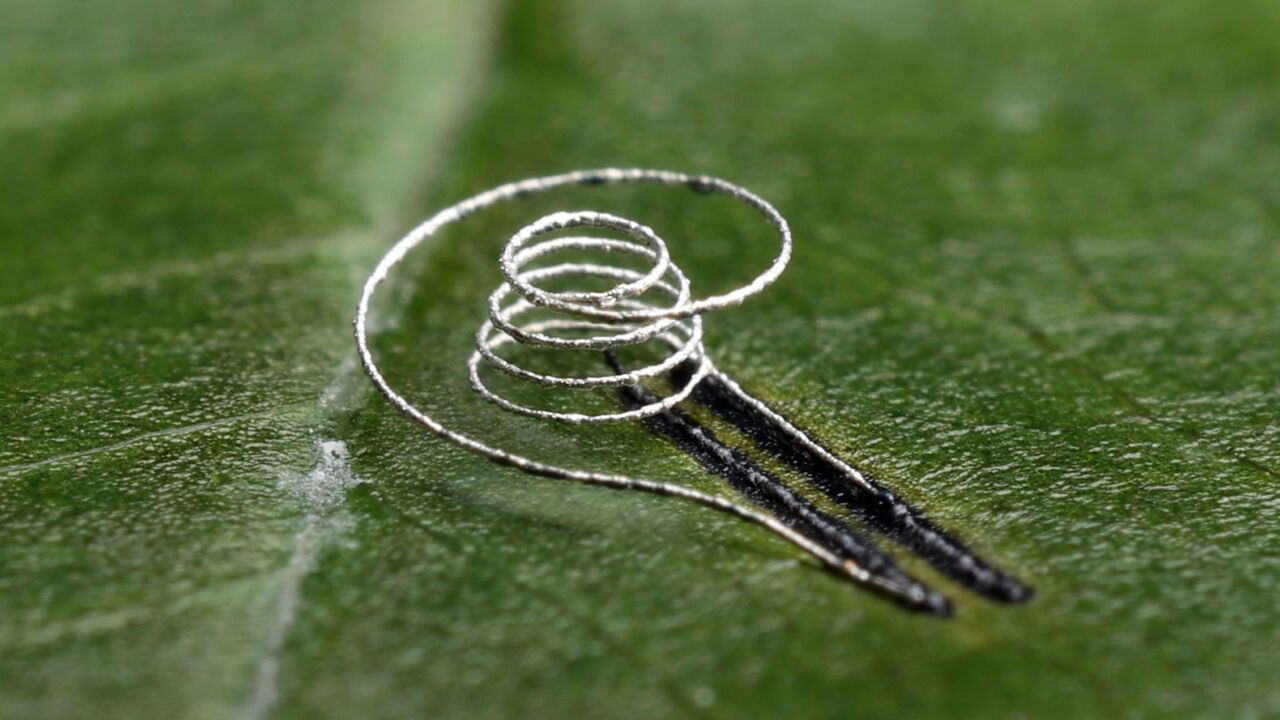
In a paper published in Science Advances, a team of researchers led by Yong Lin Kong and his colleagues at Rice University in Houston, Texas, propose another application. They have come up with(想出) a way to print electronic circuits onto delicate materials(易损材料), including living tissue. The researchers hope that could eventually lead to medical implants that wirelessly monitor the condition of their recipients(接受者), high-tech pills and more.
在发表于《科学进展》的一篇论文中,由德克萨斯州休斯顿莱斯大学的Yong Lin Kong及其同事领导的研究团队提出了另一种应用。他们找到了一种将电子电路打印到包括活体组织在内的易损材料上的方法。研究人员希望这最终能带来无线监控患者状况的医疗植入物、高科技药片等。
3D-printing circuitry(电路系统) is not a new idea. Nano Dimension, based in Massachusetts, for instance, prints electronics into communications equipment and medical sensors. Printers made by Optomec, based in New Mexico, build antennas(天线) directly into smartphones cases, as well as printing circuits onto touch screens and solar panels.
3D打印电路并非新概念。例如,位于马萨诸塞州的Nano Dimension公司就为通信设备和医疗传感器打印电子元件。新墨西哥州的Optomec公司制造的打印机,直接将天线嵌入智能手机外壳,同时也能在触摸屏和太阳能电池板上打印电路。