India’s ruling(执政的,统治的) Bharatiya Janata Party (BJP) loves a name change(改名,更名), a good acronym and flexing its Hindu credentials(资质,凭证). Last December it combined all three to replace the Mahatma Gandhi National Rural Employment Guarantee Act (MGNREGA) with the Viksit Bharat–Guarantee for Rozgar and Ajeevika Mission (Gramin)(去年12月,它把三者结合起来,用新计划取代了旧法案。)—which translates from Hinglish(印式英语,混合印地语和英语) as “Developed India–Guarantee for Employment and Livelihood Mission (Rural)”. As an acronym it is VB-G RAM G, a reference to Ram, a revered(受尊敬的,被崇敬的) Hindu god.
印度执政党印度人民党(BJP)喜欢改名、好的首字母缩略词,并炫耀其印度教资质。去年12月,它把三者结合起来,用“Viksit Bharat–Guarantee for Rozgar and Ajeevika Mission (Gramin)”取代了圣雄甘地国家农村就业保障法(MGNREGA)——这个名称从印式英语翻译过来就是“发达印度——就业与生计保障使命(农村)”。作为首字母缩略词,它是VB-G RAM G,指的是备受尊敬的印度教神祇罗摩。
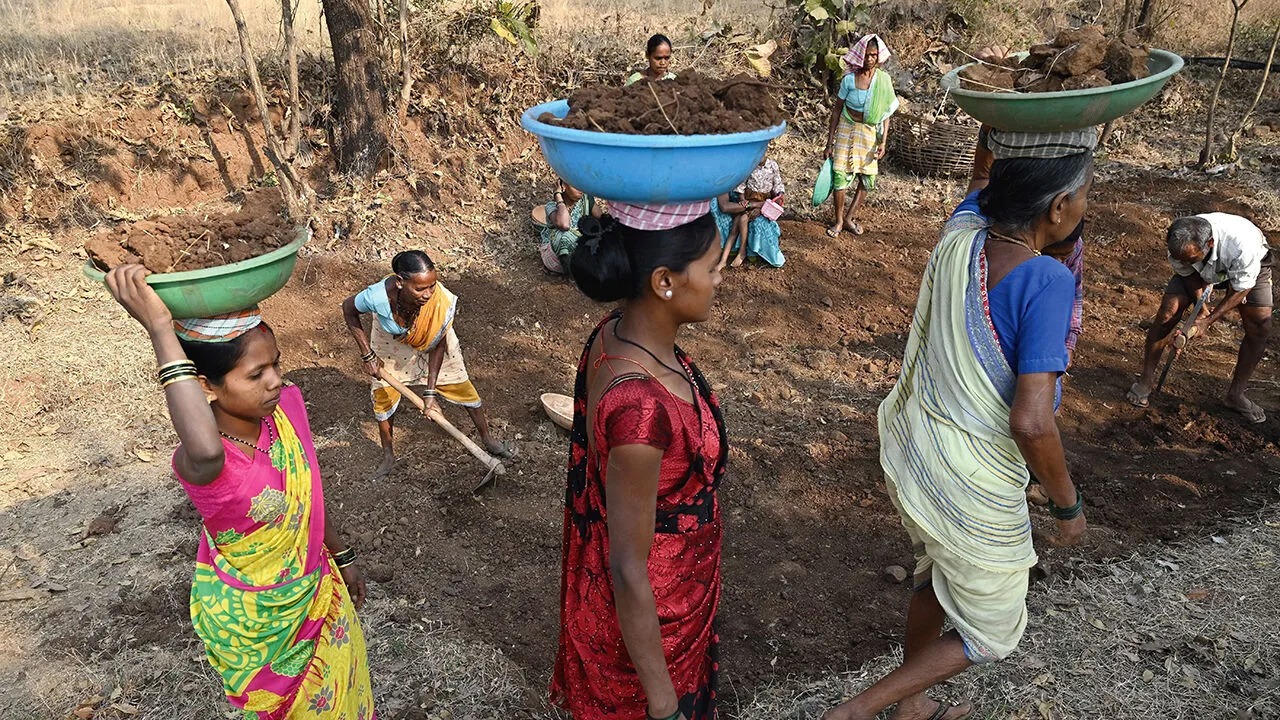
This was far from a mere rebrand(远非简单的品牌重塑). VB-G RAM G, which began officially on July 1st, revamps(改造,改进) a scheme that has been a pillar(支柱,核心) of India’s rural-development policy since 2005. Combining social protection with public works, it guaranteed 100 days of paid toil(苦干,劳累的工作) to any rural household that demanded it. Plenty did: in 2024-25 some 60m households were employed on an assortment of(各种各样的) projects, from wells and ponds to rural roads. The scheme earned international acclaim(赞誉,称赞) for its scale and ambition: the World Bank has called it the world’s largest public-works programme, and the International Labour Organisation has recommended that other developing countries copy it; many, including Bangladesh and South Africa, have done so.
这远非简单的品牌重塑。VB-G RAM G于7月1日正式启动,它改造了自2005年以来一直是印度农村发展政策支柱的一项计划。该计划将社会保障与公共工程相结合,保证向任何有需求的农村家庭提供100天有酬劳动。许多家庭确实这样做了:在2024-25年度,约6000万家庭受雇于各种项目,从水井、池塘到乡村公路。该计划因其规模和雄心赢得了国际赞誉:世界银行称其为世界上最大的公共工程计划,国际劳工组织建议其他发展中国家效仿;包括孟加拉国和南非在内的许多国家已经这样做了。
The government argues that its new scheme is an improved version(改进版,升级版) of the old one. Workers can now get 125 days of work, rather than 100, and they will work on a narrower set(更狭窄的范围) of tasks to build “productive infrastructure(生产性基础设施)”; many of the previous projects, it argues, were of little real value(没有多少实际价值). But opponents say the scheme is being gutted. “The government has essentially removed the legal guarantee of work that made MGNREGA so unique,”(政府基本上取消了使MGNREGA如此独特的工作的法律保障。) says Nikhil Dey, the founder of an advocacy group(倡导组织,游说团体) that helped draft the original act.
政府辩称,其新计划是旧计划的改进版本。工人现在可以获得125天的工作,而不是100天,并且他们将从事更狭窄的任务范围,以建设“生产性基础设施”;政府认为,之前的许多项目没有多少实际价值。但反对者称,该计划正在被掏空。“政府基本上取消了使MGNREGA如此独特的工作的法律保障,”帮助起草原始法案的倡导组织创始人尼基尔·德伊说。