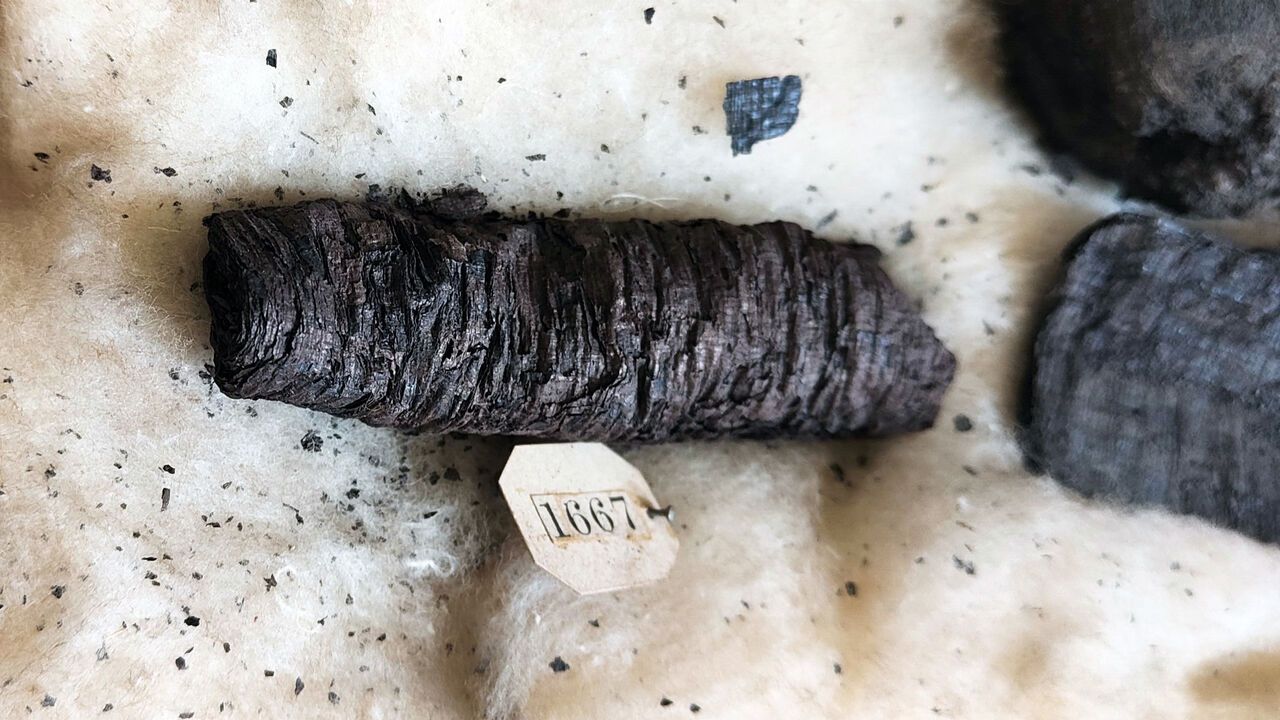
It looks like nothing: a lump(块,团块) of coal, at best(充其量,顶多). A blackened fir cone(冷杉球果) or piece of excrement(排泄物,粪便). It looks so underwhelming(令人失望的,不起眼的) that other such lumps had, over the years, been destroyed or thrown away. This particular lump went by(被称为;以……为名) an underwhelming title, too: curator(策展人,馆长)s called it “PHerc. 1667(赫库兰尼姆卷轴编号)”. But at a recent press conference in Naples, PHerc. 1667 became one of the most famous underwhelming-looking lumps in classics.
它看起来毫不起眼:充其量是一块煤。一个烧焦的冷杉球果或一块粪便。它看起来如此不起眼,以至于多年来其他类似的块状物都被销毁或扔掉了。这块特殊的团块也有一个平淡无奇的名称:策展人称之为“PHerc. 1667”。但在最近那不勒斯的一次新闻发布会上,PHerc. 1667 成为了古典学中最著名的外形平庸的团块之一。
The eruption of Vesuvius in 79AD made two very different kinds of classical writing famous. The first was the letters of Pliny the Younger(小普林尼,古罗马作家), which contained his account of that eruption. These are minor masterpieces(小杰作,次要杰作) of descriptive writing(描写性写作), with words like “evil cloud”, “zigzag flames” and the even more evil-feeling(令人感到邪恶的) “descending cloud”. They are also masterpieces of dramatic irony(戏剧性讽刺). The reader knows what will happen; Pliny did not even have a word for “volcano”.(读者知道将要发生什么;普林尼甚至没有“火山”这个词。) They are, rightly, some of the most-read writings from the ancient world.
公元79年维苏威火山的喷发使两种截然不同的古典著作闻名于世。第一种是小普林尼的书信,其中包含他对那次喷发的描述。这些书信是描写性写作的小杰作,使用了“邪恶之云”、“锯齿形火焰”以及更令人感到邪恶的“下沉之云”等词。它们也是戏剧性讽刺的杰作。读者知道将要发生什么;而普林尼甚至连“火山”这个词都没有。它们理所当然是古代世界阅读量最大的作品之一。
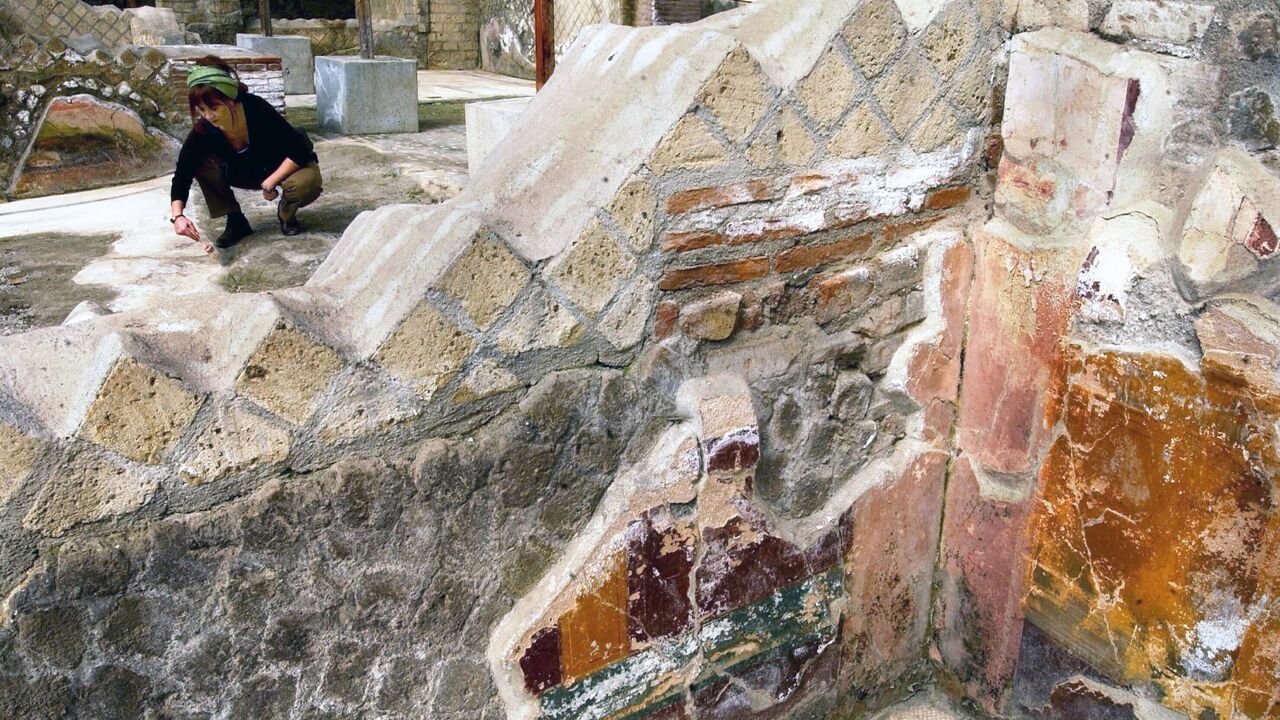
The second category of writing was the 600-1,000 scrolls that were covered by the falling cloud(落下(火山灰)云团) as it travelled, at 100kph and around 400°C, over a vast library in a villa in Herculaneum. The villa was rediscovered by well-diggers(挖井人) in 1750. Since then the finest scholars of every era have tried to read its scrolls—and largely failed (though some were read). In the 1820s Humphry Davy(汉弗莱·戴维,英国化学家), a British chemist, tried a mixture of force, iodine, chlorine and heat(力量、碘、氯和热量的混合) to get to them. (“The papyrus smoked,” wrote Davy.) Most were bibliographic Gordian knots: to open them was to destroy them.(大多数是文献版的戈尔迪之结:打开它们就意味着毁灭。)
第二类作品是被落下的火山灰覆盖的600至1000卷卷轴,这些火山灰以每小时100公里、约400°C的温度席卷了赫库兰尼姆一座别墅中的庞大图书馆。这座别墅于1750年被挖井人重新发现。此后,各个时代最优秀的学者都试图阅读这些卷轴,但大多失败了(尽管有一些被成功阅读)。19世纪20年代,英国化学家汉弗莱·戴维尝试了力量、碘、氯和加热的方法来打开它们。戴维写道:“纸莎草冒烟了。”大多数卷轴是文献版的戈尔迪之结:打开它们就意味着毁灭。