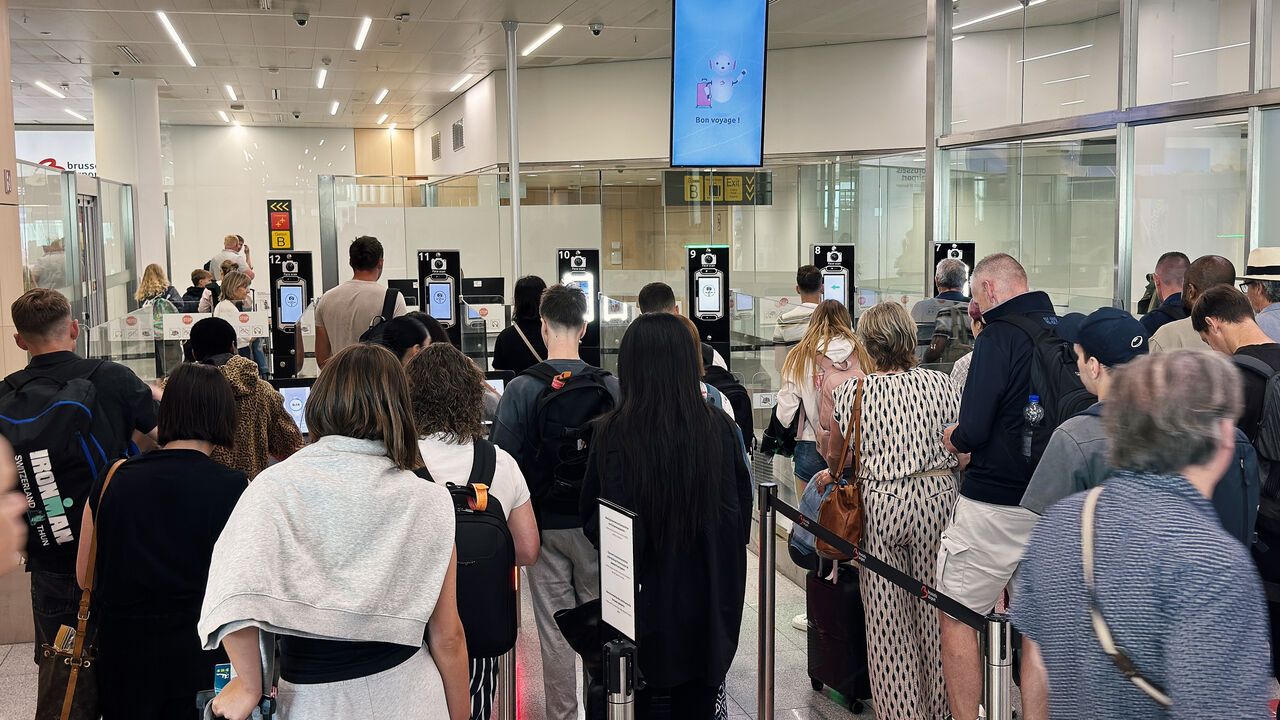
THE EUROPEAN UNION frets(焦虑、担忧) a lot about whether it is competitive, but in one sector it leads the world: acronyms(首字母缩写词) that infuriate(激怒,使大怒) foreigners. In recent months the EU’s Entry-Exit Scheme (EES) has caused conniptions at the continent’s airports. Exasperated(恼怒的,被激怒的) visitors (mostly Americans and Britons, for whom travel to Europe is supposed to be a visa-free breeze(免签的轻松之旅)) have posted videos on Instagram and TikTok(社交媒体平台) of spaghetti-like queues(意大利面般的长队) at passport control.
欧盟非常在意自身是否具有竞争力,但在一个领域它却领先世界:那就是让外国人恼火的缩写词。近几个月来,欧盟的出入境管理系统(EES)在欧洲机场引发了一片怨声载道。愤怒的旅客(主要是美国人和英国人,对他们来说,去欧洲旅行本应是一件无需签证的轻松事)在Instagram和TikTok上发布了护照检查处蜿蜒曲折的排队视频。
The EES began its rollout(推广,推出) last October, three years behind schedule(比计划晚了三年). It was supposed to be(本应该) fully implemented by April. The system is meant to make it easier to track(追踪,跟踪) non-EU visitors to the Schengen(申根区) visa-free travel area, replacing passport stamps with a smooth IT system. Travellers must register by getting their passport, face and fingerprints(指纹) scanned at the border. Border guards are supposed to use these data to verify(验证,核实) their identity on each subsequent trip(后续旅行).
EES系统于去年10月开始推广,比计划晚了三年。它本应在4月前全面实施。该系统旨在更轻松地追踪前往申根免签旅行区的非欧盟游客,用流畅的IT系统取代护照盖章。旅客必须在边境扫描护照、面部和指纹进行登记。边境警卫应利用这些数据在后续每次旅行中验证他们的身份。
European officials reckon(认为,估计) the scheme is working(正在起作用). In May the European Commission said it had stopped some 30,000 people from improperly(不适当地,不合规地) entering Schengen, including nearly 7,000 who had stayed longer than allowed on previous visits(之前的访问).
欧洲官员认为该方案正在发挥作用。5月,欧盟委员会表示,它阻止了约3万人不当进入申根区,其中包括近7000人此前停留时间超过了允许的期限。