FEW THINGS sit closer to the heart of(接近...的核心/本质) Americana(美国文化/美国特色) than the hamburger. In the early 1970s John Updike, an acute(敏锐的,深刻的) observer of American life, described the country as “a hamburger kingdom, one cuisine, under God, indivisible, with pickles and potato chips for all”. At the time, the hamburger was a democratic meal: cheap, plentiful and available to almost everyone.
很少有东西比汉堡更贴近美国文化的核心。20世纪70年代初,美国生活的敏锐观察者约翰·厄普代克将美国描述为“一个汉堡王国,一种美食,在上帝之下,不可分割,人人享有泡菜和薯片”。当时,汉堡是一种民主的餐食:价格便宜、供应充足,几乎人人都能享用。
That kind of meal is getting harder to find lately. Grocery prices in America are 30% or so higher than in early 2020, before the covid-19 pandemic. This adds about $1,600 to the average household’s annual food bill. Average wages have risen by a similar amount, leaving the overall affordability of groceries little changed.(主句+分词短语表结果)
这种膳食最近越来越难找了。美国食品杂货价格比新冠疫情前的2020年初高出约30%。这使普通家庭每年的食品开销增加了大约1600美元。平均工资也上涨了类似的幅度,使得食品杂货的整体负担能力变化不大。
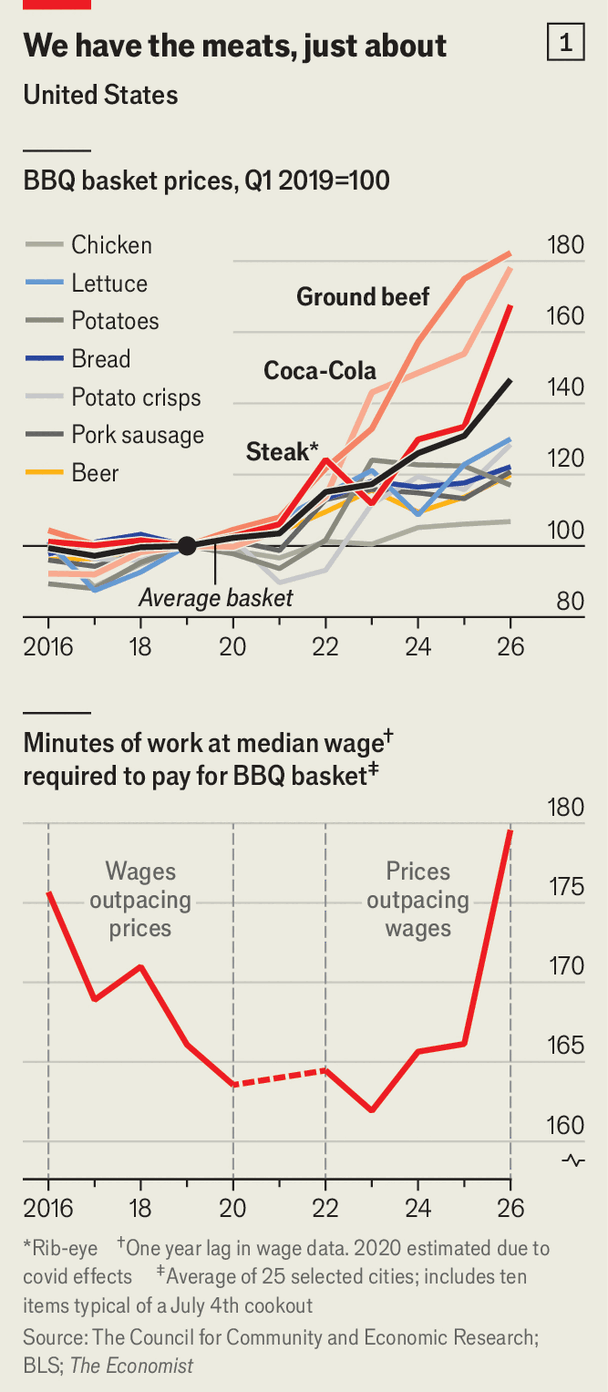
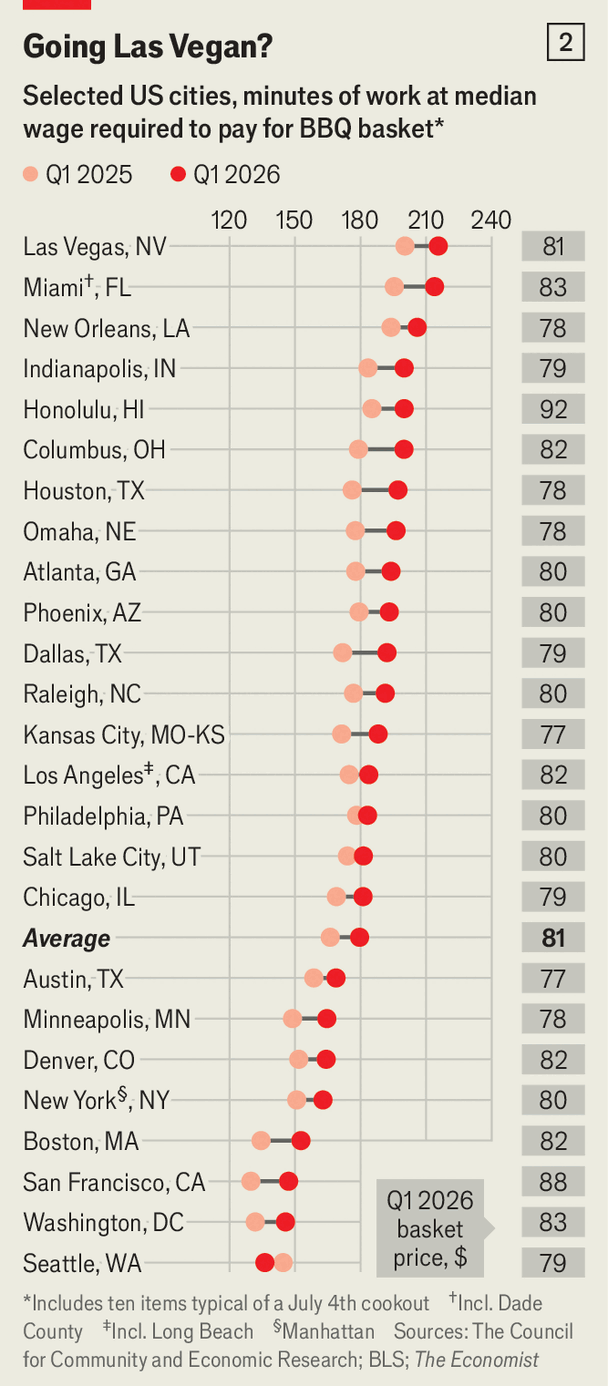
However, that aggregate(总体,合计) mask(掩盖,掩饰)s sharp and unpredictable increases in the prices of some staples, which consumers tend to notice particularly. A recent survey by the Kitchen Table Project(厨房餐桌项目), an advocacy group, found groceries to be Americans’ biggest source of financial pressure, with meat and poultry causing the most stress(with + n + V-ing独立主格). As the United States celebrates its 250th anniversary on July 4th, the Independence Day cookout offers a timely measure of what classic Americana costs.
然而,这一总体数据掩盖了一些主食价格急剧且不可预测的上涨,消费者对此尤为敏感。最近由倡导组织“厨房餐桌项目”进行的一项调查发现,食品杂货是美国人的最大财务压力来源,其中肉类和家禽造成的压力最大。在美国于7月4日庆祝建国250周年之际,独立日烧烤为经典美国文化的代价提供了一个及时的衡量标准。
Got mulch?
有多覆盖物?