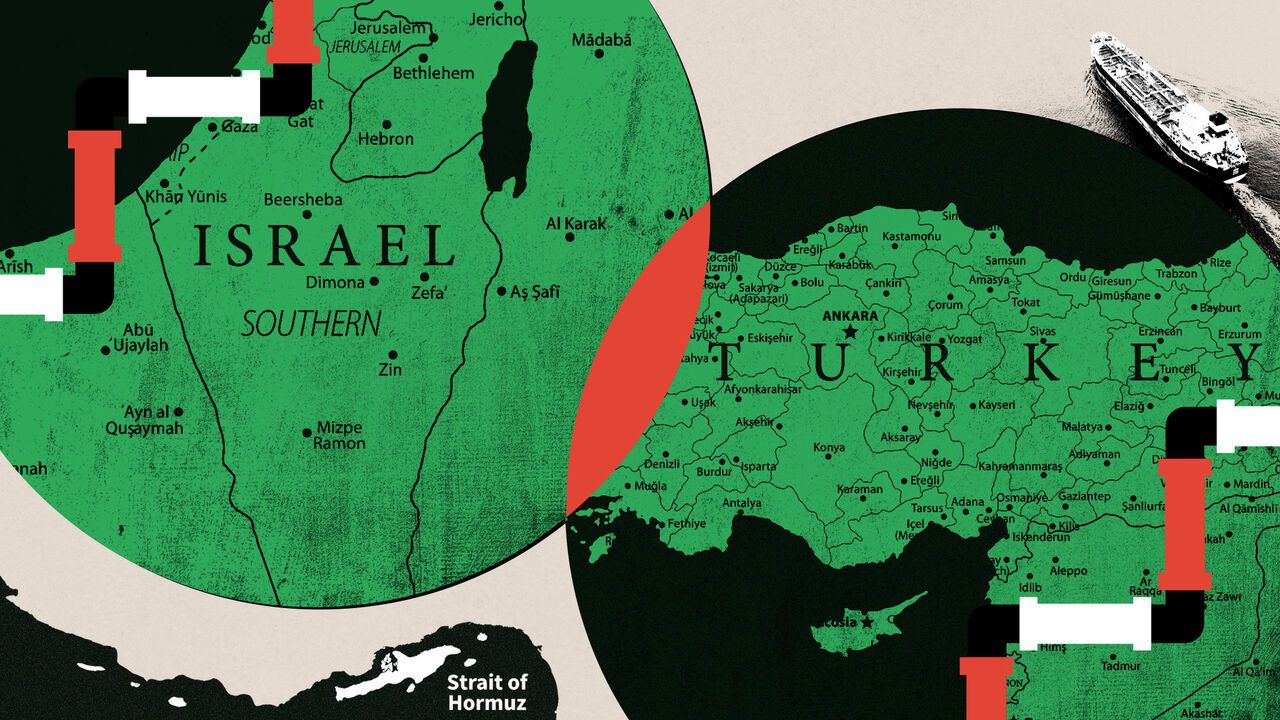
A minister in Turkey has spoken of one day “ruling(统治;裁决)” Jerusalem. Israeli officials have warned darkly(阴沉地;神秘地) that Turkey is “the new Iran”. Listen to the volleys of invective(连珠炮般的谩骂) flying in both directions, and you might think that two of the Middle East’s pivotal(关键的;枢纽的) powers are heading for conflict(走向冲突).
土耳其的一位部长曾谈到有朝一日“统治”耶路撒冷。以色列官员则阴沉地警告说土耳其是“新伊朗”。听听双方你来我往的连珠炮般的谩骂,你可能会以为这两个中东的关键大国正走向冲突。
The tension is real. Turkey, a mostly Muslim country, fumes over(对……感到愤怒) Israel’s ill-treatment(虐待;不公正对待) of Palestinians. Israel accuses Turkey of harbouring(窝藏;庇护) leaders of Hamas, the Islamist group that attacked Israel on October 7th 2023. Each thinks the other threatens its borders. Israel has fostered ties with Kurds, including some that Turkey’s government, ever wary of(始终警惕) Kurdish nationalism, sees as enemies. Turkey has close relations with the ex-jihadists(前圣战分子) now ruling Syria, who appear to be reformed(改过自新的;经过改革的) but who Israel fears could one day prove hostile to(对……表现出敌意) the Jewish state.
紧张局势是真实存在的。土耳其作为一个以穆斯林为主的国家,对以色列虐待巴勒斯坦人感到愤怒。以色列指责土耳其窝藏哈马斯领导人,哈马斯是2023年10月7日袭击以色列的伊斯兰组织。双方都认为对方威胁到自己的边界。以色列与库尔德人建立了联系,其中包括一些土耳其政府因一直警惕库尔德民族主义而视为敌人的群体。土耳其与现在统治叙利亚的前圣战分子关系密切,这些人似乎已经改过自新,但以色列担心他们未来可能对犹太国家怀有敌意。
Israel’s prime minister and Turkey’s president often swap ferocious insults(互相猛烈辱骂). Binyamin Netanyahu recently called Recep Tayyip Erdogan an “antisemitic(反犹太的) dictator(独裁者)” who is “committing genocide against(对……实施种族灭绝) the Kurds”. Then again, Mr Erdogan has likened the Israeli leader to Hitler, saying Israel is a chaos factory(混乱工厂) fuelled “by blood and tears”.
以色列总理和土耳其总统经常互相猛烈辱骂。本雅明·内塔尼亚胡最近称雷杰普·塔伊普·埃尔多安为“反犹独裁者”,并说他在“对库尔德人实施种族灭绝”。同样,埃尔多安将以色列领导人比作希特勒,称以色列是一个靠“鲜血和眼泪”驱动的混乱工厂。