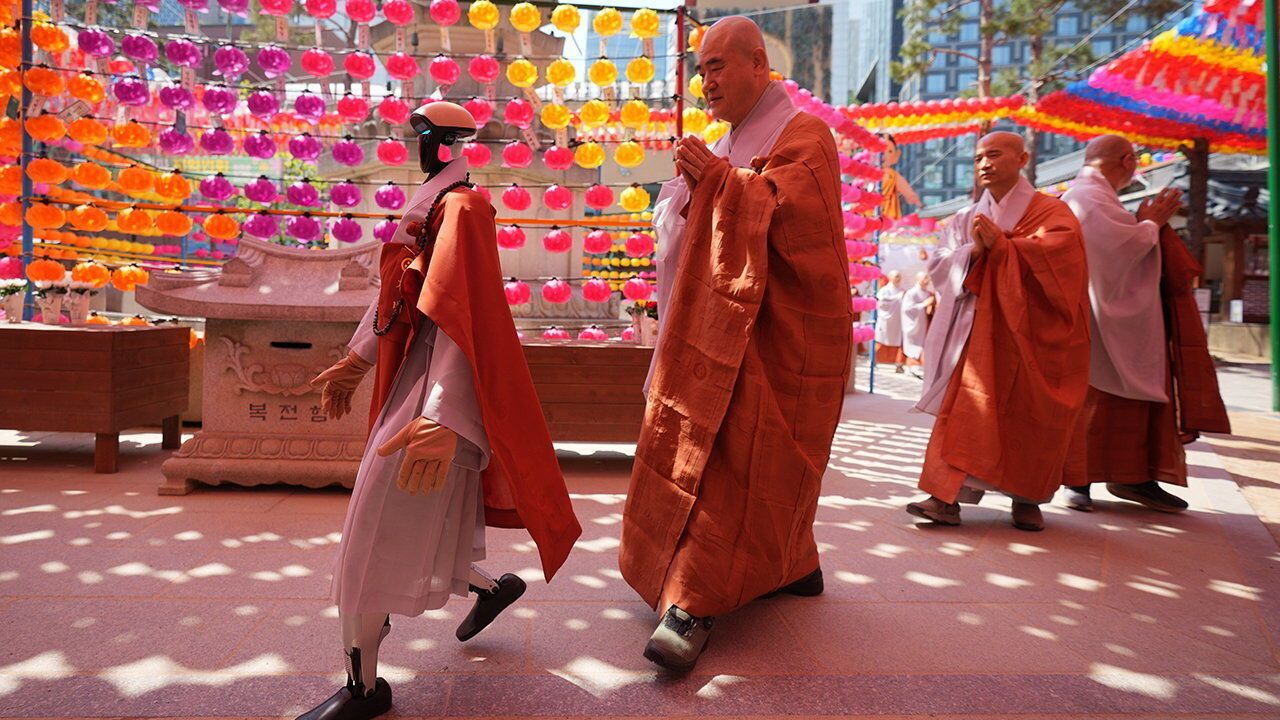
A ROBOT MONK trundles(缓慢行进,笨重地移动) across the exhibition hall of the Korean Buddhism Culture Expo in the city of Daegu. The humanoid, called Gabi, was unveiled in May and has since generated a new buzz(热议,兴奋氛围) about an ancient religion. Buddhists in South Korea have recently been trying to appear less old-fashioned, says Bae Ji-yun, a 26-year-old attending the expo and sifting through T-shirts bearing slogans such as “Shut up and meditate(闭嘴,冥想吧)”. Their efforts seem to be paying off(带来回报,取得成功). The event used to draw mainly Buddhists, but it increasingly attracts casual shoppers too. A similar expo this year in Seoul, the capital, drew a quarter of a million(二十五万) visitors, mostly youngsters.
一个机器人僧侣在韩国大邱市佛教文化博览会的展厅中缓缓穿行。这个名为加比的人形机器人于5月亮相,此后为这一古老宗教带来了新的关注热潮。26岁的裵智允正在展会上翻捡印有「闭嘴,冥想吧」等标语的T恤衫,她表示韩国佛教徒近来一直试图让自己显得不那么过时。他们的努力似乎正在奏效。该活动过去主要吸引佛教徒,但现在也越来越多地吸引普通购物者。今年在首都首尔举办的类似博览会吸引了25万参观者,其中大部分是年轻人。
Gloomy young Koreans are drawn to Buddhism. Young adults report that life is increasingly stressful and competitive. The number of young who are economically inactive(经济上不活跃的(未就业或未求职)) is said to have nearly tripled(三倍增长(增加两倍)) since 2004. Buddhism, which views suffering as an unavoidable feature of life and strives to rise above it, offers them some comfort.(佛教将痛苦视为生活中不可避免的特性,并努力超越痛苦,这给了他们一些安慰。) The religion generates faith in oneself rather than in a deity, says Kim Su-jin, a 25-year-old who recently trek(长途跋涉(尤指徒步))ked to a temple in search of(为了寻找,寻求) inner peace. Buddhism remains the religion viewed most favourably by secular Koreans, a recent poll shows. Books about mindfulness such as “Life Hacks from the Buddha(《佛陀的生活窍门》—将修行智慧转化为实用技巧的畅销书)” are bestsellers. Last year temples hosted a record number of overnight guests.
情绪低落的韩国年轻人被佛教所吸引。年轻人报告说生活压力越来越大、竞争越来越激烈。据说自2004年以来,处于经济不活跃状态的年轻人数量几乎增加了两倍。佛教将痛苦视为生活中不可避免的特性,并努力超越痛苦,这给了他们一些安慰。25岁的金秀珍最近跋涉到一座寺庙寻求内心平静,她说这种宗教产生的是一种对自身的信仰,而非对神明的信仰。最近的一项民意调查显示,佛教仍然是世俗韩国人评价最高的宗教。《佛陀的生活窍门》等正念类书籍成为畅销书。去年,寺庙接待的过夜客人数量创下了纪录。
Buddhist leaders hope the interest will revitalise(使复兴,注入新活力) their fading(衰退的,逐渐消失的) religion. South Koreans, especially young ones, are becoming less religious overall. The number of practising(修行的,实践宗教活动的) Buddhists is shrinking. Fewer new monks join monasteries: ordination(授戒仪式,任命神职人员)s within the Jogye order(曹溪宗—韩国最大的佛教宗派), the largest in South Korea, have dropped to less than a third of their level two decades ago.
佛教领袖希望这股兴趣能重振他们日渐衰落的宗教。韩国人,尤其是年轻人,整体上正变得越来越不虔诚。修行佛教徒的数量正在萎缩。加入寺院的新僧侣越来越少:韩国最大的曹溪宗内的授戒人数已降至二十年前水平的三分之一以下。