The “People’s House” in Desford, Leicestershire, was a humble(简陋的,谦卑的) home. With three small bedrooms and hot water heated by a coal fire, in 1952 it was the Conservative government’s model solution(示范性解决方案) to Britain’s post-war housing crisis. Taking just 12 weeks and £952 to build (£24,500, or $33,000, in today’s prices), the house was rented from the council(市政委员会,地方议会) for 16 shilling(先令(英国旧货币))s a week, a 30% market discount and equivalent to about 10% of average manual wages.
莱斯特郡德斯福德的“人民之家”是一处简陋的住宅。它有三间小卧室,热水靠煤火加热,1952年成为保守党政府应对英国战后住房危机的样板方案。仅用12周和952英镑(按今日价格计算为24,500英镑,即33,000美元)便建成,该房屋以每周16先令的价格从市政局租得,相当于市场价格打七折,约为平均体力劳动者工资的10%。
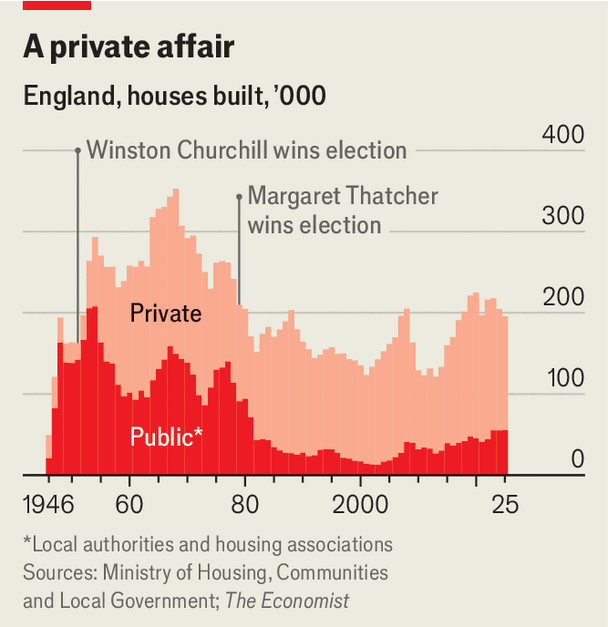
Andy Burnham, the prime-minister-in-waiting(候任首相), is nostalgic(怀旧的,留恋过去的) about these post-war council homes, which he thinks used to be “the foundation for everything(一切的基础)”. In a speech on June 29th he asked: “If you don’t give people a good home, what chance have they got of having a good life?” One of his few bold(大胆的,勇敢的) policy promises was to “oversee(监督,监管) the biggest council-housebuilding programme since the post-war period”.
候任首相安迪·伯纳姆对这些战后的市政住房怀有怀旧之情,他认为这些住房曾经是“一切的基础”。在6月29日的一次演讲中,他问道:“如果不给人们一个良好的家,他们有多少机会拥有美好的生活?”他为数不多的大胆政策承诺之一就是“监督自战后以来最大的市政住房建设计划”。
But council housing is not the only way to give people a good home. Sir Keir Starmer, the outgoing prime minister, focused on enabling private housebuilding, through planning reform, rather than the state picking up the shovel(亲自上阵,直接参与). The most sensible(明智的,合理的) thing for Mr Burnham to do would be to ease(缓解,放宽) planning restrictions further and to relax regulations, such as environmental requirements. Instead, he has said that “undue(过度的,不适当的) weight” has been placed on planning reform—he wants to return housing to its post-war heyday(全盛时期) of state-led intervention.
但市政住房并不是给人们一个良好家园的唯一途径。即将离任的首相基尔·斯塔默爵士专注于通过规划改革促进私人建房,而非国家亲自上阵。对伯纳姆来说,最明智的做法是进一步放宽规划限制和放松监管,比如环保要求。相反,他表示规划改革被赋予了“不适当的权重”——他想要让住房回归战后国家干预的鼎盛时期。
A nation of homebuilders
一个由房屋建造者组成的国家