Animals living on islands can develop strange characteristics. (Just look at the British.) Isolated, safe from mainland predators(捕食者) and facing less competition for resources, island-dwellers often evolve(进化) differently from mainland relatives. Some develop “island syndromes(岛屿综合征)”. For example, small animals get bigger and big animals get smaller. The dodo(渡渡鸟) of Mauritius evolved from the size of a pigeon to that of a large turkey, losing the use of its wings along the way(在此过程中失去飞行能力).
生活在岛屿上的动物可能会发展出奇怪的特征。(看看英国人就知道。)由于与世隔绝、不受大陆捕食者威胁、资源竞争更少,岛屿居民常常进化出与大陆亲属不同的特征。有些会发展出“岛屿综合征”。例如,小型动物变大,大型动物变小。毛里求斯的渡渡鸟从鸽子大小进化到大火鸡大小,并在此过程中失去了飞行能力。
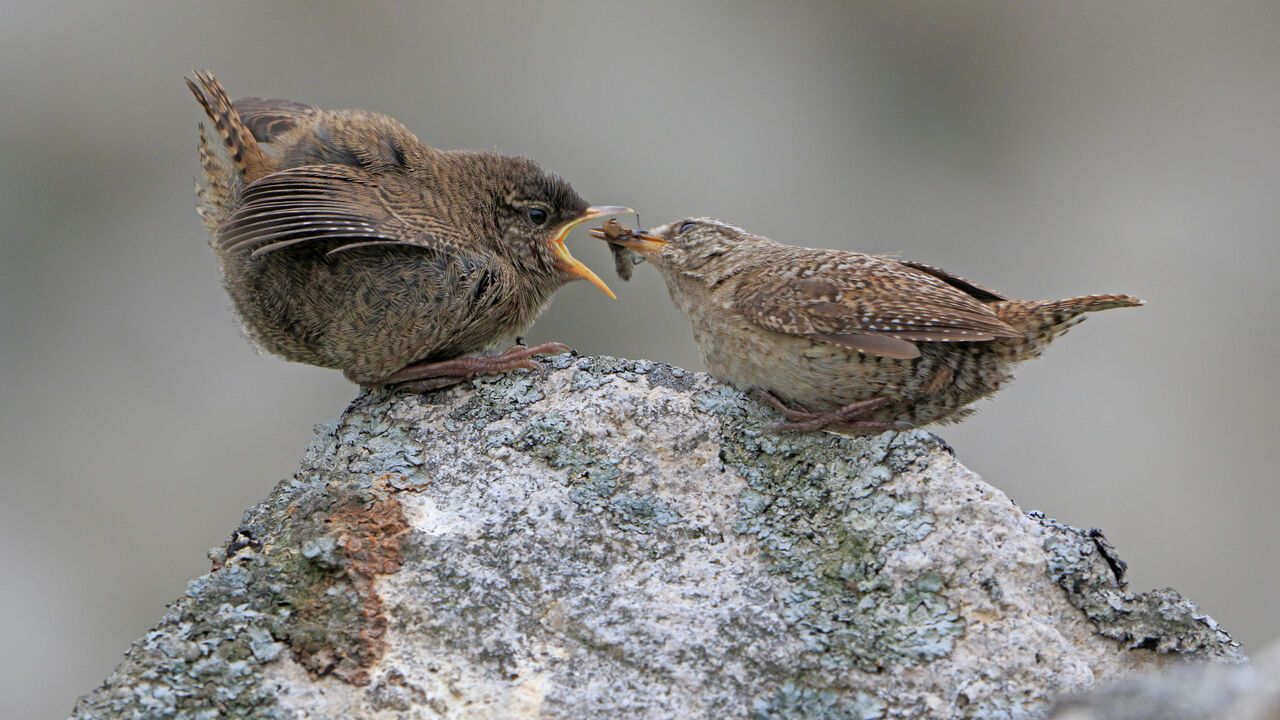
Some wrens in Scotland have developed the syndrome. Cut off from mainland Britain for thousands of years, two subspecies(亚种) on St Kilda and Shetland, a pair of archipelagoes(群岛), have evolved(进化) to be much larger than mainland wrens, says a recent paper in the Evolutionary Journal of the Linnean Society.
苏格兰的一些鹪鹩也出现了这种综合征。根据最近发表在《林奈学会进化期刊》上的一篇论文,圣基尔达和设得兰这两个群岛上的两个亚种,与英国大陆隔绝数千年后,已经进化得比大陆鹪鹩大得多。
Researchers set mist nets(雾网) beside speakers playing recordings of wren song across Shetland, Fair Isle, the Outer Hebrides and St Kilda—a method to lure birds out of cover. “Catching them was a nightmare,” says Michal Jezierski, the paper’s lead author. Wrens are so territorial(领土性的) that when song played, the birds simply sang back, refusing to budge(拒绝移动). Still, the team caught 45 wrens, enough to study systematically(系统地). Using data of historical specimens from the National Museums Scotland, and body-mass records from the British Trust for Ornithology, they compared the island wrens with their mainland relatives—and with 695 other island-mainland bird pairs.(他们利用来自苏格兰国家博物馆的历史标本数据以及英国鸟类学信托基金的体重记录,将岛屿鹪鹩与大陆亲属——以及另外695对岛屿-大陆鸟类——进行了比较。)
研究人员在设得兰、费尔岛、外赫布里底群岛和圣基尔达岛放置雾网,旁边播放鹪鹩鸣叫的录音——这是一种将鸟从掩蔽处诱出的方法。论文的主要作者米哈尔·杰日尔斯基说:“捉它们简直是一场噩梦。”鹪鹩领地意识极强,以至于当歌声响起时,它们只是跟着唱,拒绝移动。尽管如此,团队还是捉到了45只鹪鹩,足以进行系统研究。他们利用来自苏格兰国家博物馆的历史标本数据以及英国鸟类学信托基金的体重记录,将岛屿鹪鹩与大陆亲属——以及另外695对岛屿-大陆鸟类——进行了比较。