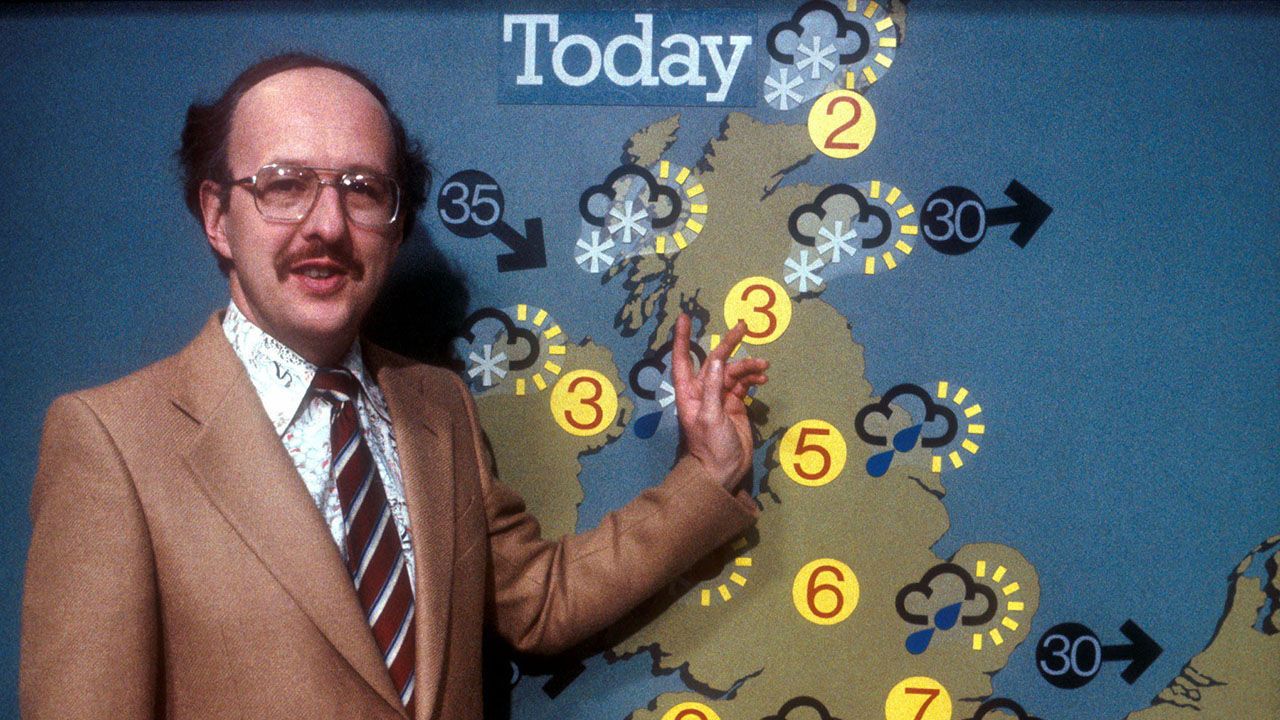
Chatting about the weather is a national pastime(国民消遣、全民爱好) in Britain—and successive heatwaves have recently given Britons lots to discuss. In the past, the obsession did not translate into(转化为、导致) faith(信仰、信任) in weather forecasters. Memories lingered(继续存留、久久不散) of the “great storm” of 1987, a deadly cyclone(气旋、风暴). The BBC’s best-known forecaster, Michael Fish (pictured), said on air that a woman had called in(打电话进来) worrying there might be a “hurricane” approaching Britain. “If you’re watching, don’t worry, there isn’t!” he quipped(俏皮地说、打趣). Hours later the storm struck.
讨论天气是英国的一项国民消遣——接连的热浪近来给英国人提供了大量谈资。过去,这种痴迷并未转化为对天气预报员的信任。人们对1987年那场致命旋风"大风暴"记忆犹新。英国广播公司最知名的预报员迈克尔·菲什(如图)在节目中表示,一位女士来电担心可能有"飓风"逼近英国。"如果你在看,别担心,没有!"他打趣道。数小时后风暴来袭。
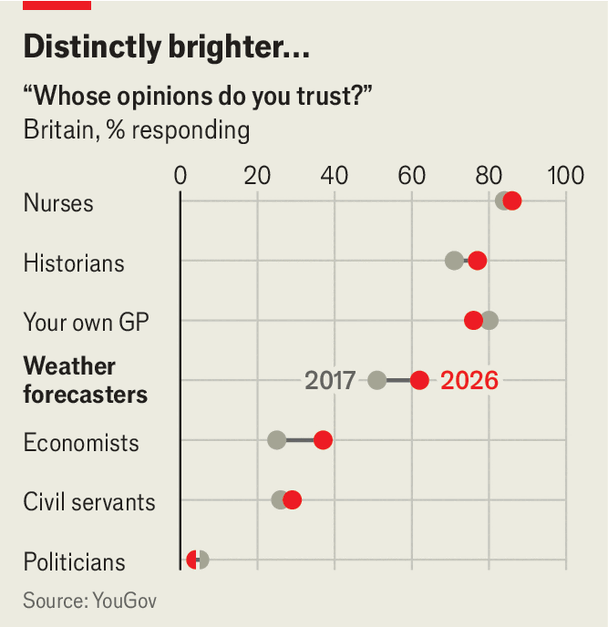
YouGov, a pollster(民调机构、民意调查者), found in 2017 that barely(仅仅、勉强) half of people trusted forecasters to give them accurate information about the weather. But that has changed. A recent YouGov survey finds that now 62% of Britons trust them and just 25% are sceptical(怀疑的)—still far behind trust in nurses (86%), but well ahead of economists (37%), let alone(更不用说) politicians (a mere 4%). The change is partly because forecasts are more accurate than ever thanks to(由于、多亏) advances(进步、进展) in technology, suggests Alex Deakin of the Met Office(英国气象局). It also helps that fewer people today remember the 1987 storm.
民调机构YouGov在2017年发现,只有勉强过半的人相信天气预报员能提供准确天气信息。但情况已经改变。YouGov最新调查显示,现在62%的英国人相信他们,仅25%持怀疑态度——仍远低于对护士的信任度(86%),但领先经济学家(37%)一大截,更不必说政客了(仅4%)。英国气象局的亚历克斯·迪金认为,变化部分源于技术进步使预报比以往更准确。另一个原因是如今记得1987年风暴的人更少了。
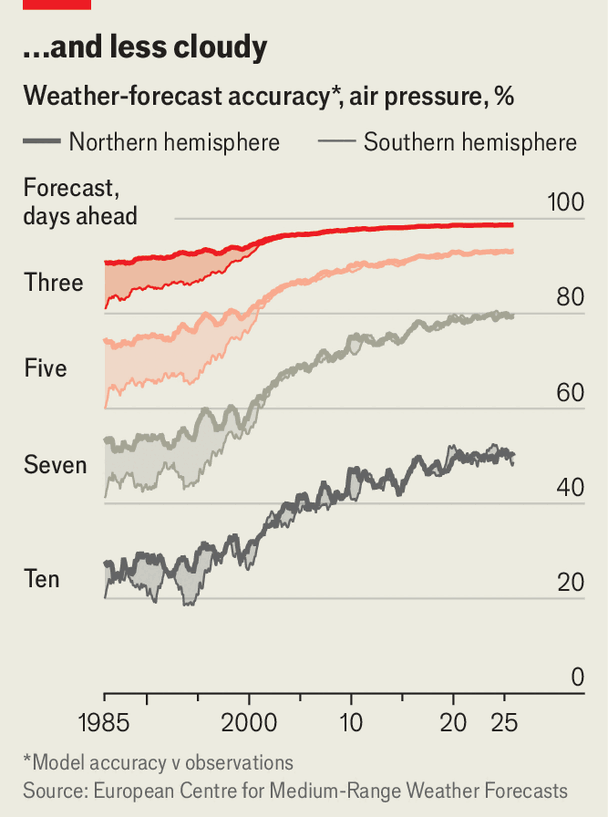
Indeed, that storm prompted(促使、引发) investment in weather-forecasting tech and communications protocols(通信协议). Liam Dutton, a weather presenter for Channel 4 News, says the model he relies on divides Britain into squares of 2km (1.2 miles) a side, whereas(然而、鉴于) a decade ago the highest resolution(分辨率、清晰度) possible was 12km. The average accuracy of a forecast four days into the future is comparable to(可与…相比) that of a one-day forecast in the 1990s. Under-25s, who grew up in an era of reliable forecasts, are by a large margin(以大幅优势) most likely to trust forecasters.
事实上,那场风暴促使了对天气预报技术和通信协议的投资。第四频道新闻的天气主播利亚姆·达顿表示,他所依赖的模型将英国划分为边长2公里(1.2英里)的方格,而十年前最高分辨率仅为12公里。现在对未来四天的预报平均准确度与20世纪90年代的一天预报相当。25岁以下的年轻人成长于预报可靠的年代,他们最有可能信任预报员,且优势明显。