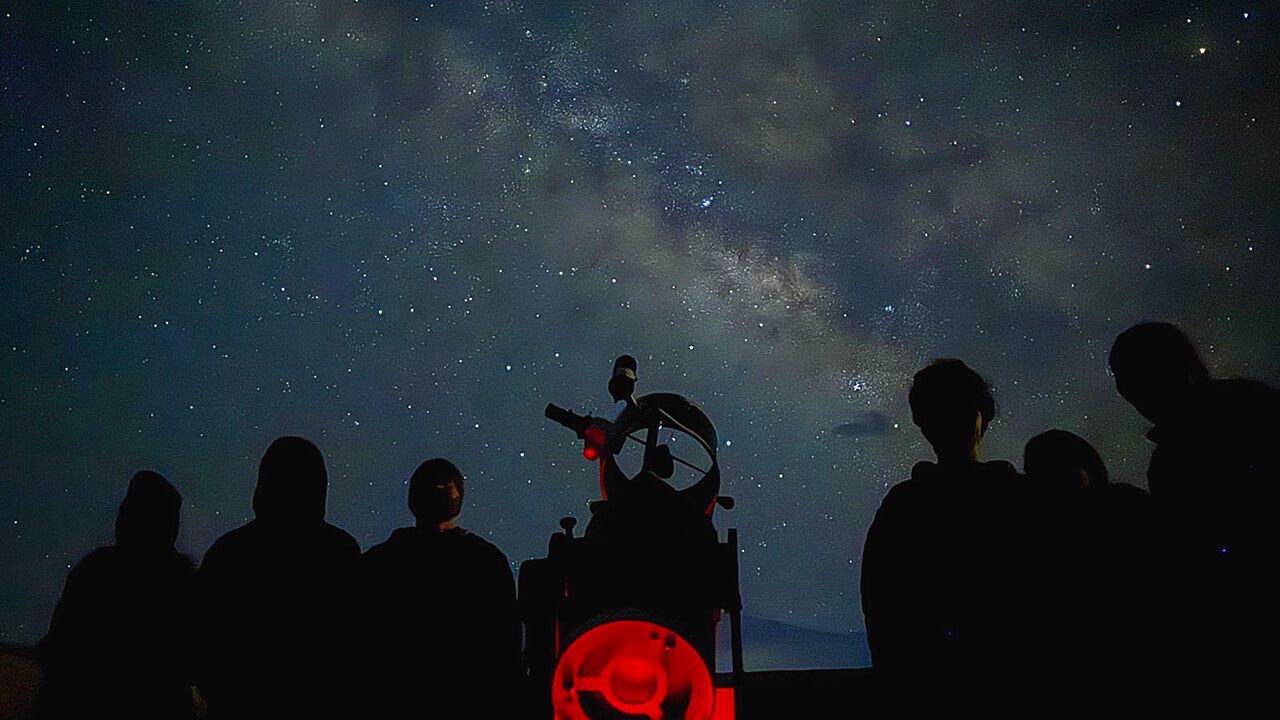
FOR MILLENNIA starry nights have guided navigators, perplexed(使困惑的) astronomers and inspired painters. But they are becoming a rarer sight. At least 80% of the world lives under light-polluted skies(光污染的天空)—a figure that rises to 99% in America and Europe. A paper published in Science found that between 2011 and 2022 the night sky grew almost 10% brighter each year. With so many places awash(充斥的,泛滥的) with artificial light, people are increasingly seeking out the darkness.
数千年来,星空指引着航海者,困扰着天文学家,也启发了画家。但它们正变得越来越罕见。全球至少80%的人口生活在光污染的天空下——在美国和欧洲,这一数字高达99%。《科学》杂志发表的一篇论文发现,2011年至2022年间,夜空每年变亮近10%。由于如此多的地方充斥着人造光,人们越来越渴望寻找黑暗。
Many became starry-eyed(迷恋星空;天真的) during the pandemic. Confined to their homes, people took to gazing at the cosmos(宇宙). (It helped that lockdown contributed to a drop in light pollution in lots of places.) Some turned to social media—and online communities such as “SpaceTok(TikTok上的天文社区)”—for information. Once restrictions lifted, these hobbyists planned their trips accordingly.
许多人在疫情期间变得迷恋星空。由于被困在家中,人们开始仰望宇宙。(封锁措施导致许多地方光污染减少,这也有帮助。)一些人转向社交媒体——以及诸如“SpaceTok”之类的在线社区——寻找信息。一旦限制解除,这些爱好者便相应地规划了旅行。
The forecasts for companies offering “astrotourism(天文旅游)” and “noctourism(夜间旅游)” are anything but cloudy(绝非阴天;前景光明). In 2024 a survey by Booking.com, a travel website, found that 62% of people were interested in destinations with limited light pollution. To meet the demand for “cosmic escapism(逃避主义)”, some hotels now provide access to telescopes and in-house astronomers. Others are offering star-bathing(星光浴) and moonlit meditation.
提供“天文旅游”和“暗夜旅游”的公司,前景一片光明。2024年,旅游网站Booking.com的一项调查发现,62%的人对光污染有限的旅游目的地感兴趣。为了满足“宇宙逃避主义”的需求,一些酒店现在提供望远镜和驻店天文学家。其他酒店则提供“星光浴”和月光冥想。