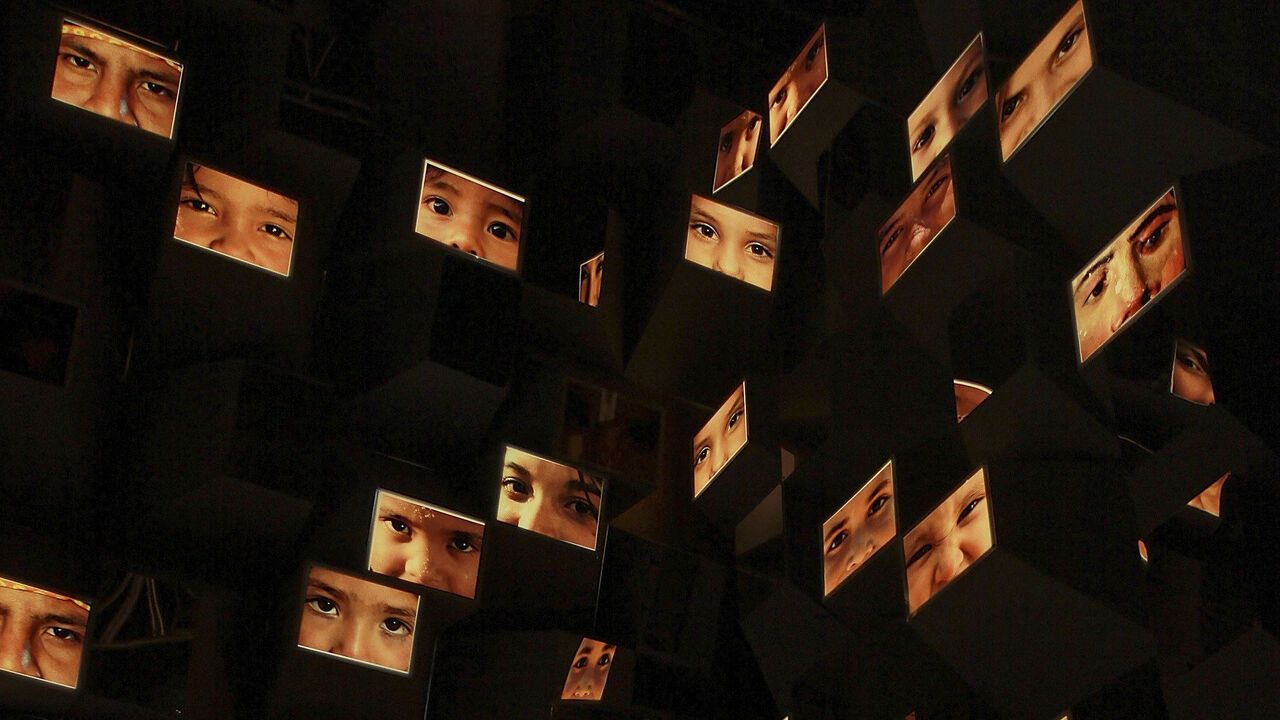
The Face. By Fay Bound-Alberti. Grand Central Publishing; 288 pages; $30. Allen Lane; £25
《面孔》。作者:费伊·鲍德-阿尔贝蒂。大中央出版社;288页;30美元。艾伦·莱恩出版社;25英镑。
CAST YOUR mind back(让思绪回到过去) to this morning. The first thing you probably did after you woke up was reach for(伸手去拿) your smartphone and hold it up in front of your bleary(视线模糊的,惺忪的) eyes to unlock it. Out of bed, you looked in a mirror and decided whether to shave or apply makeup. Perhaps you smilingly cajoled(哄骗,劝诱) a child to eat or joined a Zoom call (and tried not to look at yourself).
将你的思绪拉回到今天早上。你醒来后做的第一件事可能是伸手拿起智能手机,举到惺忪的眼前解锁。下床后,你照了照镜子,决定是刮胡子还是化妆。也许你微笑着哄孩子吃饭,或者参加一个Zoom会议(并尽量不看自己)。
Central to(对……至关重要) all those actions was your face: the particular shape and arrangement of your forehead, eyes, nose, mouth and chin. Those dimensions(尺寸,维度) are used to identify you (on your passport, for instance, or via your phone’s Face ID). They will determine whether people trust you, fancy(喜欢,爱慕) you or believe you are the right person for a job. If you are ever accused of a crime, they could influence whether or not the jury is inclined(有……倾向的) to find you guilty.
所有这些行动的核心是你的面孔:额头、眼睛、鼻子、嘴巴和下巴的特定形状与排列。这些尺寸被用来识别你(例如在护照上,或通过手机的面部识别)。它们将决定人们是否信任你、喜欢你,或认为你是某个职位的合适人选。如果你被指控犯罪,它们甚至可能影响陪审团是否倾向于判你有罪。