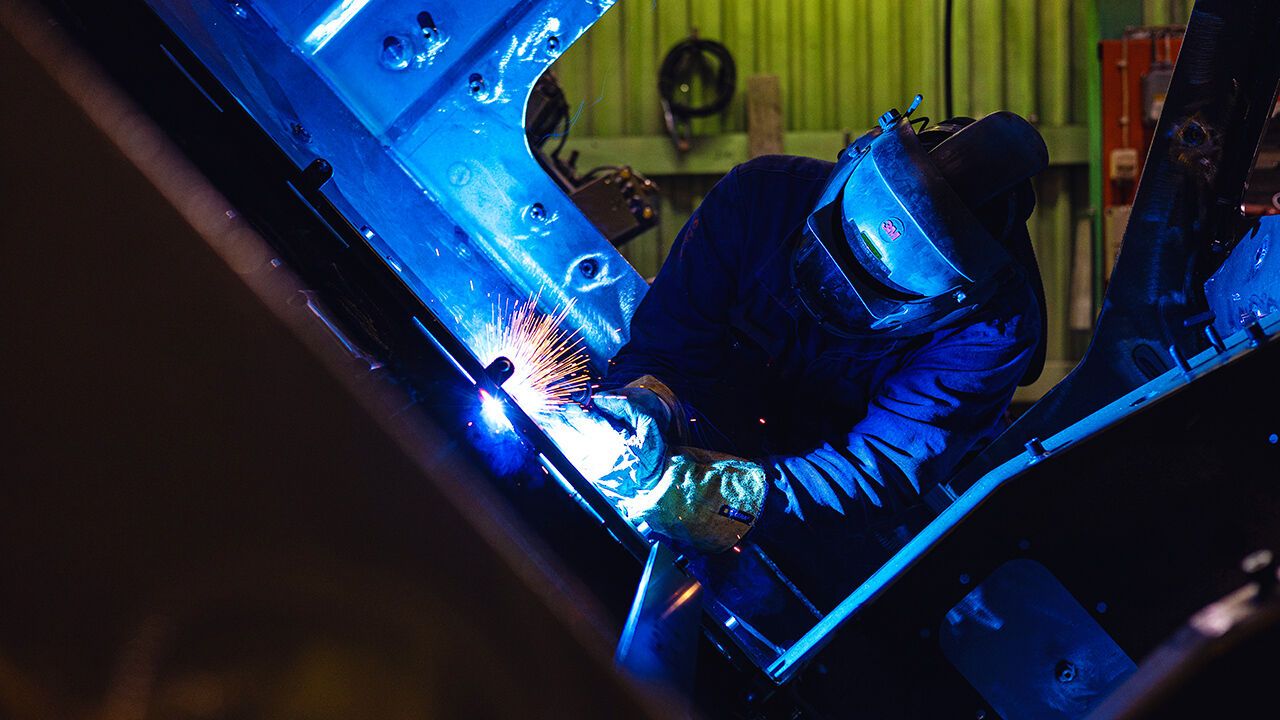
A UKRAINIAN FLAG inscribed(刻有,题写) in Cyrillic(西里尔字母) with the words “Thanks, always” hangs at a factory in northern Sweden, where slabs of steel are transformed into hundreds of armoured vehicles each year. The flag was presented by Ukraine’s 21st Brigade, which operates the CV90 infantry fighting vehicle(步兵战车) made here. Its soldiers affectionately call(亲切地称为) it “the Scandinavian beast(斯堪的纳维亚猛兽(CV90别称))”. The flag is a daily reminder to employees of how they are contributing to the security of Europe.(这面旗帜每天都在提醒员工,他们正在为欧洲的安全做出贡献。) “It is good to see that we have helped people,” says Julia, who works on an assembly line.
瑞典北部一家工厂内,悬挂着一面用西里尔字母写着“永远感谢”的乌克兰国旗。在这里,钢板每年被制成数百辆装甲车。这面国旗由乌克兰第21旅赠送,该旅使用的正是此地制造的CV90步兵战车。士兵们亲切地称它为“斯堪的纳维亚猛兽”。这面旗帜每天都在提醒员工,他们正在为欧洲的安全做出贡献。“看到我们帮助了别人,这很好,”在装配线上工作的朱莉娅说。
A decade ago the Hagglunds factory, owned by BAE Systems, Britain’s biggest defence firm(防务公司), was cutting costs to survive(为生存削减成本). Today it is expanding its capacity five- or six-fold to fulfil soaring(飙升的) orders. Revenue has surged(激增) from $211m in 2018 to $1.1bn in 2025, and is heading “north of $2bn(超过20亿美元)” a year, says Tommy Gustafsson-Rask, the general manager. The workforce has more than tripled(增至三倍) since 2021, to around 2,600.
十年前,赫格隆工厂(由英国最大防务公司BAE系统公司所有)为求生存而削减成本。如今,它正将产能扩大五到六倍,以满足飙升的订单。营收从2018年的2.11亿美元飙升至2025年的11亿美元,总经理汤米·古斯塔夫松-拉斯克表示,年收入正“朝着20亿美元以上”迈进。员工人数自2021年以来增长了两倍多,达到约2600人。
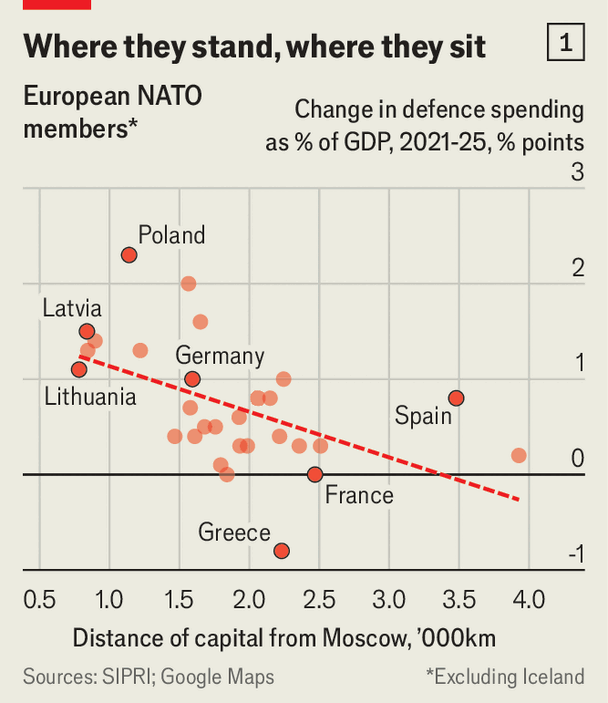
Prosperity in Ornskoldsvik is one side of Europe’s rearmament boom(重整军备热潮), as the continent rushes to meet a year-old(已有一年之久的) NATO agreement to raise defence spending to 3.5% of GDP (plus another 1.5% on security infrastructure) by 2035. Much of this money will go towards new equipment, from missiles to drones, tanks and warships. European NATO members must rebuild their armed forces to counter(应对,反击) a potential Russian attack, possibly without American support. For countries with substantial(大量的,重要的) defence industries, this investment will create economic growth.
恩舍尔兹维克(Örnsköldsvik)的繁荣是欧洲重整军备热潮的一面,因为欧洲大陆正急于履行一项已有一年之久的北约协议,即在2035年前将国防支出提高到GDP的3.5%(另外1.5%用于安全基础设施)。这些资金大部分将用于新装备,从导弹到无人机、坦克和军舰。欧洲北约成员国必须重建军队,以应对可能的俄罗斯攻击,且可能没有美国的支持。对于拥有强大国防工业的国家来说,这项投资将创造经济增长。
A fistful of euros
一把欧元