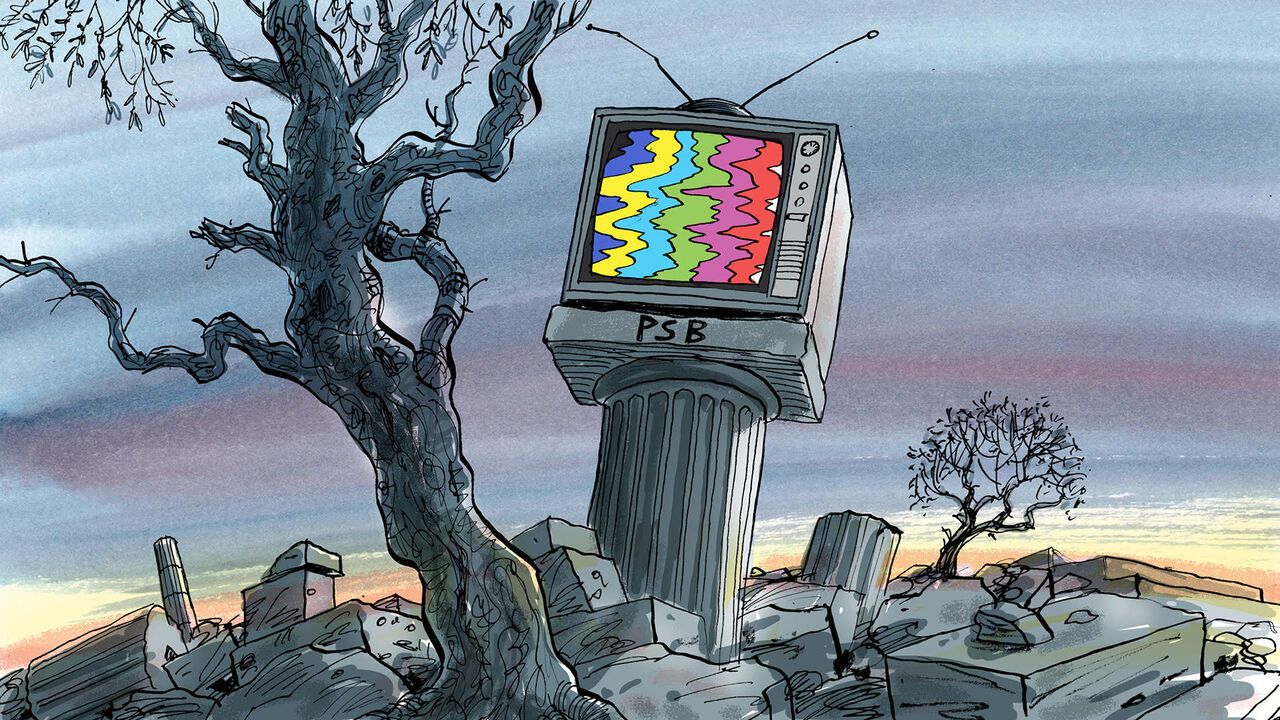
Every evening in dozens of European countries, a soothingly familiar(令人安心的熟悉) ritual unfolds. Cued in by a few bars of portentous(预兆性的、故作威严的) music, a much-loved newsreader delivers the day’s happenings with the solemnity of a suburban accountant(带着郊区会计师般的严肃). A cheery(欢快的、兴高采烈的) meteorologist then gestures at a map in a segment not much changed since the 1950s, bar the warming weather. Later a costume drama reminds viewers of a more decorous(得体的、端庄的) past. As the evening trundles on(缓慢地继续), a series imported from America passes the time, or a game show with unfathomable(难以理解的、莫测的) rules. On the other side of the television screen, meanwhile, teenagers slumped(瘫坐、耷拉着) on the living-room sofa are utterly unaware that any of this exists as they guzzle(狂饮、猛吃) another hour of TikTok on their phones before turning their attentions to YouTube.
在每个欧洲国家的夜晚,一种令人安心的熟悉仪式都会上演。随着几小节庄重的音乐响起,深受喜爱的新闻播音员以郊区会计师般的严肃口吻播报当天的新闻。一位兴高采烈的气象员随后在地图前比划,这一环节自1950年代以来几乎没有变化,除了气候变暖。接着,一部古装剧让观众回想起更加体面的过去。当夜晚缓缓推移,一部美国进口剧集或一个规则难懂的游戏节目消磨着时光。而在电视屏幕的另一边,瘫坐在客厅沙发上的青少年们对此全然不知,他们正在手机上狂刷TikTok又花了一小时,然后转向YouTube。
Likely as not(很可能), the content being studiously(刻意地、专心致志地) ignored by youngsters is the work of a public-service broadcaster, or PSB. These enduring mastodons(庞然大物、猛犸象) are often known by their mere initials—RAI in Italy, ZDF in Germany, TVP in Poland or the BBC in Britain. They are integral(不可或缺的、完整的) to modern European polities. Funded by the state but somehow not of it(由国家资助但不属于国家), they have long been as recognisable to citizens as royal families and the postal service. (Brits call theirs “Auntie”.) Turn on an old-fashioned television set and it will probably serve up a channel hosting a PSB as the cathode ray tubes(阴极射线管) warm up. Fiddle with(摆弄、调试) your car’s radio and soon enough the sound coming through the static(静电噪声) will belong to a publicly funded disc jockey.
很有可能,年轻人刻意忽视的内容正是公共广播公司(PSB)的作品。这些经久不衰的庞然大物通常只以其缩写闻名——意大利的RAI、德国的ZDF、波兰的TVP或英国的BBC。它们是现代欧洲政治体系中不可或缺的部分。虽然由国家资助,却又不完全属于国家,长期以来它们对公民而言就像王室和邮政服务一样熟悉。(英国人管BBC叫“阿姨”。)打开一台老式电视,随着阴极射线管预热,出现的很可能就是一个播放PSB的频道。摆弄车上的收音机,静电噪声中传来的声音很快就会属于某个公共资助的唱片骑师。
For decades after their founding in the 20th century, PSBs had a charmed life(幸运的生活、一帆风顺): the public in search of information or titillation(刺激、挑逗) had few alternatives. Commercial rivals sometimes made inroads(取得进展、打入), beating PSBs in the ratings by offering racier(更露骨的、更火辣的) shows. But public broadcasters’ funding was guaranteed by a dedicated licence fee levied(征收(税费)) on households, with advertising a handy sideline(便当的副业). Everyone knew where to find them. Their news set the national agenda. Once a year PSBs from Portugal to Finland joined forces for the Eurovision Song Contest, a festival of kitschy(低俗的、俗气的) pop put on by the European Broadcasting Union (EBU)(欧洲广播联盟), their umbrella group.
自20世纪成立以来的几十年里,PSB们过着得天独厚的生活:寻求信息或刺激的公众几乎没有其他选择。商业竞争对手偶尔会取得进展,通过提供更露骨的节目在收视率上击败PSB。但公共广播公司的资金由向家庭征收的专项收视费保证,广告则是一项便利的副业。每个人都知道去哪里找它们。它们的新闻设定国家议程。每年一次,从葡萄牙到芬兰的PSB都会联手举办欧洲歌唱大赛,这是一场由它们的上级组织欧洲广播联盟(EBU)举办的低俗流行音乐节。
But who then killed the video star?
但随后是谁杀死了视频明星?