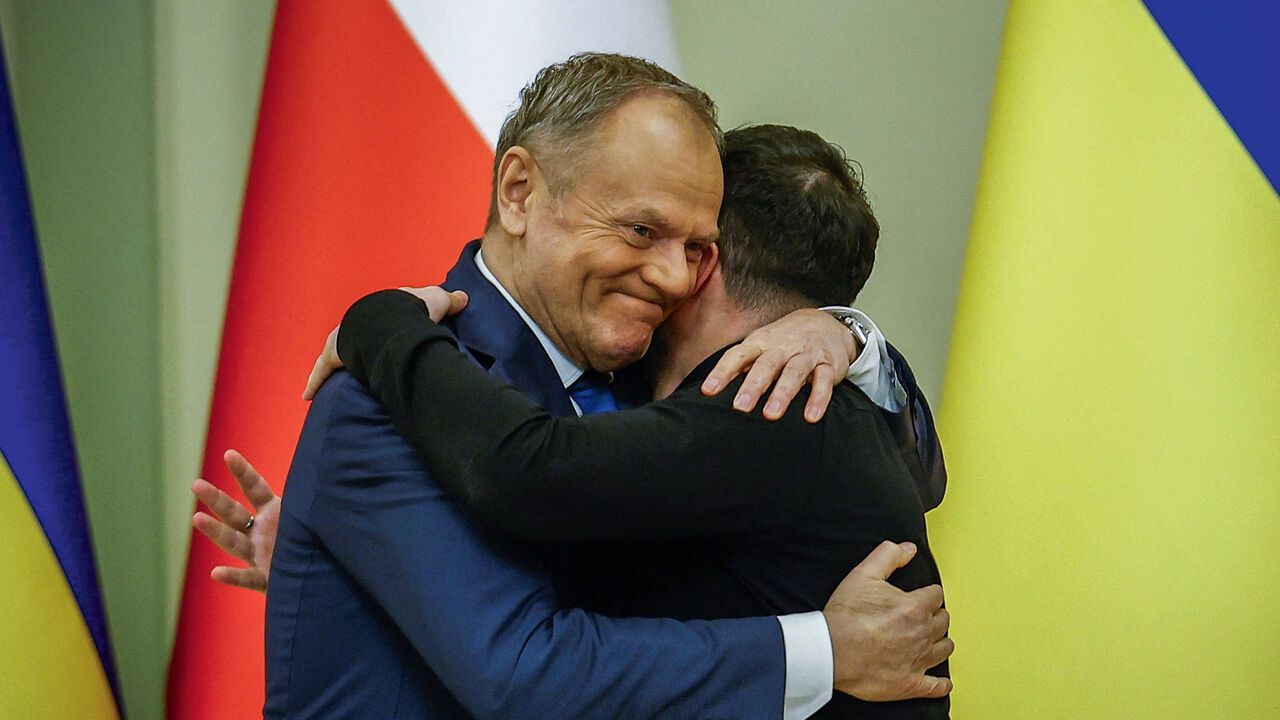
ON JULY 11th Poland commemorates(纪念,缅怀) the Volhynia massacres, in which some 100,000 Polish civilians were killed by Ukrainian nationalists in 1943 in what is now western Ukraine. The day used to be an occasion for dialogue. Polish and Ukrainian leaders together honoured the victims of the killings and of reprisals(报复行为) by Polish partisans. Local officials and priests organised vigils on both sides of the border.
7月11日,波兰纪念沃里尼亚大屠杀——1943年约10万波兰平民在现乌克兰西部被乌克兰民族主义者杀害。这一天过去曾是对话的契机。波兰和乌克兰领导人共同纪念遇难者以及波兰游击队的报复行动受害者。地方官员和神职人员在边境两侧组织了守夜活动。
Not this year. Poland and Ukraine, long close allies, are entangled in(卷入,陷入(困境)) a fight over Volhynia’s legacy. A Polish minister has warned that his country may block Ukraine’s accession to the European Union. And Poland has reneged(违约,背弃) on a deal to give Ukraine MIG-29 fighters, citing its unwillingness to share drone technology. Donald Tusk, Poland’s prime minister, has suggested he may withhold aid. The squabble(小争吵,口角) threatens lasting damage to one of Europe’s most crucial partnerships.
但今年不同。长期亲密盟友波兰和乌克兰因沃里尼亚的历史遗产陷入争执。一位波兰部长警告说,波兰可能阻挠乌克兰加入欧盟。波兰还撕毁了向乌克兰提供米格-29战斗机的协议,理由是乌克兰不愿分享无人机技术。波兰总理唐纳德·图斯克暗示他可能会暂停援助。这场争吵可能对欧洲最重要的伙伴关系之一造成持久伤害。
The latest dispute began in late May, after Ukraine’s president, Volodymyr Zelensky, named a special-forces unit after the Ukrainian Insurgent Army (UPA), which during the second world war fought the Soviets and the Nazis (though it occasionally co-operated with the latter). Ukrainians celebrate the insurgents(起义者,叛乱者) as a symbol of resistance against Moscow. Poles revile(辱骂,痛斥) them for the massacres, which Poland officially considers a genocide(种族灭绝).
最近的争端始于5月下旬,乌克兰总统泽连斯基将一支特种部队命名为乌克兰起义军(UPA)。该部队在二战期间与苏联和纳粹作战(虽然偶尔与后者合作)。乌克兰人将起义军视为抵抗莫斯科的象征。波兰人则因大屠杀而痛斥他们,波兰官方将其视为种族灭绝。
Ancient quarrels
陈年旧怨