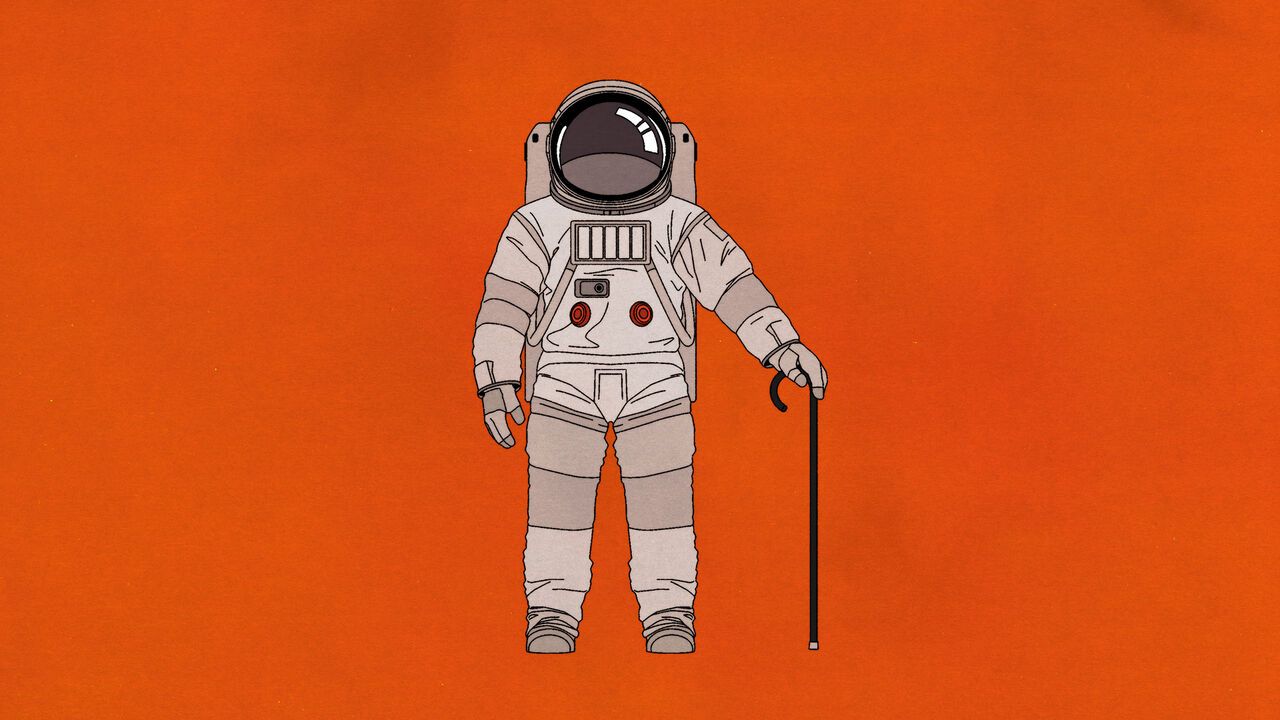
The year is 2100. It is a grim(严峻的,令人沮丧的) time to be of working age. Not only must you put up with rising sea levels, rampant rogue AIs and colleagues who, 80 years after the pandemic, still do not know how to mute themselves on a video call, but your take-home pay is meagre.(你不仅要忍受海平面上升、猖獗的流氓人工智能以及那些在疫情80年后仍然不知道如何在视频通话中静音自己的同事,而且你的实得工资微薄。) Taxes to finance state support for the vast grey population(老年人口(灰发人群)) take an ever-larger chunk(一大块,大部分) of your wage. After a century of health-care spending growing faster than the economy, there is little for anything but pills, hospital beds and nurses.
时间已是2100年。对于处于工作年龄的人来说,这是一个严峻的时代。你不仅要忍受海平面上升、猖獗的流氓人工智能,以及那些在疫情80年后仍然不知道如何在视频通话中静音自己的同事,而且你的到手工资微薄。用于资助国家支持庞大老年人口的税收,占你工资的比例越来越大。经过一个世纪医疗支出增速超过经济增长之后,除了药片、病床和护士,几乎没有其他东西。
Economic theory lends support to(支持,为……提供依据) science fiction. Spending on health care depends on how much it costs to provide and how much treatment is needed. Generally, the former has increased over time. Economists attribute this to Baumol’s cost disease, diagnosed(诊断,识别) by William Baumol, an American economist. Technologically intensive sectors (think of manufacturing or software development) get more productive. Labour-intensive service sectors do not. A doctor’s consultation(咨询,问诊) takes roughly as long as it did a century ago. Yet physicians’ pay must match increases in(与……的增长相匹配) faster-growing skilled industries, or all the doctors will go to work in tech. (Baumol pointed out that a string quartet(弦乐四重奏) still took 45 minutes to perform a Schubert work, but was paid vastly(极大地,非常) more than when the composer was alive.)
经济学理论为科幻小说提供了支持。医疗支出取决于提供服务的成本以及所需的治疗量。通常,前者随着时间的推移而增加。经济学家将其归因于鲍莫尔成本病,由美国经济学家威廉·鲍莫尔诊断提出。技术密集型行业(比如制造业或软件开发)生产力更高。劳动密集型服务行业则不然。一次医生问诊所花费的时间与一个世纪前大致相同。然而,医生的工资必须跟上快速增长的技术行业的薪资涨幅,否则所有医生都会去科技行业工作。(鲍莫尔曾指出,一个弦乐四重奏演奏舒伯特的作品仍需45分钟,但报酬却比作曲家在世时高得多。)
As for(至于,关于) the volume(量,数量) of health care, there is a debate over whether “expansion” outweighs(比……重要/超过) “compression(压缩,缩短)”. As medical knowledge improves people live longer but not for ever. Eventually they fall ill and die. The question is whether the total time spent poorly expands as the population ages, becoming more decrepit and needing more complex and expensive care, or whether the same sort of advances that keep them alive also keep them healthier.(问题是,随着人口老龄化、人们变得更衰老且需要更复杂昂贵的护理,总的不健康时间是否会增加,还是说那些让他们活得更久的进步也让他们更健康。) Sickness would become compressed into(压缩成,压缩到) just a few years before death.
至于医疗服务的量,存在一场关于“扩张”与“压缩”孰轻孰重的争论。随着医学知识的进步,人们活得更长,但并非永生。最终他们会生病和死亡。问题是,随着人口老龄化,人们变得衰老并需要更复杂昂贵的护理,总的不健康时间是否会增加;还是说,那些让他们活得更久的进步也同时让他们更健康。疾病将被压缩到死前仅几年。
Silver linings
一线希望