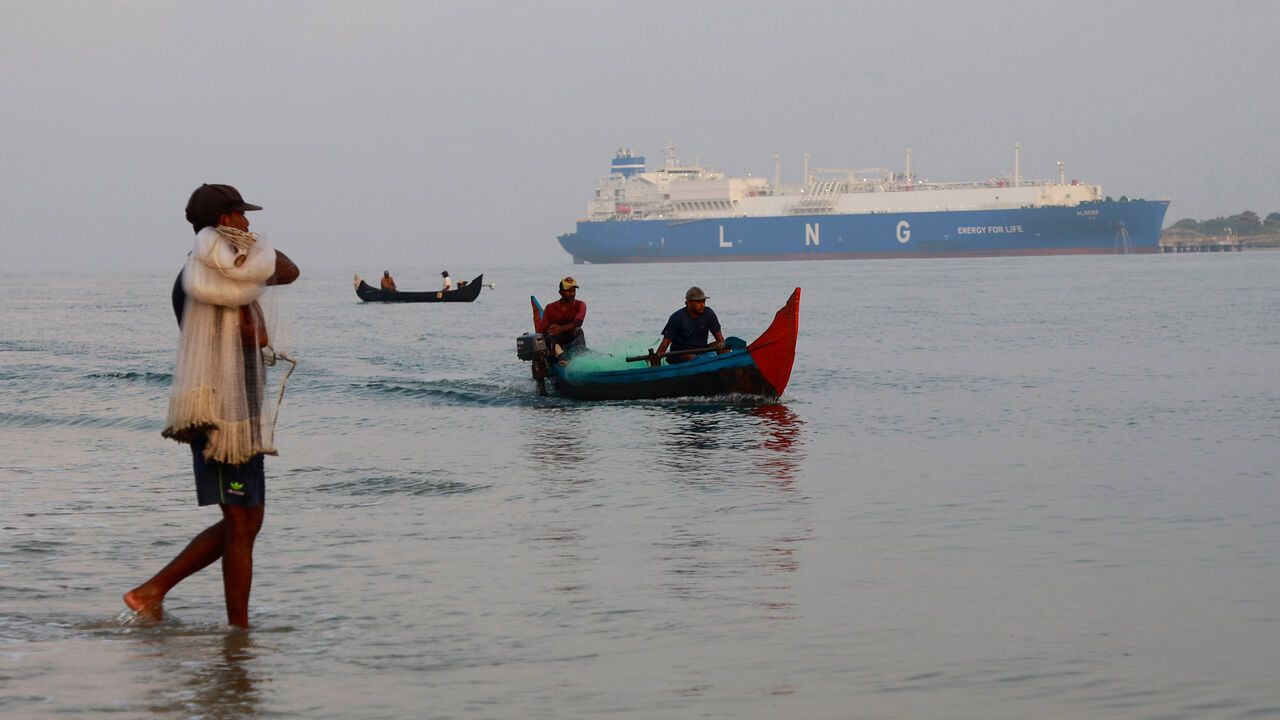
ON JUNE 28TH the Hlaitan(油轮名称,海莱坦号), a tanker laden with(满载着) liquefied natural gas, set off(出发,启程) for France from Freeport, Texas. Almost immediately it changed course. TotalEnergies(道达尔能源公司), its charterer(租船人,承租商), had received a better offer from Asia. According to Kpler, a data firm, the Hlaitan is due at(预计到达) its new destination on August 1st.
6月28日,一艘名为“海莱坦”号、满载液化天然气的油轮从得克萨斯州弗里波特出发驶往法国。但几乎立刻它就改变了航向。其承租商道达尔能源公司收到了来自亚洲的更优报价。据数据公司Kpler称,“海莱坦”号预计于8月1日抵达新目的地。
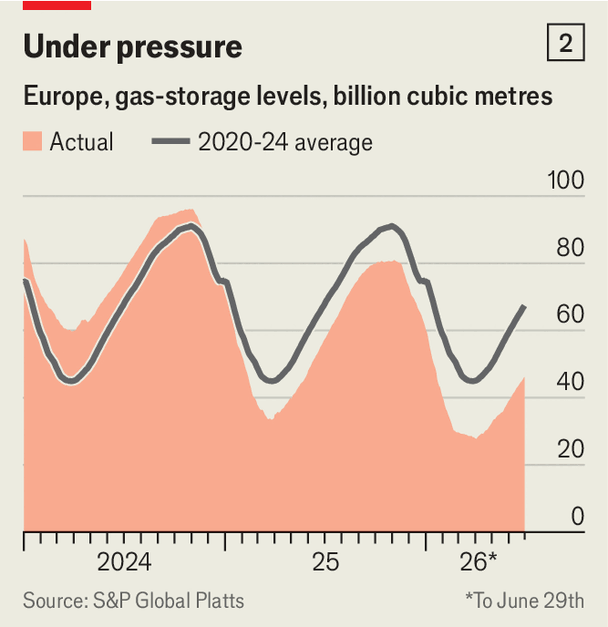
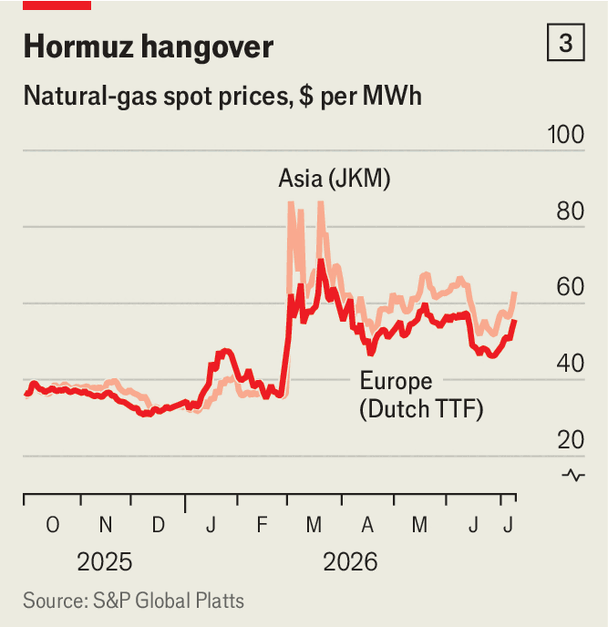
Such stories have become common. Buyers in Asia, where a scorching(灼热的,滚烫的) summer is turbocharging(极大推动,增压) demand, are outbidding(出价高于) Europeans for American cargoes at every turn(每次,处处). LNG tankers are being diverted(被改道,被转移) in record numbers (see chart 1). In sidelined(被边缘化,出局) Europe, gas storage, drained by(被消耗殆尽) a cold winter, is only 47% full—the lowest in 15 years at this point of the summer (see chart 2).
这样的故事已屡见不鲜。亚洲买家——那里炎热的夏季正极大推高需求——在每一轮竞购中都击败欧洲人,抢购美国货源。液化天然气油轮被改道的数量创下纪录(见图表1)。而被边缘化的欧洲,天然气库存因寒冬消耗殆尽,目前仅存47%——这是15年来夏季同期的最低水平(见图表2)。
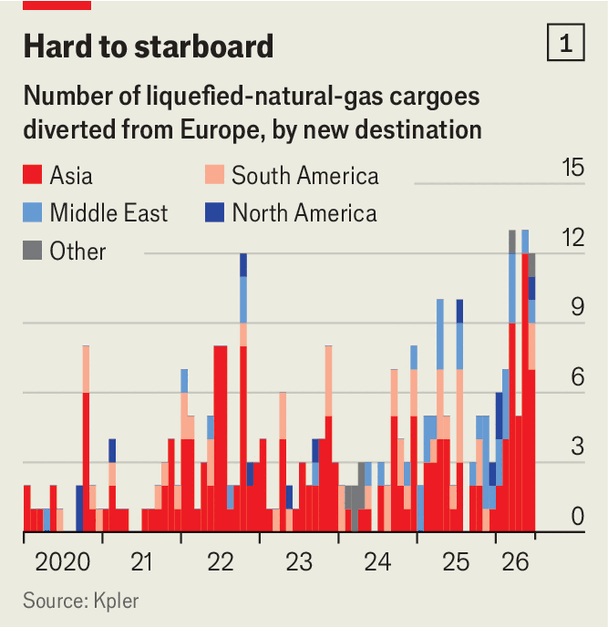
Behind this is(这背后是) a lack of supply from Qatar, usually Asia’s main provider. Since America and Iran agreed in mid-June to reopen the Strait of Hormuz(霍尔木兹海峡), 11 LNG tankers have traversed(穿越,横渡) the waterway—better than none(聊胜于无), but just three days’ normal traffic. On July 7th America began striking Iran, in retaliation for(为报复……) Iranian attacks on tankers (including a Qatari LNG one a day earlier). President Donald Trump also revoked(撤销,废除) a waiver(豁免,弃权) which allowed Iran to sell its oil and declared the ceasefire with the Islamic Republic(伊斯兰共和国(伊朗)) to be “over”.
这一切的背后是卡塔尔的供应不足,该国通常是亚洲的主要供应方。自美国和伊朗于6月中旬同意重新开放霍尔木兹海峡以来,已有11艘液化天然气油轮穿越该水道——聊胜于无,但仅相当于正常三天的通行量。7月7日,美国开始打击伊朗,以报复伊朗对油轮(包括前一天一艘卡塔尔液化天然气油轮)的袭击。唐纳德·特朗普总统还撤销了允许伊朗出售石油的豁免,并宣布与伊斯兰共和国的停火“结束”。