Letters are welcome via email to letters@economist.com Find out more about how we process your letter
欢迎通过电子邮件致信letters@economist.com,了解更多关于我们如何处理您的来信的信息。
Calculating war casualties
计算战争伤亡
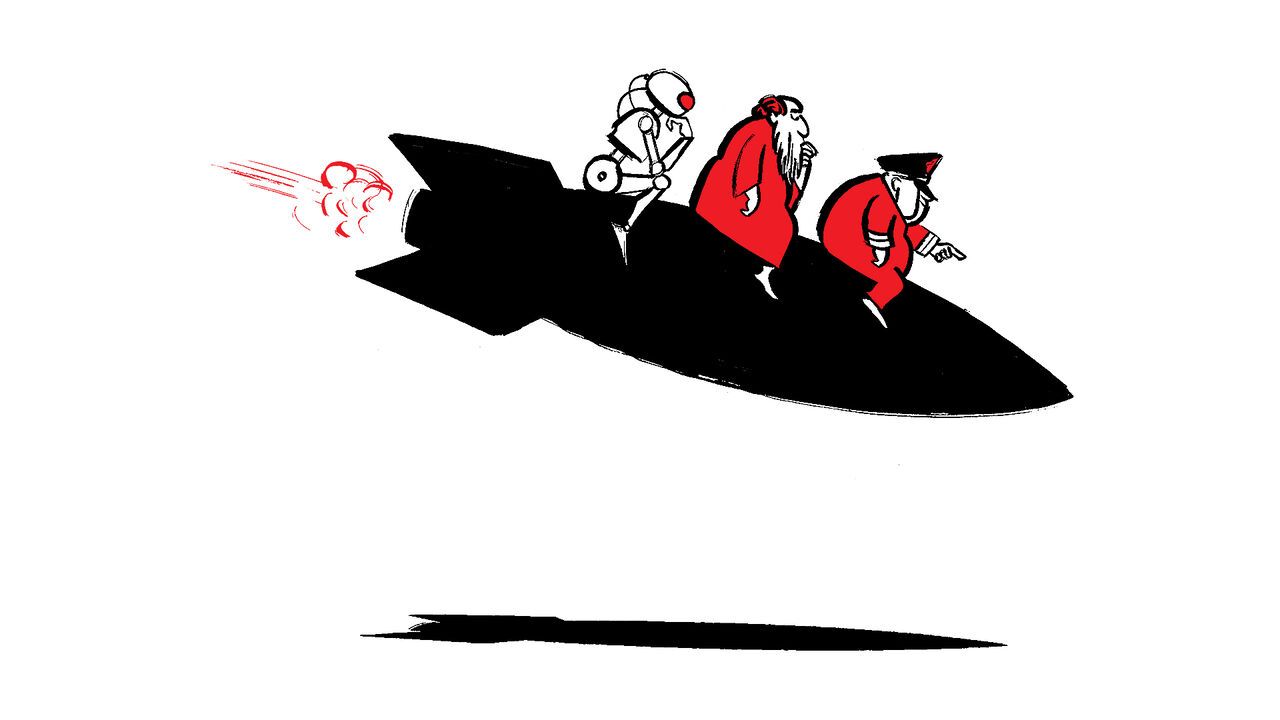
You reported on why big artificial-intelligence labs are hiring so many philosophers and noted its impact on the ethics of war (“Computo, ergo sum(我算故我在,改编自笛卡尔的"我思故我在")”, June 27th). Philosophers excel at(擅长,在某方面出色) formulating questions, but they have no agreed answers to how military objectives should be weighed against civilian deaths. For example, if a military objective of killing a wartime leader in a foreign country can be achieved only at the expense of(以……为代价) the deaths of innocent civilians, what is the maximum number of such deaths that is acceptable? This number, known as the non-combatant casualty cut-off value(非战斗人员伤亡上限值) (NCV), is often specified by military authorities but has varied widely (for example, between 0 and 30) across campaigns and over time. Its variability(变化性,易变) betray(暴露,显示(内心状态))s the uncertainty of those who set it.
你们报道了为什么大型人工智能实验室在大量招聘哲学家,并指出了这对战争伦理的影响(《我算故我在》,6月27日)。哲学家擅长提出问题,但对于如何在军事目标与平民死亡之间权衡,他们没有达成一致的答案。例如,如果杀死外国战时领导人的军事目标只能以无辜平民的死亡为代价,那么可以接受的死亡人数上限是多少?这个数字被称为非战斗人员伤亡上限(NCV),通常由军事当局规定,但在不同战役和不同时期差异很大(例如在0到30之间)。它的波动性暴露了制定者内心的不确定。
There is no “correct” NCV for human judges or for AI systems. If we knew how many future deaths a wartime leader would be responsible for the problem would resolve itself into the well-known trolley dilemma(电车难题,经典伦理思想实验). But we don’t know that. And even if we did, there is no universally acceptable(普遍接受的) solution to that dilemma.
对于人类审判者或AI系统,并不存在“正确的”NCV。如果我们知道一位战时领导人将对多少未来死亡负责,这个问题就会转化为著名的电车难题。但我们并不知道。而且即使知道,那个难题也没有普遍接受的解决方案。
Turning on a dime
瞬间转向
Diverging universities
分化的大学

The highs and lows
高与低
A reliable source
可靠的消息来源
Much derided, much loved
备受嘲笑,也备受喜爱