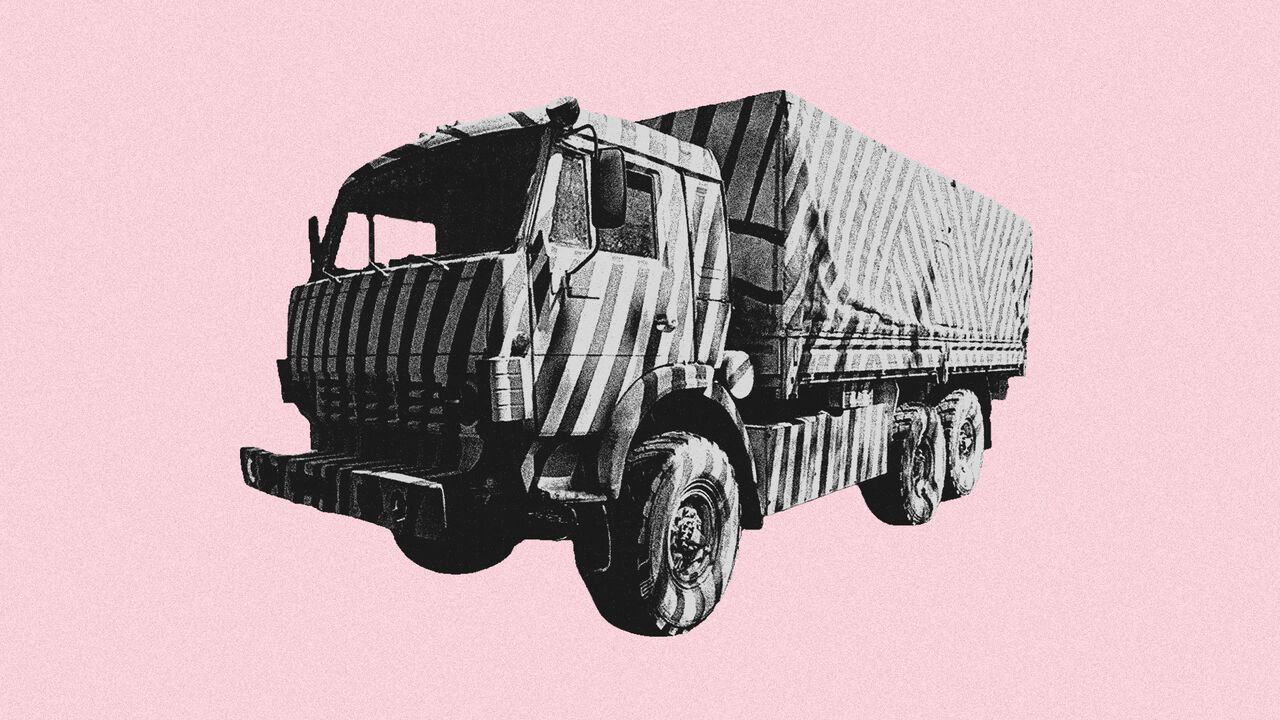
IN RECENT MONTHS Russian military lorries in Ukraine have begun sporting(穿戴,拥有) a striking(引人注目的,显著的) new colour scheme of vivid(鲜艳的,生动的) black-and-white stripes. As camouflage goes, it is not much use against human observers. But then, it is not intended to fool biological eyes. Its aim is to frustrate the machine-vision systems that are fitted to the Ukrainian drones that zip around battlefields looking for prey.(其目的是干扰乌克兰无人机上的机器视觉系统,这些无人机在战场上快速穿梭搜寻猎物。)
近几个月来,乌克兰的俄罗斯军用卡车开始采用一种引人注目的鲜艳黑白条纹新配色。作为伪装而言,这对人类观察者用处不大。然而,它本就不是为了欺骗生物眼睛。其目的是干扰安装在乌克兰无人机上的机器视觉系统,这些无人机在战场上快速穿梭搜寻猎物。
The stripes are reminiscent(令人想起的,回忆的) of the “dazzle camouflage(炫目迷彩:一战军舰迷彩)” used by the Royal Navy in the first world war. But whereas dazzle camouflage was intended to break up a ship’s silhouette, making it difficult to judge its speed and heading, the new variant aims to fool machines into thinking that a lorry is not, in fact, a lorry at all.(但炫目迷彩旨在破坏舰艇轮廓,使其速度航向难以判断,而新变种旨在欺骗机器,让它们以为卡车根本不是卡车。)
这些条纹让人想起一战中皇家海军使用的“炫目迷彩”。但炫目迷彩旨在破坏舰艇的轮廓,让人难以判断其速度和航向,而新变种则旨在欺骗机器,让它们以为卡车实际上根本不是卡车。
Machine vision is based on pattern-matching(模式匹配). A model is trained by exposing it to images, some of which contain lorries (or tanks, or aircraft) and some of which do not. Over zillions(无数,大量) of exposures, the computer deduces(推断,推导) rules that allow it to identify the things its trainers want to teach it about. Because zebra-striped trucks are unlikely to appear in the training data, says Todd Humphreys, an engineer at the University of Texas at Austin, an AI that encounters one in the real world may not realise what it is looking at.(由于斑马条纹卡车不太可能出现在训练数据中,得克萨斯大学奥斯汀分校的工程师托德·汉弗莱斯表示,在现实世界中遇到一辆的AI可能无法意识到它是什么。)
机器视觉基于模式匹配。模型通过暴露于图像进行训练,其中一些包含卡车(或坦克、飞机),另一些则不包含。经过无数次曝光,计算机推导出规则,使其能够识别训练者希望它学习的物体。得克萨斯大学奥斯汀分校的工程师托德·汉弗莱斯表示,由于斑马条纹卡车不太可能出现在训练数据中,在现实世界中遇到一辆的AI可能无法意识到它是什么。