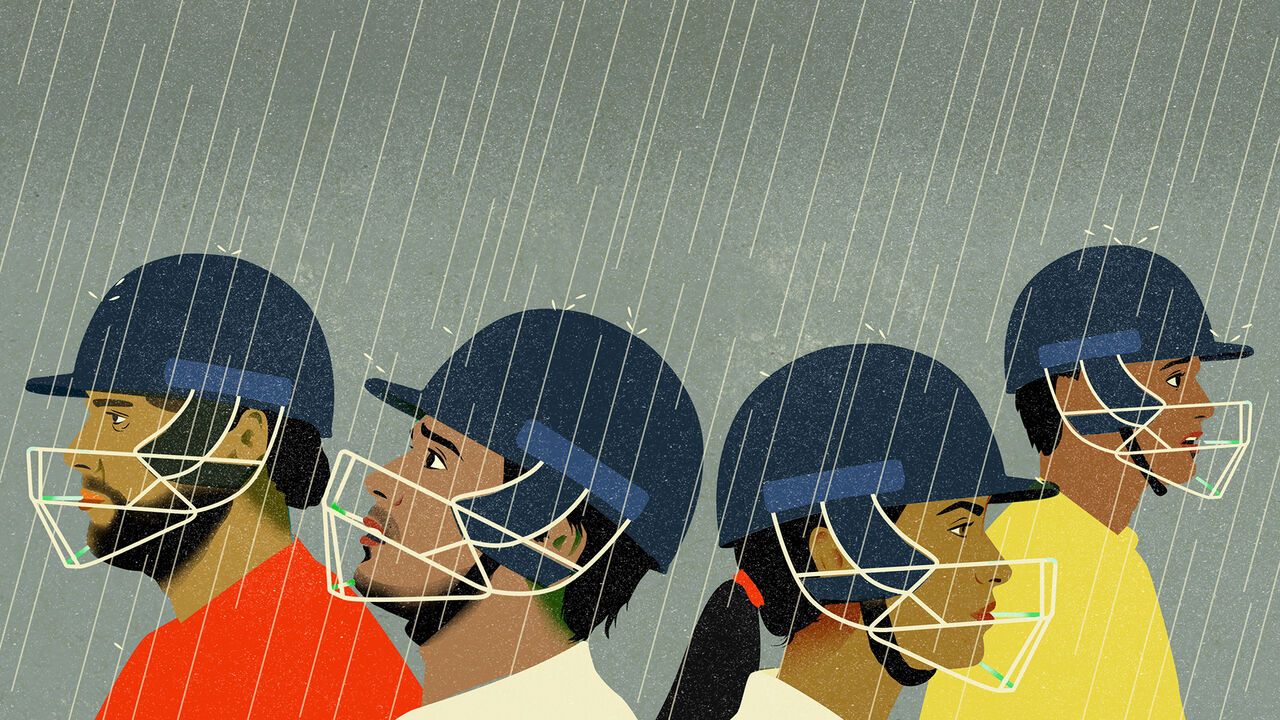
NO METROPOLIS IN(没有一个大都市) India and few big cities anywhere receive as much rain in as little time as Mumbai. Even by the city’s own standards it has been an exceptionally soggy(异常潮湿) July, the wettest bit(最湿润的时期) of the monsoon(季风). It rained as much in the first week as it normally does over the whole month. Wind speeds of over 75kph wreaked havoc(造成严重破坏). By July 7th, 830 trees had fallen (compared with 855 in all of 2025) in addition to 1,238 branches. An 11-year-old was crushed(压死,压碎) inside his school bus; an 18-year-old on his bike; a 63-year-old outside his shop.
印度孟买及全球任何大城市都极少能在如此短的时间内降下如此多的雨水。即便以该城市自身的标准衡量,今年七月也异常潮湿,是季风中最湿润的时期。第一周的降雨量就相当于整个月的正常水平。超过75公里/小时的风速造成了严重破坏。截至7月7日,已有830棵树倒下(而2025年全年为855棵),此外还有1,238根树枝。一名11岁男孩在校车内被压死,一名18岁青年骑自行车时遇难,一名63岁老人在店外丧生。
Citizens blame the authorities for blocking the roots of trees with concrete. Officials counter(反驳) that no city in the world could weather this weather. They have a point(说得有道理). Strong winds in Beijing last year knocked down(刮倒,撞倒) 843 trees and 2,572 branches in a single day. But the problem with that explanation is that the phenomenon(现象) of objects falling on and killing people is not restricted to(限于,局限于) the monsoon, to trees or to Mumbai.
市民指责当局用混凝土封堵树根。官员反驳称,世界上没有哪个城市能扛得住这样的天气。他们说得有道理。去年北京的一场大风一天内就刮倒了843棵树和2,572根树枝。但问题在于,这种坠落物体致人死亡的现象并不仅限于季风、树木或孟买。
Everything that can crush(压死,压碎) someone has done so in India—including an actual anvil(铁砧) (in 2024). On just one day this month a jamun tree(紫薇树/印度蒲桃) cracked a man’s skull, a tanker overturned and squashed(压扁,压死) two people in an autorickshaw and a trash mountain(垃圾山) tumbled onto a building, which then collapsed, killing nine. India is the land of death from above(来自上方的死亡之地).
一切能压死人的东西都在印度做到了——包括一个真正的铁砧(2024年)。就在本月的一天,一棵紫薇树砸裂了一名男子的头骨,一辆油罐车侧翻压死了三轮车上的两人,一座垃圾山崩塌压塌了一栋建筑,导致九人死亡。印度是来自上方的死亡之地。