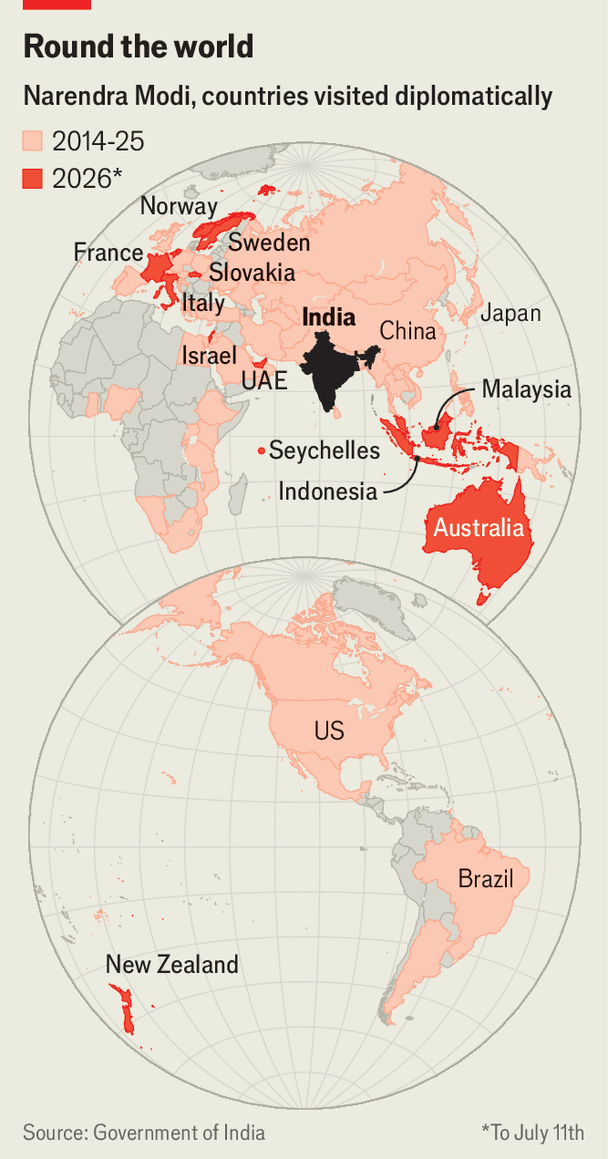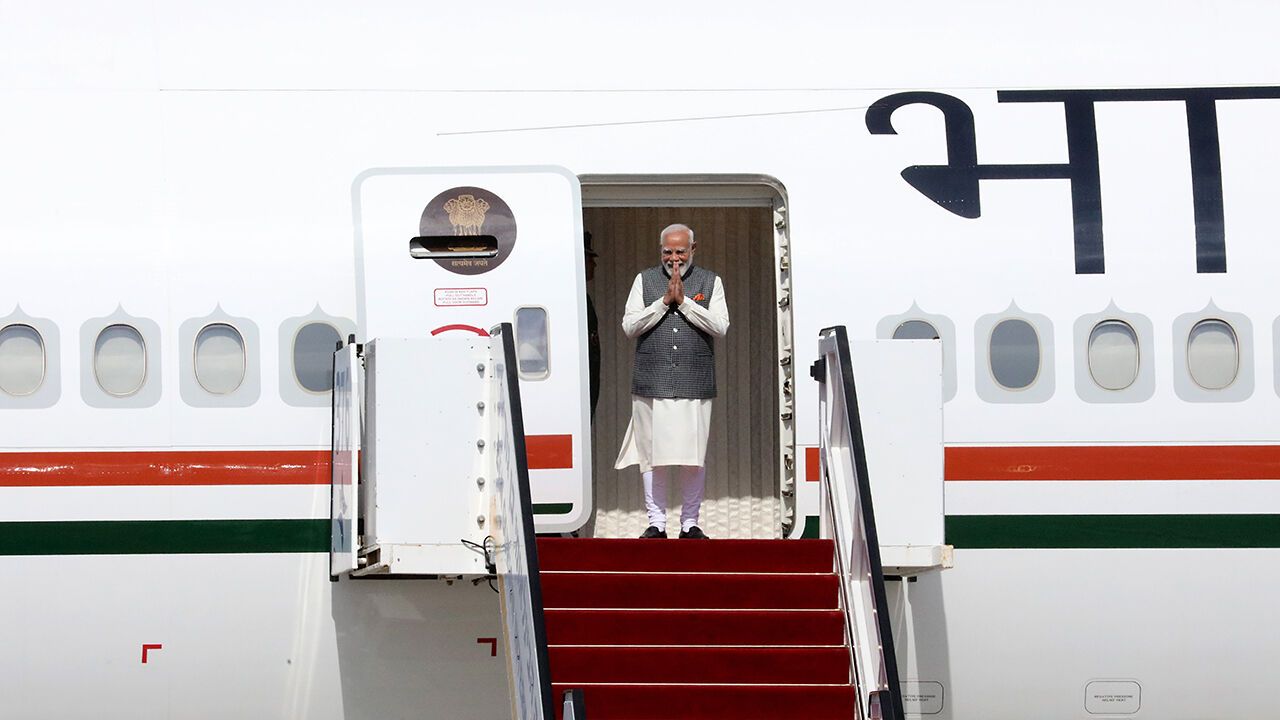
NARENDRA MODI is often seen pressing flesh(握手(政治场合用语)) at bilateral meetings, or embracing his favourite counterparts with a bear hug(熊抱,热烈拥抱). A visit to France and Slovakia last month was the peripatetic(四处奔波的,巡游的) Indian prime minister's 100th foreign trip since taking office in 2014. Shortly after returning to India, he jetted off(乘飞机离开,飞往) to the Seychelles. He was then in Delhi to host Japan's prime minister, Takaichi Sanae, before heading to Indonesia, Australia and New Zealand.
莫迪经常在双边会议上与人握手,或用熊抱拥抱他最喜欢的同行。上个月对法国和斯洛伐克的访问,是这位四处奔波的印度总理自2014年上任以来的第100次出访。回到印度后不久,他又飞往塞舌尔。随后他在德里接待了日本首相高市早苗,之后又前往印度尼西亚、澳大利亚和新西兰。
The flurry(一阵(活动),忙乱) of activity in the Indo-Pacific illustrates a trend: Asia’s middle powers want an insurance policy(保险措施,保障). Mr Modi aired(公开提出,播送) deals on defence, maritime security, semiconductors and rare earths—all in the shadow of the two superpowers. Like other Asian countries, India has long had to contend with(应付,与……斗争) the economic heft(重量,影响力) and territorial ambitions of China. But as America has become less reliable the balancing act(平衡术,左右为难的处境) has got rather harder.
印度-太平洋地区的一系列活动展示了一个趋势:亚洲的中等强国希望买一份保险。莫迪谈成了防务、海上安全、半导体和稀土方面的协议——所有这些都发生在美国和中国这两个超级大国的阴影之下。与其他亚洲国家一样,印度长期以来一直不得不应对中国的经济实力和领土野心。但随着美国变得不那么可靠,这种平衡术变得愈发艰难。
C. Raja Mohan, an Indian foreign-policy analyst, has described Mr Modi’s approach as “G minus 2”, referring to the so-called G2 pact that Donald Trump at times talks of striking with China. Asian countries are not turning their backs on(背弃,抛弃) America or seeking to contain(遏制) China, he says: they know they cannot do either. Instead, they are working out what they can do together, putting aside old differences.(相反,他们正在搁置旧分歧,摸索能够共同开展的事情。)
印度外交政策分析家拉贾·莫汉将莫迪的做法描述为“G减2”,指的是唐纳德·特朗普有时谈论的要与中国达成的所谓G2协议。他说,亚洲国家并没有背弃美国,也没有寻求遏制中国:他们知道自己两者都做不到。相反,他们正在搁置旧分歧,摸索能够共同开展的事情。