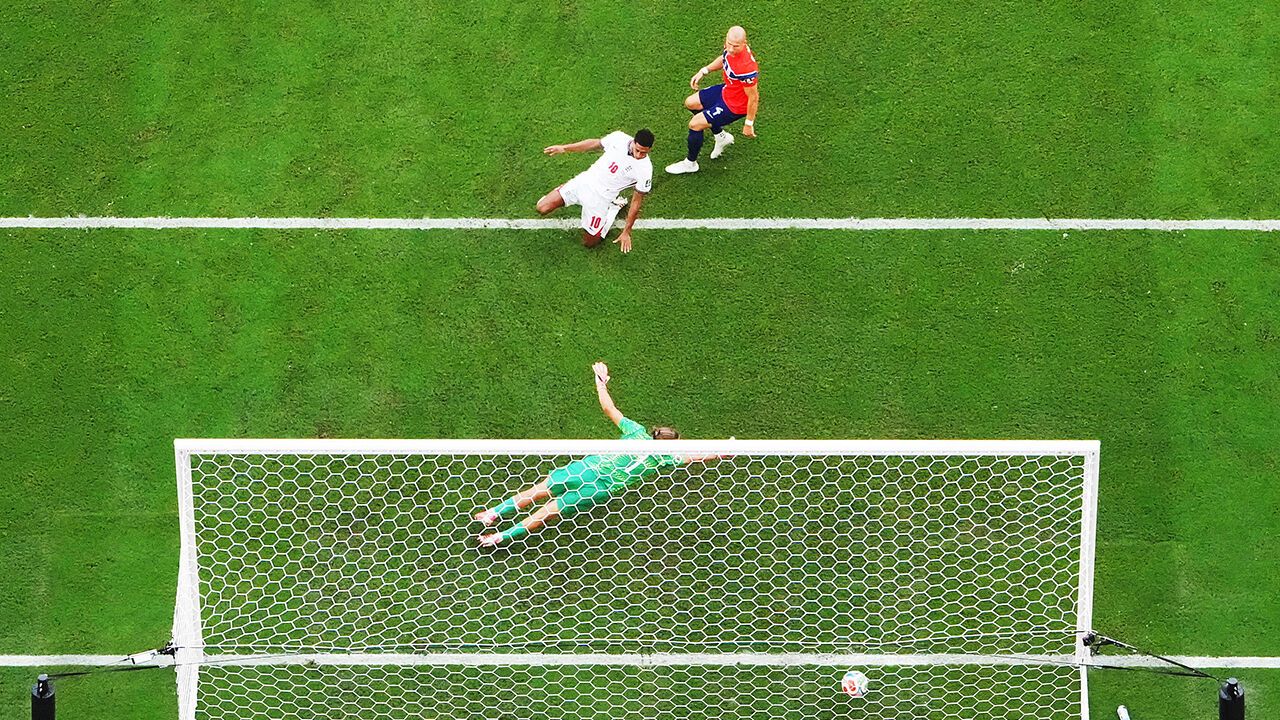
“We were lucky today,” said England’s manager, Thomas Tuchel, after his team’s nerve-shredding(令人极度紧张的) 2-1 win over Norway on July 11th. Britain’s bookmakers enjoyed their own good fortune: England reached the semi-finals of the World Cup, but for betting purposes the match was a draw. By convention, match wagers are settled on the 90-minute scoreline (1-1). England’s winning goal came in extra time(加时赛), saving the bookies millions of pounds.
“我们今天运气不错,”英格兰主帅托马斯·图赫尔在7月11日球队惊险地以2比1战胜挪威后说道。英国的博彩公司也同样走运:英格兰队闯入了世界杯半决赛,但就投注而言,该场比赛结果为平局。按照惯例,投注结算以90分钟常规时间内的比分(1比1)为准。英格兰的制胜球发生在加时赛,从而为博彩公司省下了数百万英镑。
Across this expanded 48-team World Cup, favourites(热门球队) have won 63% of matches in normal time, compared with 53% on average in the previous three. Underdogs prevailed in only 10%, against an average of 23% previously. Such results would once have perturbed British bookies, which do well when favourites don’t.(这样的结果曾经会令英国博彩公司不安,因为它们在强队不胜时表现良好。)
在这届扩军至48支球队的世界杯中,强队在常规时间内赢得了63%的比赛,相比之下,此前三届的平均比例为53%。弱旅仅获胜10%,而之前的平均比例为23%。这样的结果曾经会令英国博彩公司感到不安,因为它们在强队不胜时表现良好。
Not this time. Bookies have steered many customers towards “bet builders(赌注组合)” (or “same-game parlays” in America). At Kambi, a sportsbook supplier, these made up more than 30% of bets at recent football tournaments. Punters might bet on, say, England to win, Jude Bellingham to score, and the match to have over nine corners and more than two bookings, all in one wager(赌注;打赌). In the Norway game, only one of those outcomes occurred in regular time. Such bets help the bookies’ profits. Trading data shared with The Economist by four of them suggest that, despite match results generally favouring customers, all remain broadly on course to achieve their usual margins.(交易数据表明,尽管比赛结果有利于顾客,所有公司仍有望实现惯常利润率。)
但这次不同。博彩公司引导了许多客户转向“赌注组合”(在美国称为“同场串关”)。在体育博彩供应商Kambi,这类投注在最近几届足球赛事中占比超过30%。赌客可能下注,比如,英格兰赢、裘德·贝林厄姆进球、全场角球超过9个、黄牌超过2张——所有这些合为一个赌注。在与挪威的比赛中,这些结果在常规时间内只发生了一个。此类投注有助于博彩公司盈利。四家博彩公司与《经济学人》分享的交易数据表明,尽管比赛结果总体上有利于顾客,但它们基本上仍有望实现惯常的利润率。