The bombs were hidden in divers’ cylinders(圆柱形容器;气瓶) and lowered into the Baltic Sea. In freezing darkness they were fixed to the pipes that snaked(蜿蜒行进) along the sea floor from Russia to Germany. The timers were set. As Bojan Pancevski shows in his new book, the resulting explosions shook Europe’s economy and the Western alliance.(正如潘切夫斯基在书中所展示的,爆炸震撼了欧洲经济和西方联盟。) Revisited today, those tanks are also time capsules(时间胶囊), messages in a bottle from an already remote past.
炸弹被藏在潜水员的气瓶中,沉入波罗的海。在冰封的黑暗中,它们被固定在从俄罗斯蜿蜒至德国的海底管道上。定时器已设定。正如博扬·潘切夫斯基在其新书中所揭示的,随后的爆炸震撼了欧洲经济和西方联盟。如今回首,那些气罐也成了时间胶囊,是从已然遥远的过去寄来的瓶中信。
Known as Nord Stream 1 and 2, the twin tubes(双管;两条管道) comprised(由...组成,构成) the world’s longest undersea pipeline network when they were laid in 2011 and 2021 respectively. They were always controversial. By bypassing(绕过) Ukraine, they made it easier for the Kremlin to cut off(切断,中断) its gas supplies without interrupting deliveries farther west. As Mr Pancevski writes in “The Nord Stream Conspiracy”, they were “giant tentacles” which “tied Germany and much of Europe to Russia” through dependence on Russian energy.(正如潘切夫斯基在《北溪阴谋》中所写,它们成了巨大的触手,通过依赖俄罗斯能源将德国和欧洲大部分地区与俄罗斯捆绑在一起。)
这两条管道被称为北溪1号和2号,分别于2011年和2021年铺设,是当时世界上最长的海底管道网络。它们一直备受争议。由于绕过乌克兰,它们让克里姆林宫更容易切断对乌克兰的天然气供应,同时不中断对更西部的输气。正如潘切夫斯基在《北溪阴谋》中所写,它们是“巨大的触手”,通过依赖俄罗斯能源将“德国和欧洲大部分地区与俄罗斯捆绑在一起”。
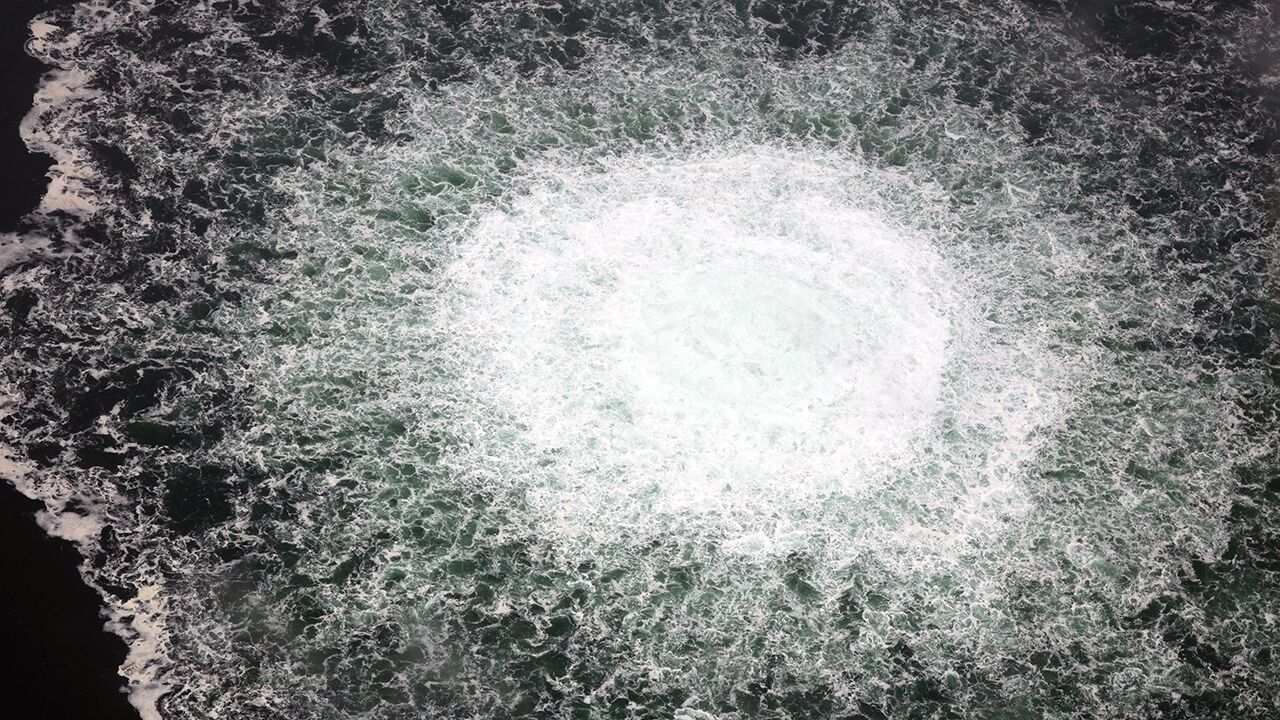
The blasts that ruptured them in September 2022, seven months into Russia’s full-scale invasion of Ukraine, spewed up gas worth $2bn in giant geysers.(2022年9月,在俄罗斯全面入侵乌克兰七个月后,爆炸将管道撕裂,喷出高达20亿美元的天然气,形成巨大间歇泉。) The facts of the case have emerged patchily(零碎地,不完整地); Mr Pancevski, a correspondent for the Wall Street Journal, has dug out(挖掘出,查明) what he thinks is the full story.
2022年9月,在俄罗斯全面入侵乌克兰七个月后,爆炸将管道撕裂,喷出高达20亿美元的天然气,形成巨大间歇泉。案件真相零散出现;《华尔街日报》记者潘切夫斯基挖掘出了他认为是完整的故事。