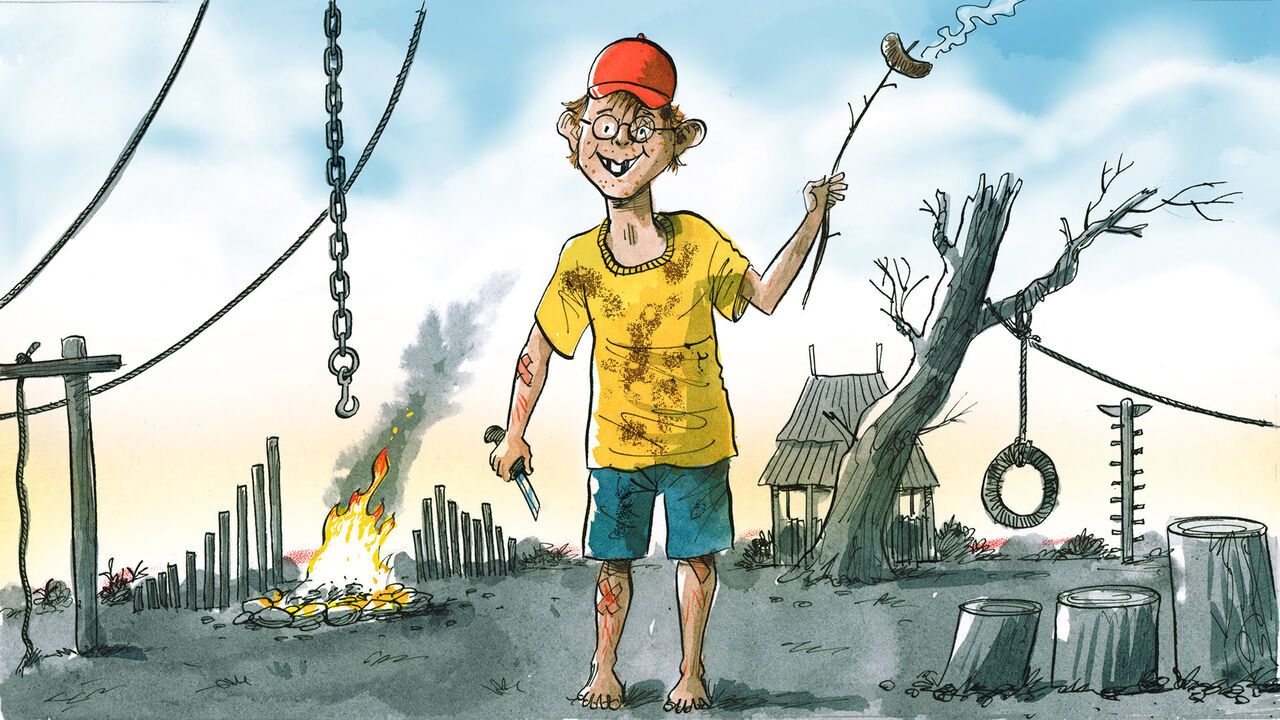
A visitor to the playground at Valbyparken, a green expanse(广阔的区域) in Copenhagen, is in for(即将经历) three surprises. The first is that the sprawling public children’s park is built on what was once a rubbish tip for the Danish capital. The second is the free coffee on offer for harried(疲惫不堪的) parents. But perhaps the most unexpected is the eagerness(热切,渴望) of the playground’s staff to hand out knives to children. Or axes, if they prefer. Or even, for tots(幼儿,小家伙) bored with mere weaponry, some fire-starting equipment. Off you go, kids, and do be careful (oh and parents please keep an eye on them). Sprogs of an age that in most countries would barely be allowed onto a swing unattended scamper away(蹦蹦跳跳地跑开) to whittle(削(木头)) sticks and soon imagine themselves carving their own magic wand, or the oar of a Viking longship(维京长船).
来到哥本哈根绿地Valbyparken的游乐场,游客会有三个意外。首先,这个开阔的公共儿童公园建在昔日丹麦首都的垃圾场上。其次,这里为疲惫的父母提供免费咖啡。但最出乎意料的或许是,游乐场的工作人员会热心地给孩子们发刀。或者斧头,如果他们更喜欢的话。甚至,对于那些觉得武器太无聊的小家伙,还有引火设备。去吧,孩子们,小心点(哦,家长们请看好他们)。在大多数国家几乎都不能无人看管玩秋千的年纪,孩子们跑开去削木棍,很快便想象自己在雕刻魔法棒或维京长船的船桨。
The knife-dispensing(发刀的) strategy may appear to some as an oversight(疏忽,失察) that keeps the local hospital bustling(繁忙的,熙熙攘攘的) with injured kids in summer. On the contrary(恰恰相反). Injecting a dose of(一剂,一点) risk into children’s free-ranging fun is a feature, not a bug(是特点,不是缺陷). The nature-based playground offers a litany(一连串(尤指令人不快的事物)) of ways for children to get bruised, bumped, scratched and dirty. There are trees to climb, brambly(多荆棘的) branches to rearrange, tricycles to ride (often into each other), a play pond to stumble into, then trails to get lost in far from nosy(爱管闲事的) parents. Adult chaperones(监护人,陪护) may fret about lurking hazards, but their peace of mind is secondary. “It’s children who need to be aware of every step they take,” says Helle Nebelong, a former Copenhagen city official who designed the place at the turn of the century. “They must take responsibility for their own safety.”(孩子们必须对自己的每一步负责。) A cadre(骨干队伍) of young staff are there to catalyse(催化,促进) play rather than stymie(阻碍,妨碍) it.
这种发刀策略在一些人看来可能是一个疏忽,让当地医院在夏天挤满了受伤的孩子。恰恰相反。在孩子们的自由嬉戏中注入一剂风险,是一个特点,而不是缺陷。这个自然游乐场提供了一系列让孩子擦伤、磕碰、抓伤和弄脏的方式。有树可爬,有荆棘树枝可以重新布置,有可以骑的三轮车(常常互相撞),有可以跌进去的游戏池塘,然后有远离爱管闲事的父母的小径可以迷路。成年监护人可能会担心潜伏的危险,但他们的安心是次要的。“孩子们需要意识到自己的每一步,”本世纪初设计了这个地方的哥本哈根前官员海勒·内贝朗说。“他们必须为自己的安全负责。”一批年轻的工作人员在那里催化游戏,而不是阻碍它。
Playgrounds the world over(全世界) have done their utmost(尽全力) to eliminate risk. Why expose children to injuries, even minor ones, if they can be avoided? From Tokyo to Toronto, childhood play has thus become enveloped(包裹,笼罩) in well-meaning bubble-wrap(善意的泡沫包装). Any adult who has visited a play area they frequented as a child can see how anything that might cause so much as a grazed(擦伤的) knee or a soiled(弄脏的) skirt has been done away with(消除,废除). Asphalt and dirt have been replaced by vast expanses of rubberised carpets. Tree branches that might tempt intrepid(勇敢的,无畏的) youths have been cut down. In their stead, standardised equipment picked out of a catalogue—a few tame(平淡的,温顺的) slides, some swings and a climbing frame—are erected. This cookie-cutter(千篇一律的) approach delights fretful(焦虑的,烦躁的) municipal officials fearing lawsuits and criticism from health-and-safety bureaucrats. Alas, it bores kids to tears(让孩子们无聊到哭). No wonder they beg for screens(吵着要手机/屏幕) instead.
世界各地的游乐场都尽最大努力消除风险。为什么要让孩子受伤,即使是小伤,如果它们可以避免的话?从东京到多伦多,童年玩耍就这样被包裹在善意的泡沫包装中。任何成年人在参观自己小时候常去的游乐场时,都能看出任何可能导致擦伤膝盖或弄脏裙子的事情都被消除了。沥青和泥土被大片橡胶地毯取代。可能吸引勇敢青年的树枝被砍掉了。取而代之的是,从目录中挑选的标准设备——几个温和的滑梯、一些秋千和一个攀爬架——被竖立起来。这种千篇一律的做法让害怕诉讼和健康安全官员批评的焦虑市政官员感到高兴。唉,它却让孩子们无聊到哭。难怪他们要手机玩。
Hey, parents, leave them kids alone
嘿,家长们,别管孩子们了