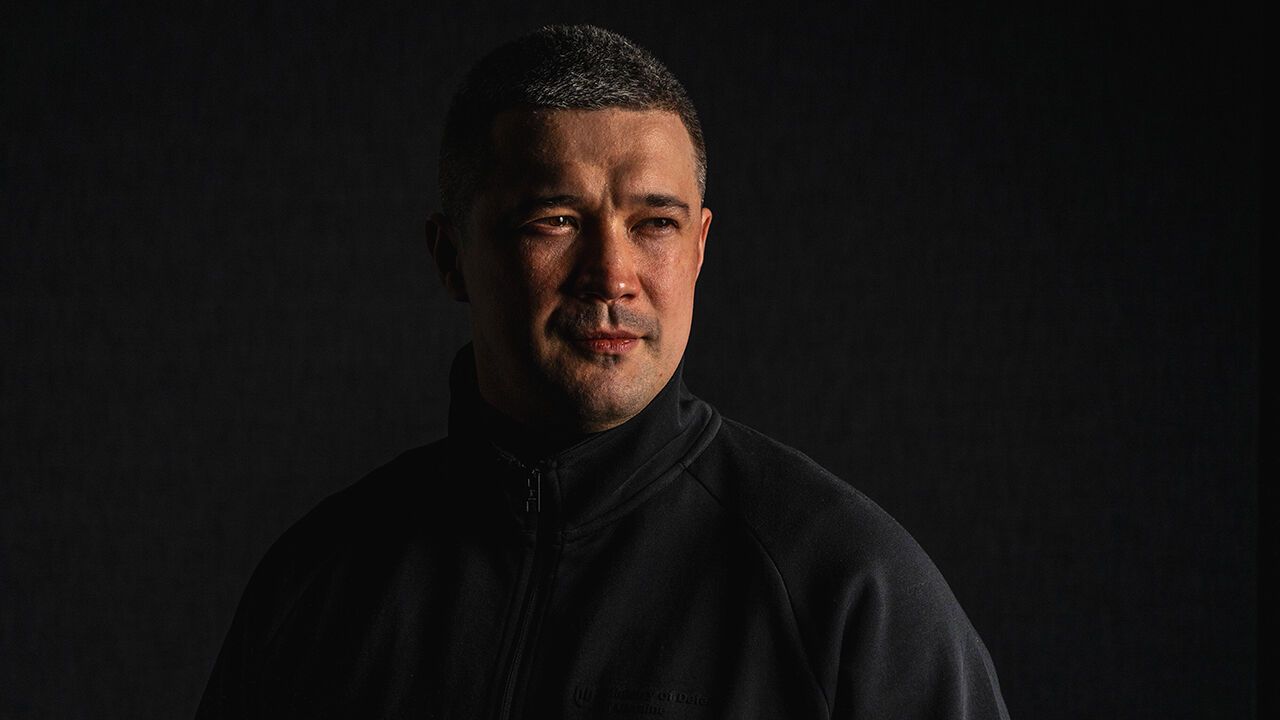
THE FIRING that people expected came first. On July 12th Volodymyr Zelensky announced the impending exit of his prime minister, Yuliia Svyrydenko, as part of a wider shake-up(大改组,人事调整) of his top team. The Ukrainian president needed someone with authority to reset fractious(难以控制的,暴躁的) relations with parliament, and the pliant(温顺的,易受影响的) Ms Svyrydenko was never that. The more shocking news came three days later with the revelation that Mykhailo Fedorov (pictured), his popular defence minister, would also be leaving after just six months in the job. Mr Zelensky said there were problems in the “dialogue” between the army and the youngest member of his top team. A self-styled disrupter(自称的颠覆者) out to break the old system, Mr Fedorov had been quick to ruffle feathers(惹恼,得罪人), but slow to build alliances.
大家预料中的解雇首先到来。7月12日,泽连斯基宣布其总理尤利娅·斯维里登科即将离职,这是他高层团队更大规模改组的一部分。乌克兰总统需要一个有权威的人来修复与议会之间紧张的关系,而顺从的斯维里登科从来就不是这样的人。三天后,更令人震惊的消息传来:广受欢迎的国防部长米哈伊洛·费多罗夫(如图)在上任仅六个月后也将离任。泽连斯基表示,军队与他高层团队中最年轻的成员之间存在“对话”问题。这位自称颠覆者、意在打破旧体制的人,很快就树敌众多,但建立联盟却行动迟缓。
Mr Fedorov, 35, known to colleagues as Misha, began his tenure(任期,任职期) at the ministry in January amid high expectations. He came with solid reformist credentials(资历,资格证明). As digital-transformation minister, he had introduced Diia, a highly regarded app that put state services and digital passports on smartphones. After Russia’s full-scale invasion(全面入侵) in 2022, he played a crucial role in building Ukraine’s “drone army”, introducing market mechanisms to boost the production of everything from small battlefield drones to bomber and interceptor drones. His supporters believed he was the man who could reform and modernise the army in the same way that he had digitised the government. The generals were less impressed, and set out to stymie(阻碍,阻挠) him.
35岁的费多罗夫被同事称为米沙,他在一月份就任国防部长时备受期待。他拥有坚实的改革者资历。作为数字化转型部长,他推出了备受赞誉的应用程序Diia,将政府服务和数字护照整合到智能手机上。2022年俄罗斯全面入侵后,他在打造乌克兰“无人机军队”方面发挥了关键作用,引入市场机制以促进从小型战场无人机到轰炸机和拦截无人机等各类无人机的生产。他的支持者认为,他能够像数字化政府那样改革和现代化军队。但将军们并不以为然,并开始阻挠他。
At a war council in early July, the tensions between Mr Fedorov and the military leadership simmered barely below the surface(几乎要浮出水面,一触即发). The generals had good news for their president. Drone operations were succeeding. A campaign to isolate Russian-occupied Crimea was ahead of schedule(提前于计划). But as Power Point slides were shown to the testosterone-filled(充满阳刚之气的,雄性荷尔蒙爆棚的) room, the generals griped(抱怨,发牢骚) about Mr Fedorov’s missile and ammunition procurement. The minister snapped back(厉声反驳,回呛): If it wasn’t for his emergency drone-purchasing decisions at the beginning of the year, which required borrowing money earmarked for salaries, there would be no Crimean operation to speak of.(如果不是他年初的紧急无人机采购决定(这一决定需要借用原本用于工资的资金),就根本谈不上什么克里米亚行动。) A witness to the proceedings described “two different co-ordinate systems” in a clinch(扭打,激烈争执), with “no common language”.
在7月初的一次战争会议上,费多罗夫与军方领导层之间的紧张关系几乎浮出水面。将军们向总统汇报了好消息:无人机行动进展顺利,孤立俄罗斯占领的克里米亚的行动提前完成。但当充满阳刚之气的会议室里播放幻灯片时,将军们开始抱怨费多罗夫的导弹和弹药采购。部长反驳道:如果不是他在年初紧急决定购买无人机(这笔资金原本用于支付工资),根本谈不上什么克里米亚行动。一名目击者形容现场是“两套坐标系统在搏斗”, “没有共同语言”。
Unbending
不屈不挠