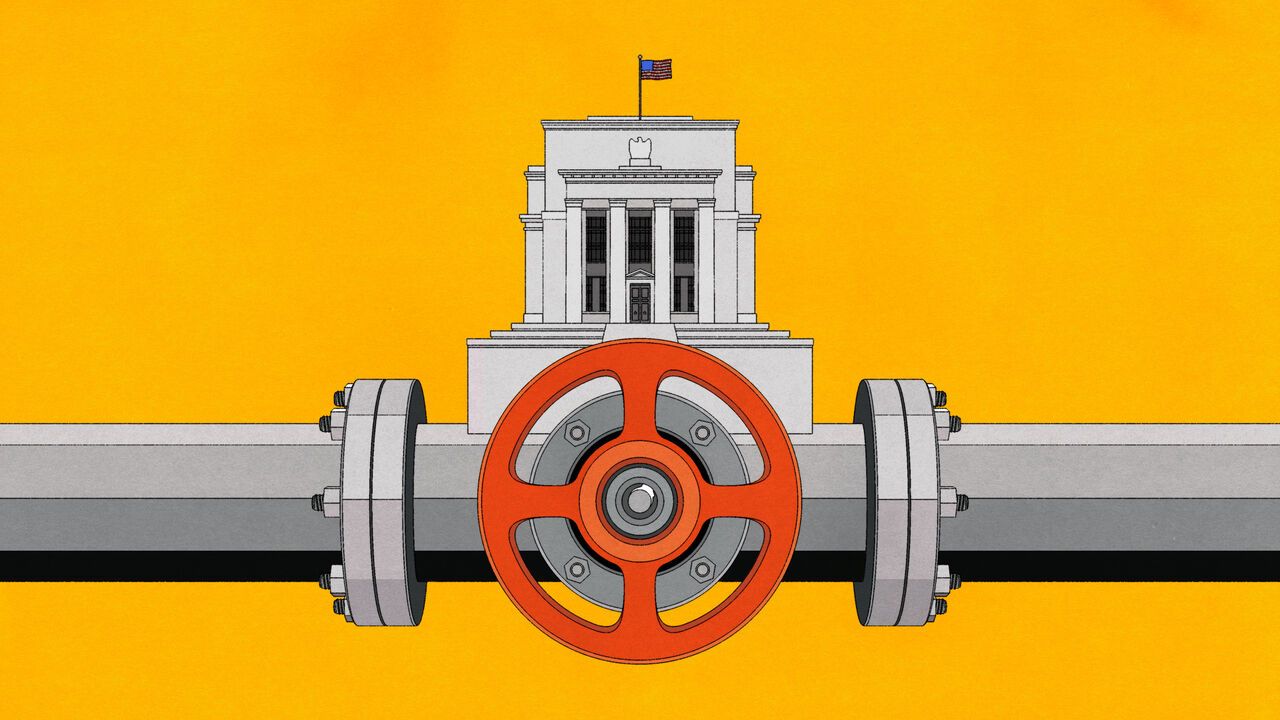
IMAGINE A CITY that, after years of drought, floods a river valley and turns it into a vast reservoir. In the decade that follows, houses spread across once-barren hillsides, factories rise where water now flows freely and farmers trade their wells for irrigation canals. Soon, the city is built around abundant water. Then comes a new mayor—an irritable(易怒的) NIMBY(邻避主义者) who regards the whole expanse as an eyesore(碍眼的东西). What is the mayor to do?
想象一座城市,在经历多年干旱后,将河谷淹没,使其变成一座巨大的水库。随后的十年里,房屋遍布昔日荒芜的山坡,工厂在水流充沛之处拔地而起,农民用水井换来了灌溉渠。很快,这座城市围绕丰富的水资源而建。这时来了一位新市长——一位暴躁的邻避主义者,认为整个水面有碍观瞻。市长该怎么办?
Kevin Warsh, the Federal Reserve’s new chairman, faces a similar dilemma(两难困境). During the global financial crisis of 2007-09 the Fed first began buying mortgage-backed securities(抵押贷款支持证券) to steady the housing market, and later long-dated Treasuries to stimulate the broader economy—a policy known as quantitative easing(量化宽松) (QE). Three rounds of QE between 2009 and 2014, then another during the covid-19 pandemic in 2020, have swelled(使膨胀) the Fed’s balance-sheet to $6.7trn, or nearly 21% of GDP. Treasuries account for about two-thirds of its holdings. Ever suspicious of central-bank sprawl(扩张(贬义)), Mr Warsh fumed(愤怒地说) last year that this was “a proxy for the Fed’s growing imprimatur(正式批准;权威认可) on the economy”.
美联储新任主席凯文·沃什面临类似的困境。在2007-09年全球金融危机期间,美联储首次开始购买抵押贷款支持证券以稳定住房市场,后又购买长期国债以刺激整体经济——这一政策被称为量化宽松(QE)。2009年至2014年的三轮QE,加上2020年新冠疫情期间的一轮,已将美联储的资产负债表膨胀至6.7万亿美元,约占GDP的21%。其中国债约占其持有量的三分之二。沃什一向对央行的扩张心存疑虑,去年他愤然表示,这"象征着美联储在经济中日益增强的权威"。
In pursuit of a lower waterline Mr Warsh has assembled a task-force(特别工作组) of engineers: Karen Dynan of Harvard University, Raghuram Rajan(印度央行前行长), an ex-head of India’s central bank, and Jeremy Stein, a former Fed governor. Can the task be done safely?
为了降低水位线,沃什召集了一个工程师工作组:哈佛大学的凯伦·戴南、印度央行前行长拉古拉姆·拉詹、以及前美联储理事杰里米·斯坦。这项任务能否安全完成?
Reservoir slog
水库抽水